
Ask Our Authors March 2026
| Features
.png)
Happy Publication Day everyone!
Our third Publication Day of 2026 brings a whole new collection of exciting stories, from a wonderful collective of talented authors!
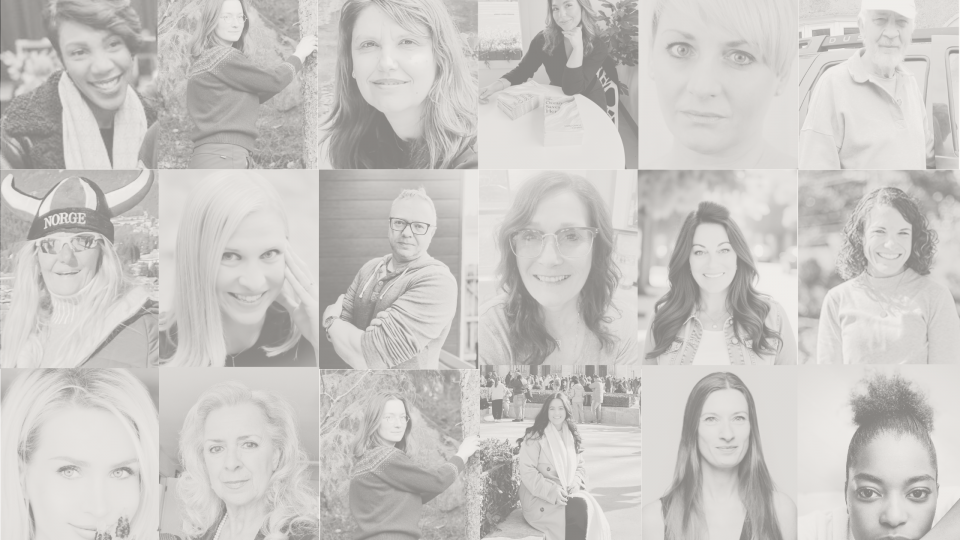
To introduce them, we are continuing a fun feature for the year – Ask Our Authors – where we send all our newly published writers the same simple question to see how different each answer is…
For our March authors, we asked them: How do you develop your characters’ personalities and arcs?
Here are their answers…
As a poet my characters don't get a lot of space to be developed! I try to give the essence of any characters in as few words of possible, such as Old Nell and Jacqueline Hyde.
Glenys Adams, author of Scribbbles and Mutterances
I draw on intense emotional experiences I am having right now or are in the near past - they provide the fuel to get the writing moving - as they resolve internally through the writing process the book is able to come to completion and the narrative arc is organic rather than planned.
Alyson Quinn, author of The Smoke That Mystifies
"This story being my own, the people here weren’t built like fiction - they came through as they were. Real folks fill these pages, each shaped by moments I lived through alongside them. As words took form, attention shifted toward depth rather than invention. Honesty became a guide, peeling feeling away from truth where it helped clarity. People appear not fixed, but unfolding - layered by time instead of trapped in one version of themselves. Something shifted once I saw that counting on memory wasn’t sufficient. Feelings color recollection, make it patchy. Instead of trusting the past as-is, I began wondering - what shaped them back then, in what ways did they leave a mark, how does distance alter my view today? Growth hides in those questions, not only in events themselves, but in how my thoughts about them stretched over time. Mine too feels this weight. Becoming the story and its watcher at once - that’s what memoir asks. Growth meant facing backslides, mixed signals, moments I cringe now to recall. Truth bends the tale into shape. Staying centered came down to one choice: aim for honesty instead of flawless results. Not about shaping how someone seemed - just showing things straight, without leaning too hard either way. That mindset lets real character unfold on its own rhythm. The path each person takes begins to show up without pushing. Here’s what I’ve learned while writing about my own life. Stories grow stronger when they breathe a little. People act in ways that surprise even themselves. Watch how moments shift as you remember them differently. Change your mind halfway through if needed. Real growth shows up in the cracks, not the plan. The mess becomes meaning without forcing it."
Brandon Hultman, author of The Hultman Blueprint
"I start by writing a family tree and cross reference relationships in much the same way. Then I write a list of character profiles, what I want them to be remembered as, their idiosyncrasies, flaws, traits, anything that makes them real. I try to think of friends or family personalities and mocks them around those key attributes. Then I make them human. I know I’m there when I can visualise them actually speaking the parts they play, the situations I place them in. I read my characters parts to friends and asked them what sort of person they thought they were, such as, did they think they were honest, or deceitful, believable. Then I homed in on their traits and tried to think about how they would actually react to the scene in the book. I made a lot of notes and kept referring to them throughout the book. I introduce the key characters in the opening chapters and describe where they were and what they were doing at the precise time the main protagonist was undergoing his car crash. Time stops still as the characters are introduced. I also used my own experience of a life changing car accident when I was 23, how it affected those I loved and those that loved me. I found out the detail of their pain many years later when they felt they could talk to me about it. It was a very difficult experience for all of us, so I tried to incorporate that experience into the book. The same with sight loss. I volunteer for Suffolk Sight, a charity for the visually impaired and have witnessed some very distressing examples of how sight loss affects people’s lives and was able to use that experience to guide my writing. Life can be very hard at times and how people cope and adapt to different situations defines them. I wanted MindSong to feel real, and although fiction, I wanted it to be believable. That’s how I developed the characters."
Mark Rigby, author of MINDSONG
My book was channeled and so I had little control over the characters and even story line - I was reading along with interest as I wrote the words I heard. Sometimes I stopped writing to re-read in order to understand the full breadth and depth of what I was being told. The spirit who came to me to ask (tell) me to write her story is a complex character - I had a lot of respect for her.
Ruby S, author of Joyce's Manifesto for Saving Humanity and Planet Earth
Not really applicable to me. I have only written a children's book. All my other publications have been scholarly. My book is a very simple morality tale deploying very basic characterisations. Having said that, some children's books are extremely useful in conveying important messages. In fact the best ones facilitate the process of thinking through much deeper issues. Never underestimate the power of a simple narrative.
Mark Hayes, author of Thea Willomena
I do many pencil sketches, and watercolors.
Karen L Chew, author of Rocky Penguin and a Box of Socks
"Writing a picture book for younger children that involves a monster of any kind requires care and understanding of the audience. Having two small children of my own, I am very aware just how quickly they can be made to be afraid by the wrong use of words or imagery within a story. Creating a 'monster' that was both friendly in character and vision was key to my book. I also wanted an interactive element to the story where the readers could see for themselves, if they too had a friendly monster at home that could also become their friend and lead to new adventures so the development of the main character had to be right. The inclusion of two young brothers into the story also meant they could share the experience and each had their own ideas as to what should be done next in the narrative... a story I hope to continue in the next book of adventures. "
Tim Osborne, author of Gurgles
The reason I write is to help and in 2026 I am writing solutions how to get humanity out of the ideological struggles it is. It is painful to see creatures enslaved by ideologies when ideologies are meant to serve and not ruin humanity.
Sadudin B.Engadean, author of We Are Too Connected To Be Divided In This World
For whatever reason, I feel the process is similar to blacksmithing. I find the characters like chunks of metal, and I gauge their properties based on how they interact with the world. Then, I turn up the world's heat; mundanities fall away, and I can better see the characters' strengths and weaknesses in the way their qualities glow. It's at this point they are the most pliable, though, so from that point on, it's all about applying the hammer of storytelling in the most effective way--without forgetting to let the characters cool off from time to time!
Benjamin Sonnek, author of Cyberwood
A spark, Tali the name of a child in my class. Knowing how a child would react to receiving a pair of brightly coloured rubber boots for a birthday present, the thread of rhyming that creates the story about Tali and the language features that lift the story from ordinary to joyful tones. I could not resist the teacher inside me, so I inserted "Helping Children understand story making" for parents and teachers and even older children to add a gleam of inspiration.
Liz Simon, author of Tali Tallboy
I believe it’s more base on I go with the flow, I generally write and the personalities and arcs seem to come by themselves, makes it feel more authentic, like getting to know a real person.
Benjamin J Mifsud, author of The Willow Tree and its Branches
"For me, the process of writing The Eight Keys was not about developing characters, but about learning to listen. The book emerged through a concentrated period of writing and contemplation during the summer of 2024. Rather than constructing ideas, I found myself observing patterns—both within my own experience and in the way life unfolds more broadly. Over time, these observations began to organize themselves into what I came to call the Eight Keys. Each Key reflects a meeting point between receptive and active forces, and together they form a kind of living structure rather than a linear narrative. What was most important in the process was not trying to control or overdefine what was coming through, but allowing clarity to arise gradually. Writing became less about producing something and more about recognizing what was already present. If there is one thing that shaped the work, it was learning to trust that insight can unfold in its own timing, especially when we create space for reflection and attentive awareness."
Enrica Ferruzzi, author of The Eight Keys: Opening to the Mysteries of Cosmic Harmony
The creation usually starts with a melody or a well-edited video or a feeling or a painting. First, I have the mood after then the story and the characters. I'm always thinking about tales and personalities but a good story needs inspiration. I think the mood and style is so important those are the basic of my fiction.
Jack Monaghan, author of Morgue in Edwardstown
"I build my characters through lived moments. I’m endlessly fascinated by the human experience, and I love watching how people move through the world — whether it’s across a café table or on a movie screen. I soak in the tiny nuances, the gestures and hesitations, the sparks and shadows, that make a character feel real. Strangely enough, boredom is my greatest catalyst. An idle mind may be the devil’s playground, but mine fills itself with stories the moment it’s left alone. I keep it busy because there’s so much I want to share with the world. If I could offer any advice, it would be this: listen deeply, observe constantly, and tell your stories without hesitation. Our time here is brief, and the tales we leave behind are part of the legacy we get to choose."
Chukwunonso I. Okafor, author of Wedding Eve
Actually the characters sort of develop their own personalities, yet at the same time you as the author become a friend with them all , the hardest part I found was when I finished the book they all line up and seem to say What about us , I honestly could say to them, What about me, I am going to miss you and believe me I do.
Derrick William Mapps, author of TREE OF DREAMS
"I love trees from my childhood. The release of my book is an inspiration and joy not to me alone but to all those who will read it. The resistance of these trees which I relate to individuals is something that I admire and wish to encourage my readers to read and relate to a tree. I hope that this book give joy and peace to those searching for their spirituality in 2026"
Reverence John Danso, author of Trees in the Bible. Meditations and Prayers
"A lot of it came from real life. These friendships are rooted in truth—the laughter, the unfiltered conversations, the loyalty, and even the hard moments. I focused on the small, intimate details: the way women show up for each other without being asked, the honesty that only comes with deep trust, and the ability to both call each other out and hold each other up. That balance is what makes the bond feel real. I wanted the characters to convey that it’s never too late to choose yourself. So many women are conditioned to play small, to be responsible for everyone else’s happiness, and to put their own desires on hold. I wanted this story to feel like permission—to live boldly, to take up space, to dance, to travel, to laugh too loud, and to stop waiting for “someday.” Freedom isn’t reckless—it’s honest. I hope the characters help readers feel awakened. Brave. A little restless in the best way. I want them to close the book and think, I’m allowed to want more than this—and I’m allowed to go after it. If they feel inspired to book the trip, take the risk, say yes to themselves, or reconnect with their own tribe, then the characters and the story have done their job."
R.D. Reynolds, author of Wild Women: Dance Like Gypsies in the Night
My approach has been heavily influenced by the writing craft books of the wonderful mystery novelist, Elizabeth George. Before she begins any plotting of her novels, she spends a lot of time thinking and pre-writing about her characters, and has found that out of such extensive character development, many ideas for plot emerge. I have had the same experience. I pay particular attention to the backstories of my characters. What experiences, particularly during childhood and adolescence, have shaped them into the people they have become? For example, in my recently released THE BIG SWITCH: VARNEY AND CEDRIC, it's essential to understand why Cedric acts out in school, bullies other students, and is so ready for a major life change. His behavior and longing to escape his life are only understandable if you know what he's gone through on the home front. And of course, we all want our characters to grow and change as they encounter obstacles and challenges, and their character arcs have a lot to do with what they've experienced in the past.
Lynn Slaughter, author of The Big Switch: Varney And Cedric
"When I build a character, I start with their imperfections. It’s the fractures—physical, emotional, and intellectual—that make someone compelling. Flaws create texture. They generate tension. They give the character something to overcome or succumb to. A character’s imperfections aren’t just decorative; they are the obstacles standing between who the character is and who they need to become. As the story applies pressure, those flaws become fault lines. Stress exposes what the character fears, what they cling to, and what they’re willing to sacrifice. Some characters rise to the moment, others break in ways that feel tragically inevitable. Either way, the response reveals something essential about human nature: courage, fear, love, loss, and the search for meaning. A well-drawn character doesn’t just move through a plot—they illuminate what it means to be human. Once those characters are fully realized, I step out of the way. Writing becomes less an act of invention and more an act of observing. It feels like watching a film unfold—my job is simply to keep up, to capture their choices. Some characters rise to the moment; others collapse under the weight of their own limitations. Sometimes, as I’m writing, I find myself asking my characters, “Why did you do that? You’ve backed yourself into a corner.” But inevitably, they show me the way out. Once they’re fully formed, they start making choices I didn’t plan. That’s the moment I know the character is alive—when they surprise me. It has been called instinct, intuition, madness, chaos, even magic- but to me, it is simply the essence of creativity.
Philip W. Hurst, author of Wolf Moon Rising: Next Phase
When I write, for a while, I live in the world I create. I walk in the shoes of my characters, and write as I think the character would behave; the stories evolve with me living through every scene, visiting every location. I do go through a disconnect with the real world around me when I write. Once I am done, I am back to being myself. Writing for me is an out-of-body experience.
Rajeshree Varangaonkar, author of Bokeh
Once I have introduced my major character, in this case Alex, a young opera singer, who finds himself in trouble, I surround him with strange characters, who either want to exploit him, or who seek his talents to defeat a monstrous dictator. It is through the conflicts that Alex must endure that I am able to develop the characters of his friends and foes.
Jack Zipes, author of Alex in the Land of Liars
All of my characters are casted. They are either public personalities or people I know in real life. From there, I play the chapters out like scenes and see how that character will respond or react. For example, in “Running from Roswell,” in my mind Oliver was Kristoffer Polaha (circa Ringer) and Amity was Rachel Bilson (circa Hart of Dixie). From there, the characters take me on their journey. I love to watch them grow, learn, and change. What I see in Amity’s future is a growing obsession and unraveling at the mystery surrounding her uncle’s disappearance. I’m excited to see where it goes. I hope you are too!
D.A. Busby, author of Running from Roswell and Canyons
"Having travelled generally alone quite extensively with my work in the oil and gas fields mainly it was quite an isolated existence. Always a great welcome home but then when I lost my wife of 50 years, I became a recluse --- with my caring daughter constantly trying to make me go out. With so many memories this 81 year became a reborn teenager and a whole list of short stories was soon developed. I enjoyed reading when young and when away from home but with the pace of life today it is the short stories with their twists or messages that seem far more satisfying. To all you lovely readers and writers dare I suggest you review your lifetimes serious sides and funny happenings and look to see how you can develop a new club -- or join the U3A."
Robin E. Bailey, author of The Happenings
"In my first published book, a fictional memoir, my characters are based on real people who did real things. I changed their names into mundane but easily recognisable ones. Each character appears only for a couple of chapters at most, so there is no scope to develop personalities or any real arc. The book is about interesting events rather than the people involved. I have a second book undergoing proof reading, a Sci-Fi novel, where the personalities of the characters are important to the story. I have described the characters initially as they appear in the narrative, but deliberately exposed them to confrontation, power and politics, to expose their flaws and strengths as the story proceeds. As with all characters who ascend to the pillar of fame, I bring the strongest crashing down by unforeseen events. Sci-Fi needs more of the Fi than the Sci to make a compelling tale."
Billy Higginbottom, author of An Engineer's Tale
"My character’s personalities and arcs are developed from simulations that may reflect real life situations without a direct link with such situations. While, the personalities or arcs may not be real as it is fiction, bringing the description of the story closer real life situations would make it realistic and appealing to the readers. After the release of my book, which is my first published novel, I am looking forward to the prospect of 2026 as a year of consolidation of my hobby of writing. I am looking forward to continue promoting this novel in schools, bookshops and other events."
A. T. Niba, author of Random Jottings from the Hinterlands
Characters and their motivation is what drives a story forward. Each character in a story tries to hold onto what they believe is right. But when characters are put to test and are being challenged, that's when they either fight, or push back, or run away from their problems. But if a character comes to finally accept his or her situation and tries to learn from it rather than fight it, he or she will think of many ways to solve that problem and come to terms with it. That's when the arc of your character has been achieved.
M. H. Scott, author of Look what it's done for you
Mine is an illustrated book. My two characters and my illustrations were born by chance, spawned from a contest held at the "Gorey House" in America, the home of my favorite illustrator, Edward Gorey. The theme of the contest was "Beast Boys," and I thought of my two beloved furry friends, a dachshund and a cat, Hari & Musci, who exist in real life. I then made the two creatures half animal and half human. There's a lot of autobiography in them because Musci is also me... I identify with her. So, those who love discovering strange things on moonlit nights and strolling through gardens, mazes, and mysterious places are me/my cat Musci, who I decided to give a beautiful one-eyed girl, and Hari, my dachshund, who almost has more sense than me/Musci. I'd say Hari is a little more rational and very, very curious, brave, and protective; she never tires of walking. Musci, on the other hand, is a little crazy. She's a cat who loves elegant clothing, who loves oddities, humor, arcane and mysterious places, bucolic settings, and myth. All this takes place in gothic settings with a noir atmosphere. My two characters love and seek out beautiful magical gardens, enigmatic labyrinths, bizarre characters and creatures they already know, and will meet. Hari and Musci are eager and eager to explore these strange places, surreal things and creatures, and they can't wait to meet new ones! The two have a very strong bond; they are inseparable, they live together. They walk at night and sleep during the day. There's a lot of me in them. And I suppose that what they are, feel, and love are inextricably linked to what I, my cat, and my dachshund feel and love... My characters therefore evolve with me, my cat Musci, and my dachshund Hari. In reality, it's me who wants to enter my illustrated pages; it's me who loves strolling with them through this surreal world! And what I'd like is to share these nocturnal strolls, these sensations and emotions with my readers, because what I want to awaken in my readers is precisely this wonder, this sense of magic! Come on, enter my illustrations and stroll with us!
Moss, author of Night Walks ~ Hari & Musci Strange Stories
I don’t really approach my writing through characters in the traditional sense, since I mainly write poetry. I tend to work with voices or emotional states that evolve across a poem or even across a collection. For me, development isn’t about constructing a fixed personality or a clear arc, but about returning to the same feeling or experience from different angles — almost like a spiral rather than a straight line. A voice might begin in denial, move through longing, contradiction, or fragmentation, and sometimes arrive somewhere clearer — but not always resolved. So rather than building characters, I let the language shape the voice, and the voice reveals itself gradually through repetition, variation, and emotional shifts.
Kreshnik Hoti, author of Haunted
"The main character in this book is a young girl called Alice. Her personality was developed chiefly from seeing how our children reacted to life's challenges during their formative years. I also found that asking myself ""What would I do in that situation ?"" was a great way to bring life to each chapter and develop the overriding arc. A friend recently said"" There is a lot of you in this book isn't there Jim ?" He was right"
Jim Thompson, author of Alice and her Magic Bathmat
"I frequently write about working-class individuals, particularly women who face and overcome hardships. The narrative is divided into three separate tales, each centered on a different protagonist: a devout Catholic mother, a rebellious teenager, and a caring uncle. For character development, I drew inspiration from many sources, such as people I know, newspaper articles, and social media—especially for creating villains—and from general observations of people. I decided the main characters should be family members united by a common quest to find a safe place away from an abusive home. Each character faces their own unique challenges. I used the hero’s journey framework to illustrate how they develop and grow by overcoming conflicts to reach their goal. I think their individual stories highlight their strengths and struggles as they move past each obstacle, staying true to the story arc."
Loring J, author of The Murky World of Criminals and Misfits
"In developing a book, I first determine how many characters I will need and how their personalities and identities will create the story. I devise their names, how they dress, their behaviour and how their personalities fit into the development of the story. As I am writing for children, memorable characters will stay in the imagination longer. A child wants characters who are the heroes, as the story develops and not the zeros. The good guys win and the bad guys lose. This is achieved through character development.
As I am writing about a magical kingdom, my characters are larger than life. Their personalities are created by what they do, how they act and how they deal with the situations they find themselves in. A character's personality is only remembered by their achievements, as a story unfolds and not by doing nothing."
Ricky Elliott, author of The Quintet Chorus - A River Adventure
"That ultimately depends on the story itself. A character’s personality should grow out of the events of the narrative, not exist separately from it. A character should grow gradually as the chapters unfold. Personality cannot realistically be defined or completed within a single chapter. Instead, it develops alongside the plot, shaped by conflict, and decisions.
As the story progresses, the character is challenged, placed in difficult situations, and forced to react in ways that reveal new sides of who they are. It also depends on the role the character plays in the story, what purpose they serve, what perspective they offer, and what they ultimately contribute to the narrative as a whole. The most effective way to develop a character is to confront them with unexpected obstacles, and allow their traits to evolve in response."
Flynn Dahlberg and Rickard Dahlberg, author of Hallow be this Night
I develop character personalities and arcs in my poetry by following the emotions that coincide with the activity going on in their life. I like to tap into the emotions of the character to pull the thread on what their decision making would be, and how their emotions would drive their interactions with people or environments they're in and what kind of outlook or attitude would be derived from that.
Allyna Rae Storms, author of Make Art. Make War.
"When I develop the characters and their personalities, I think about their roles in my story and create their traits (also) based on them. My aim is to create their traits and characteristics so that they differ from each other as much as possible, and which are manifested through their behavior and actions. The protagonist of my story is a good person, and her counterforce (the antagonist) is a bad person, so their actions and behaviors should manifest in the story accordingly. Good sources of inspiration for character development are e.g. photos and stories in magazines, as well as stories I hear from people I meet. By combining these with my own experiences and imagination, I can develop versatile personalities, that change with the resolution of the main conflict and other major external events of the story.
Marja-Liisa Kakkonen, author of The Summer Cottage
By having a general idea of their world view and putting that in the context of their experiences. I keep notes of how Wayne and Winnie would react to situations to be included in the books and find that their characters develop from that.
Will Vaughan, author of Wayne Bunny, Winnie the whippet and the amazing carrot of gold.
A character needs to feel real in order to connect with the reader. While a story divulges aspects of a character - who they are, what they look like, their personality, their relationships, motivations and goals - it also reveals their flaws, and the inner strengths they must draw on in order to face a particular challenge or challenges. As writers, we choose the right character for the challenge that the story presents. Plot and character are co-designed. In the case of Spencer's Speech, the main character is a child. Therefore the challenge that Spencer is required to navigate needs to be appropriate to his age and life experience, and also relatable to a child who reads the story.
Merryn Jones, author of Spencer's Speech
I want to keep close to the noirish tropes that make cyberpunk (or proto-cyberpunk, especially books like The Sprawl trilogy, a character like Case was a big inspiration from Ryu Ruiz). I wanted the arc to be spiritual, which is an element largely missing from a fiction largely by nature cold and implacable. I am a great admirer of the British New Wave of SF, Ballard, Priest, Moorcock and I wanted something that made the genre---which is now pretty visually reconizable to audiences worldwide, even if they don't think they know the term. For me what matters is that the characters, most of whom are morally ambiguous, addicted, street criminals on a prison planet for Earth's undocumented. If by the end they can ignite revolution and put aside the selfish drive for themselves and discover a worthier cause, I think that if I earn that it's a satisfying way of developing an arc.
Christopher Miguel Flakus, author of Flight of the Chicxulub
MORE FROM THE BLOG
-
Ask Our Authors - April 2026
| Features
Happy Publication Day everyone! Our fourth Publication Day of 2026 brings a whole new collection of exciting stories, from a wonderful collective of talented authors! To introduce them, we are continuing a fun feature for the year – Ask Our Aut...
read more -

Easter Reading
| Features
Easter is a time of gentle magic, soft spring mornings, blooming flowers, and the excitement of chocolate eggs hidden in the garden. But beyond the treats and traditions, Easter also offers a chance to slow down, connect, and create meaningful moments with children. One of the simplest...
read more