
The Time To Sit Down - An Interview with Christopher Holliday
We spoke with Christopher about changing from a factual to a fiction author, how his passion for theatre moulded into...
We spoke with Christopher about changing from a factual to a fiction author, how his passion for theatre moulded into...
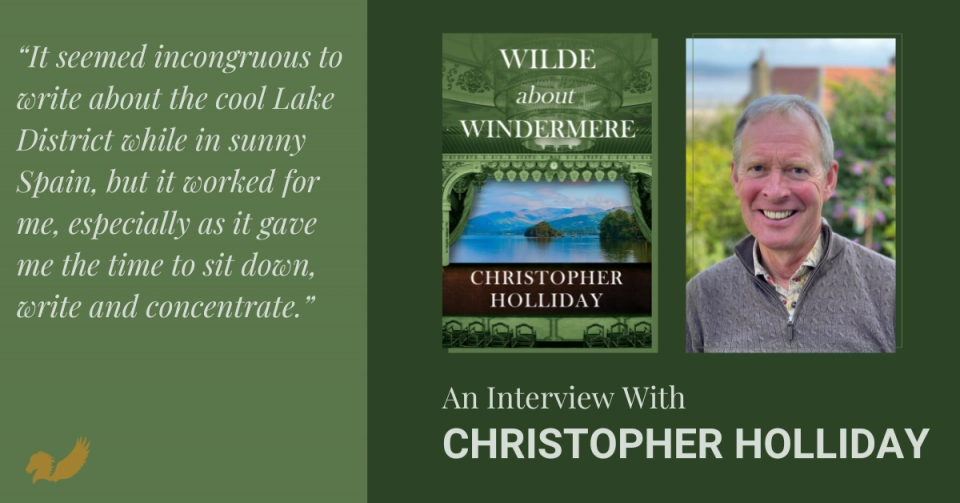
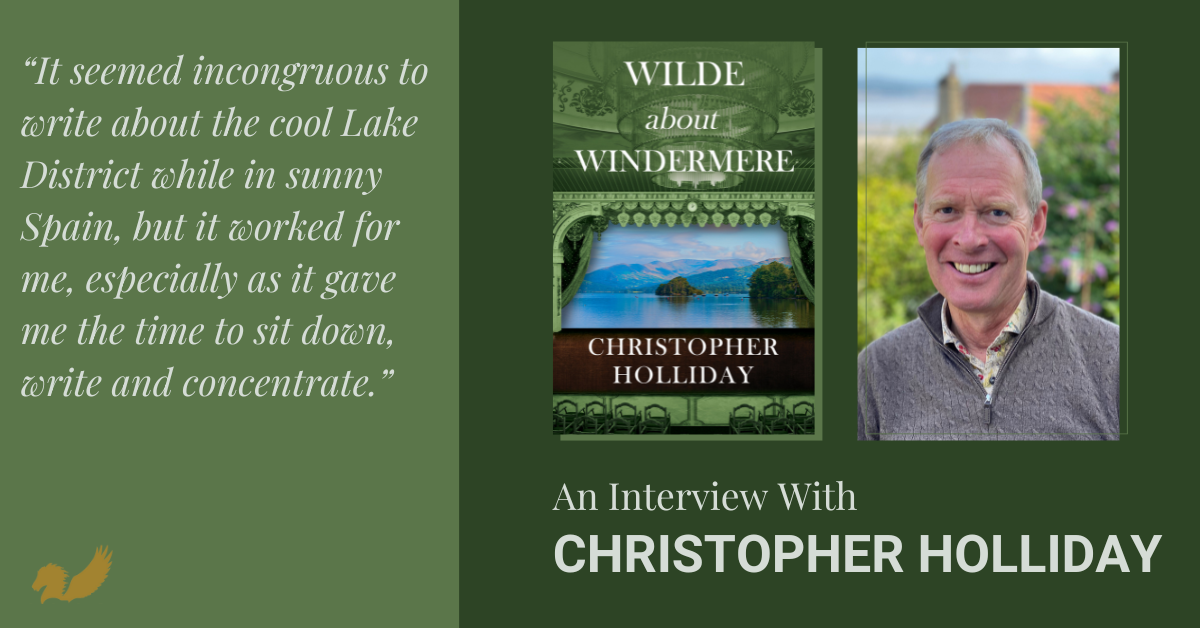
Treading the boards can be the most fulfilling showcase of tremendous talents or an embarrassing array of mishaps and blunders. Today, we peek behind the curtain of Wilde About Windermere, the fictious theatre-troupe tale from Christopher Holliday.
Drawing upon his own experiences in amateur dramatics, Holliday pens a gloriously comic romp, regaling the wars between the Westmorland Amateur Festival Theatre members and the upstart newcomers. The whole world may be a stage but only so many stars can shine at once.
We spoke with Christopher about changing from a factual to a fiction author, how his passion for theatre moulded into a passion for writing and how Oscar Wilde’s great comedy work has influenced his own.
Your previous writing experiences cover the world of exotic plant life as well as the historic houses of the Lake District - but Wilde About Windermere is your first fiction title. How did your approach to writing change between those debut factual works and this fictitious novel?
The non-fiction books had to be accurate, whereas in a novel you can write from your imagination. What I particularly enjoyed was writing the dialogue which progresses the narrative and I found I was good at it, and it really helps to push the story along.
The tale of this book follows an enthusiastic amateur dramatic group, with your love of the dramatic arts blooming from your parents - who themselves were passionate about treading the boards. What lead to you moulding your interest in writing with your interest in theatre?
I gradually weaned myself off amateur dramatics in Cumbria because I found that you had to rehearse in the spring, for only three nights of performances - which seemed an awful lot of work for three nights. I began writing mainly because I was bludgeoned into it by a former teacher from school with whom I had kept in touch. I did indeed write and get paid for hundreds of gardening articles and then two non-fiction works. The premise of the novel occurred to me when I was living in Andalusia and finding that the heat of summer was as bad as the rain in England for keeping one inside. It seemed incongruous to write about the cool Lake District while in sunny Spain, but it worked for me, especially as it gave me the time to sit down, write and concentrate.
The Important of Being Earnest is one of the great stage comedies, written by the genius playwright Oscar Wilde. What about this particular play enthralled you and how has Wilde’s writing influenced your own?
I was fascinated by the play from way back when reading English Literature at university, particularly for its reversal of everything that you have been led to expect and anticipate within the plot. I had discovered that it is much quicker to read essays about a certain work rather than a book and ploughed through various essays and articles about the play which stood me in good stead. Moreover, I needed a play in which my leading lady would “kill” to play an important role. The part of Lady Bracknell is justifiably famous and most of the other parts are very good, so I needed to choose a play which the reader would most likely be familiar with, and the amateur actors would be very keen to play most of those parts because they are witty and studded with the usual amount of Wilde’s epigrams.
In so far as Oscar Wilde’s writing influencing my own, I feel that comes out in my comic dialogue. One or two of my characters seem born to play the role of Lady Bracknell and even act like her in real life. The characters come out with various humorous one liners in my novel, sometimes mannered, which echoes the play. I was also keen to push the story along with dialogue so that there were no longueurs, and the novel rattles along a bit like a comic play that hopefully does not drag!
Setting your work amongst the breathtaking landscape of the Lake District, means setting this story in the area you yourself call home. As a destination for many writers and poets across modern history, why has the Lake District been a draw for you and your creative endeavours?
Like many Lake District writers, I am a romantic, so the backdrop of the Lake District fitted in with that. Most of the characters are more interested in amateur theatricals rather than fell walking however! But the story does depend on a particular afternoon on the edge of Lake Windermere, an event which could only happen on its shores, which then leads to further complications in the story.
Finally, the curtains have opened on your debut performance as a fiction writer. The critics are loving it and the crowds are demanding more! Can we expect a revival performance or perhaps something else entirely?
I have written various drafts for a humorous novel concerning a young man starting out in his first Lake District hotel job, with all the complications that follow.
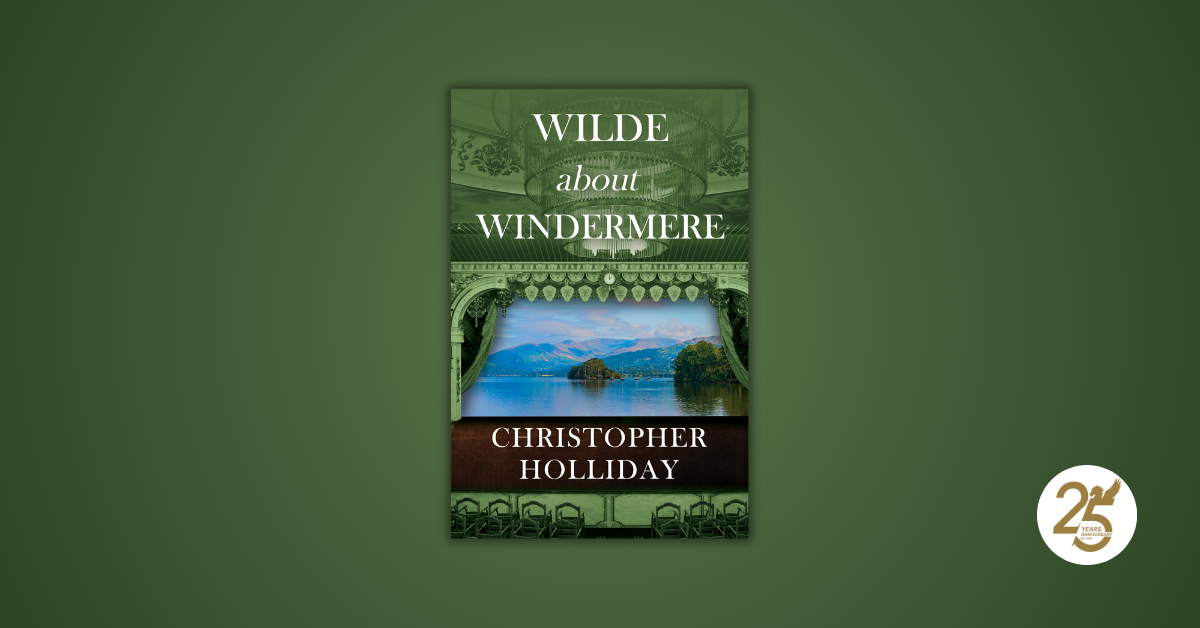
Wilde about Windermere is available now in paperback.

We are honoured to work with as many authors as we do at Pegasus Publishers – each with their own stories to tell. Their worlds are singular, their characters are relatable, and their creativity truly knows no bounds. This is Author Life, a feature on the Pegasus Blog that opens the door to each of our author’s creative process and previous literary experience, offering you – the reader – an opportunity to learn a little about the mind, or minds, behind the novel. Marius Shovlin ...

We are honoured to work with as many authors as we do at Pegasus Publishers – each with their own stories to tell. Their worlds are singular, their characters are relatable, and their creativity truly knows no bounds. This is Author Life, a feature on the Pegasus Blog that opens the door to each of our author’s creative process and previous literary experience, offering you – the reader – an opportunity to learn a little about the mind, or minds, behind the novel. Dylan Lee Henders...

There's something special for an author about seeing your book through someone else's eyes. Every review offers a unique perspective, highlighting the moments, characters, and themes that resonated most with a reader. We love sharing reader feedback, and this review of How Not to Have a One Night Stand by Elizabeth Ellen is one we couldn't wait to spotlight. Reviews not only help other readers discover new books, but they also offer fascinating insights into what captures people's imagina...
12 December, 2024