
Magical Occurrences Were Part Of The Everyday - An Interview With Susan B McCarthy
We spoke with Susan about her love of animals, how her passion for languages informed her writing and what she...
We spoke with Susan about her love of animals, how her passion for languages informed her writing and what she...
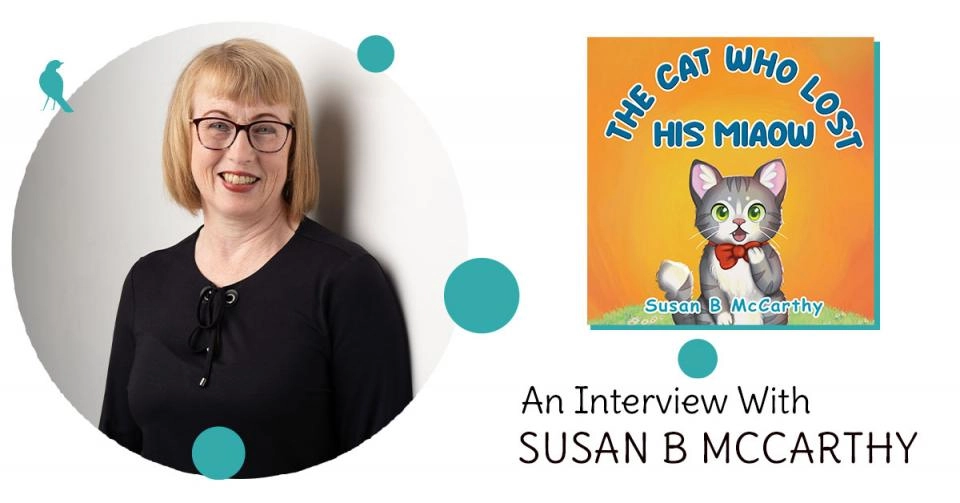
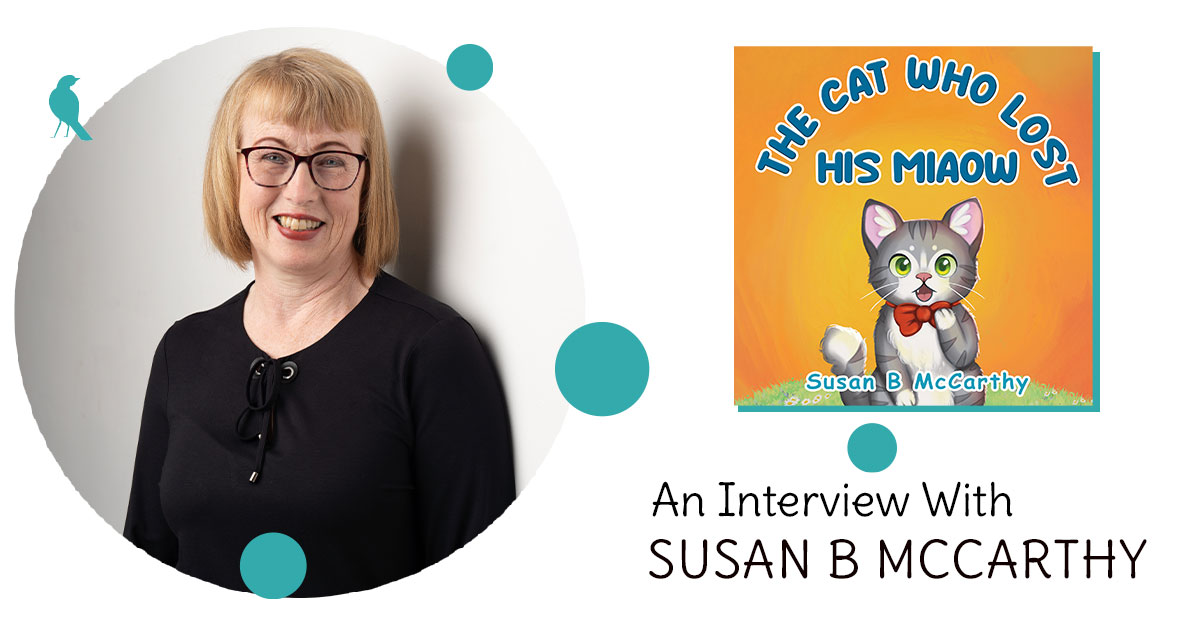
Know the phrase “never judge a book by it’s cover?” At Pegasus Publishers, we come across this saying quite frequently – as one might imagine. But it’s in the story of Susan B McCarthy’s latest children’s tale that these words resound most.
The Cat Who Lost His Miaow takes the one expectant characteristic of our feline friend and leaves them struggling with their place in the world. If a cat can’t miaow, then what can they do? The answer – of course – is many, many things and McCarthy takes readers on a journey to discover just that. Perhaps don’t judge a cat by their miaow…
We spoke with Susan about her love of animals, how her passion for languages informed her writing and what she hopes young readers take from her story.
Max, the titular cat in your book, is a very sweet and adorable character, surrounded by lots of other sweet and adorable animal companions. Have you always had a love for animals and is Max inspired by a pet of your own?
Animals have always played a big part in my life. As a child I had rabbits, a hamster, tortoises, dogs and a budgie – though not all at the same time! Through the years a succession of dogs has been part of my family and, more recently, a cat joined the family circle.
I wouldn’t say that the inspiration for Max comes directly from my own feline, except perhaps the colour, but I have yet to encounter a child who has no fondness for small, cuddly creatures and felt that there would be immediate interest and appeal in a tale where a variety of animals take centre stage.
As a languages graduate, you must have a loving fascination with words and writing. Has The Cat Who Lost His Miaow been a long-term dream or was writing your debut children’s book something unexpected?
Yes indeed, I find words and the use of language fascinating. A Thesarus is invaluable. Limericks were constantly tripping off my tongue as a youngster – and even in more recent years. For as long as I can remember I have had a vivid imagination, visualising incredible places where magical occurrences were part of the everyday and where nothing was beyond the realms of possibility. So instead of years spent saying “I really should write that down”, I finally took the plunge and put pen to paper. A long-term dream, yes I would say so, but unexpected in the sense that its timing wasn’t planned. I had time on my hands and the opportunity simply presented itself.
Whilst a cat losing his miaow is a cute story on the surface, your book targets a much deeper and more important sentiment for young readers. What do you hope kids who read your book take away from it?
First and foremost, I want young readers to enjoy the book and to feel an affiliation with Max and his friends, to sympathise with him in his despair and to cheer over his ultimate joy. I hope that the story will encourage them to use their imaginations and conjure up their own personal pictures of what they think a miaow might look like.
The underlying message of the tale is always to share your problems and stick by your friends through thick and thin. This is what I hope children will take away from the book.
Writing in rhyme creates a very satisfying read but must have been a difficult task at times. How did you manage when writing and how did you overcome any obstacles?
No writing is exempt from obstacles, but the composition of this book was fairly straightforward. When I write, particularly in rhyme, the ideas either flow immediately or don’t come at all. With The Cat Who Lost His Miaow I was lucky because everything fell into place fairly quickly. A lot of the rhyming had already formed in my head before it was assigned to print. The main problem with writing in rhyme is that occasionally there is a word which has no rhyme, or at least one that doesn’t fit the text. In this case I have to rethink the entire verse without compromising the storyline.
You’ve previously teased to us that this will not be the last time readers see Max and his friends. What can you tease about where Max is headed next?
Well I don’t know whether Max will resurface or not. I suppose a lot depends on how he is received. What I can say with some certainty is that I shall continue to write about our animal friends who aspire to human attributes or have human problems or failings. I’d like to convey, behind the words of a hopefully entertaining story, how our worries can be overcome and that in society there is a place for every one of us, regardless of ability or how we look. If I can get this message across through animals, then I will have achieved my goal.
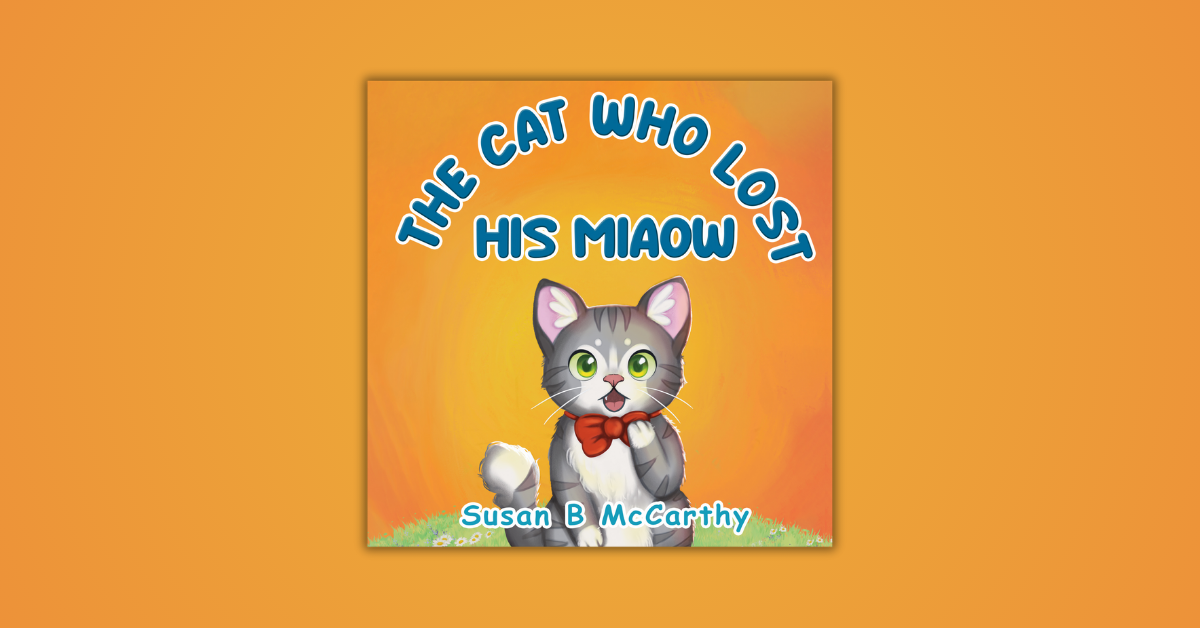
The Cat Who Lost His Miaow is available now in paperback.

We are honoured to work with as many authors as we do at Pegasus Publishers – each with their own stories to tell. Their worlds are singular, their characters are relatable, and their creativity truly knows no bounds. This is Author Life, a feature on the Pegasus Blog that opens the door to each of our author’s creative process and previous literary experience, offering you – the reader – an opportunity to learn a little about the mind, or minds, behind the novel. Marius Shovlin ...

We are honoured to work with as many authors as we do at Pegasus Publishers – each with their own stories to tell. Their worlds are singular, their characters are relatable, and their creativity truly knows no bounds. This is Author Life, a feature on the Pegasus Blog that opens the door to each of our author’s creative process and previous literary experience, offering you – the reader – an opportunity to learn a little about the mind, or minds, behind the novel. Dylan Lee Henders...

There's something special for an author about seeing your book through someone else's eyes. Every review offers a unique perspective, highlighting the moments, characters, and themes that resonated most with a reader. We love sharing reader feedback, and this review of How Not to Have a One Night Stand by Elizabeth Ellen is one we couldn't wait to spotlight. Reviews not only help other readers discover new books, but they also offer fascinating insights into what captures people's imagina...
05 November, 2024