
Life Isn't Uniformly Monochrome: An Interview with Rex W. Last
We spoke with him about his interest in setting, control of genre and the worthwhile reason he has chosen to write this book.
We spoke with him about his interest in setting, control of genre and the worthwhile reason he has chosen to write this book.
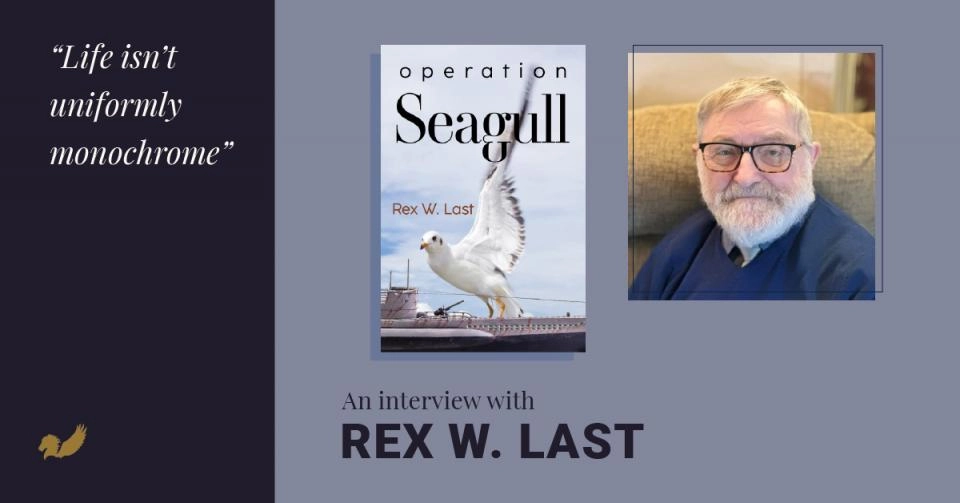
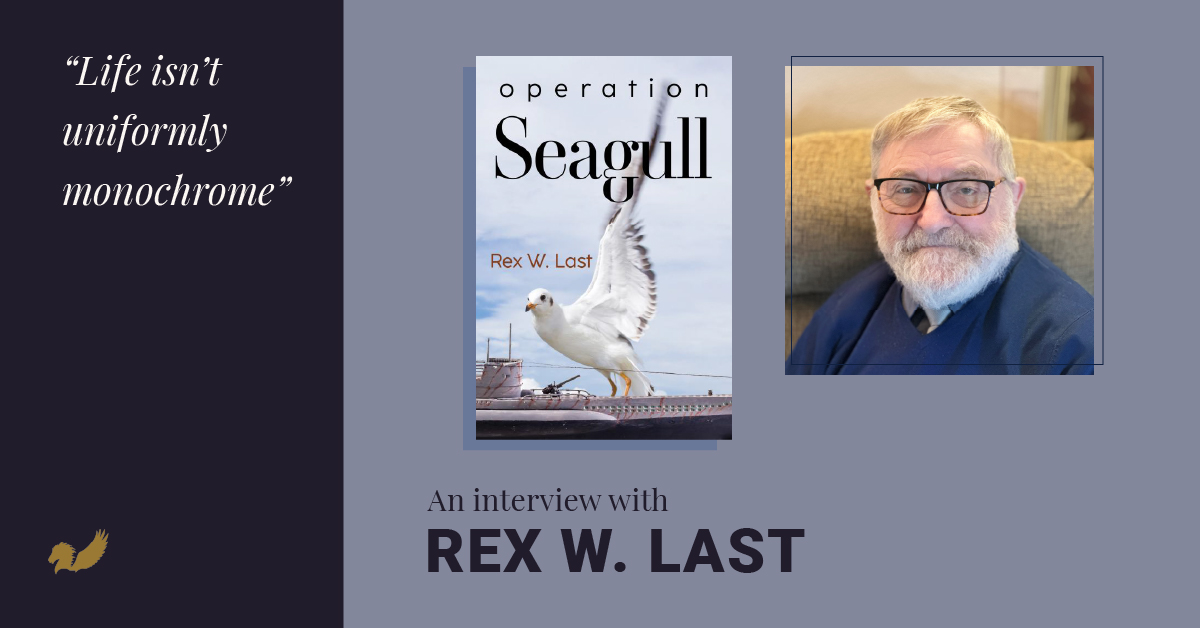
With each passing day, the importance of studying history and learning lessons from the past becomes more of a necessity. To interact with the past so directly, through fiction writing and telling stories with a historical background, is a love of our author, Rex Last.
His latest title is Operation Seagull and like his previous book, tackles the events of World War Two and the oncoming storm of Nazism and fascism. We spoke with him about his interest in setting, control of genre and the worthwhile reason he has chosen to write this book.
------------------------------------------------------------------------------------------------------------------------------------------------------------------------
This is your second book with Pegasus, after last year's Cursing the Darkness. Is this new book a continuation or something different?
The themes of the books are the same, namely, how and to what extent you can challenge a vile regime without yourself suffering painful consequences. I also explore the role of women in WW2 and the key part played by chance and small events in the direction of the war.
Each book is a standalone novel, although some characters and locations may be shared.
At the same time, I want to incorporate all that stuff into a captivating tale with interesting characters and a decent twist at the end.
Operation Seagull is a novel set deep within the Second World War. How did you decide on this as the setting for your work?
By a strange coincidence, my father was a professional army major in Berlin in 1945 in charge of re-establishing telecommunications links when he was contacted by his long-lost cousin Winnie. She and her mother had survived the Nazi period and the war, but were stuck in the Russian Zone, in Leipzig. He managed somehow to get them across to the west. I visited them in Nuremberg when I was twelve and that started my love of the country and its people and trying to fathom out how they fell victim to Nazism. I pursued this throughout my career, ending up as Professor of Modern Languages at the University of Dundee.
The last line of your blurb reads: "A potentially dark tale is told with great ingenuity and more than a touch of humour." How do you balance these conflicting genres when writing?
Life isn’t uniformly monochrome even in the darkest of times, and I wanted to inject humour for two reasons: first, because it is a powerful weapon in putting a point across to the reader, and secondly because much of the philosophy of Nazism is ludicrous in its militaristic bluster and the character (or lack of it) of so many of its adherents. In bringing down a puffed-up Nazi, laughing him to scorn is the best way of underlining the folly of his ways.
I understand that the profits of your work are being donated to a local dementia charity. This is an incredible action to be taking and I was wondering if you would be able to speak on your decision.
When my wife was alive, we both campaigned many years ago for the rights of carers of loved ones with severe and enduring mental illness, she in particular became a leading figure both nationally and on the European scene. She brought about a sea change in medical attitudes. Ironically, she fell victim to mental illness herself, dying a few months back from dementia. I was her informal carer for over a decade.
I am now too old and crusty to go out on the campaign trail on behalf of the disgracefully neglected band of ‘informal carers’ of loved ones with dementia, so I have done the only two things I still can.
I wrote a trio of books on the trials and tribulations of the informal carer and the tsunami of demand for caring for their needs which is coming down the track but which no one seems to care about. The latest book is The informal Dementia Carer—who cares?
The other way in which I can help is to donate money targeted at dementia carers, and that is why I am donating the proceeds of these novels to PKAVS (Perth and Kinross Association of Voluntary Service) and their dementia carers section.
And finally, when can we expect your new book to be released? Is there another one on the way?
As for a successor or successors, your submissions department has a copy of Distant Cousin.
Another book is currently being written, title Summer Snow. The subject here is how to halt two disastrous Nazi research projects—chemical warfare and heavy water production—again with limited resources and much ingenuity.
------------------------------------------------------------------------------------------------------------------------------------------------------------------------
Operation Seagull is available now in paperback.
 (8).png)

We are honoured to work with as many authors as we do at Pegasus Publishers – each with their own stories to tell. Their worlds are singular, their characters are relatable, and their creativity truly knows no bounds. This is Author Life, a feature on the Pegasus Blog that opens the door to each of our author’s creative process and previous literary experience, offering you – the reader – an opportunity to learn a little about the mind, or minds, behind the novel. Marius Shovlin ...

We are honoured to work with as many authors as we do at Pegasus Publishers – each with their own stories to tell. Their worlds are singular, their characters are relatable, and their creativity truly knows no bounds. This is Author Life, a feature on the Pegasus Blog that opens the door to each of our author’s creative process and previous literary experience, offering you – the reader – an opportunity to learn a little about the mind, or minds, behind the novel. Dylan Lee Henders...

There's something special for an author about seeing your book through someone else's eyes. Every review offers a unique perspective, highlighting the moments, characters, and themes that resonated most with a reader. We love sharing reader feedback, and this review of How Not to Have a One Night Stand by Elizabeth Ellen is one we couldn't wait to spotlight. Reviews not only help other readers discover new books, but they also offer fascinating insights into what captures people's imagina...
18 April, 2024