Fortune Favours the Bold: The Importance of Banned Books Week
Join us today as we discuss the importance of the impending Banned Books Week, and celebrate the freedom to present new ideas in literature.
Join us today as we discuss the importance of the impending Banned Books Week, and celebrate the freedom to present new ideas in literature.
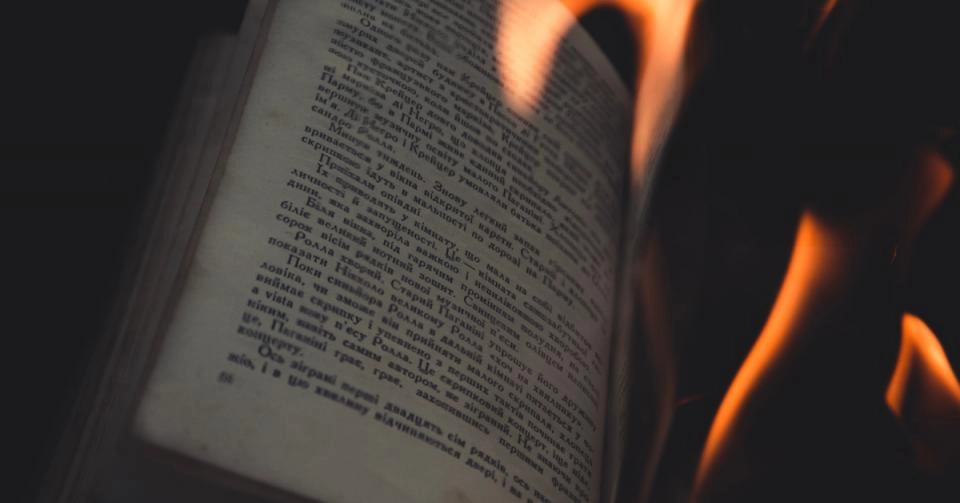
 Words penned by great minds possess the power to change lives, and this has been acknowledged time and time again throughout history. Sometimes, however, the viewpoints or ideas espoused by these words are cast out of libraries and places of education, their authors ostracised and silenced.
In 1982, “Banned Books Week” was established as a reaction to the nationwide banning of books in the United States by library activist Judith King. The campaign was promoted by the American Library Association and Amnesty International. The campaign has only grown in popularity over the years and has reached international shores, challenging libraries, bookstores and schools all over the world to open their minds to fiction, non-fiction and beyond that deals with subject matter that may be divisive or controversial.
To this day, Banned Books Week is still very relevant, and it remains critical to keep the flame alive. As recently as this year, there are still books being challenged for their content.
According to the American Library Association’s Office for Intellectual Freedom, some of the top books being challenged in 2022 were the likes of “Looking for Alaska” by John Green, “All Boys Aren’t Blue” by George M. Johnson, “The Absolutely True Diary of a Part-Time Indian” by Sherman Alexie, and “The Perks of Being a Wallflower” by Stephen Chbosky. Some very recognisable and beloved titles in there indeed, but many are the cause of outcry due to sexually explicit content, LGBTQ+ themes, or uses of profanity.
As a publisher that releases all kinds of books out into the world, we cannot stress enough how much we believe in and champion intellectual freedom in literature. The content of books- even if they are fictional- often contain pieces of true, lived experiences. Authors will often put themselves on the page, and in doing this, they can open readers’ eyes to realities that they had never before considered. To put a muzzle on those that wish to propose new ideas, touch the hearts of the ignorant and grant a voice to the voiceless with their writing is undeniably narrow-minded, and only serves to stifle what could be a more unified march into the future.
If you’re like us and want to help spread the word about Banned Books Week, head over to their website to see how you can participate!
Words penned by great minds possess the power to change lives, and this has been acknowledged time and time again throughout history. Sometimes, however, the viewpoints or ideas espoused by these words are cast out of libraries and places of education, their authors ostracised and silenced.
In 1982, “Banned Books Week” was established as a reaction to the nationwide banning of books in the United States by library activist Judith King. The campaign was promoted by the American Library Association and Amnesty International. The campaign has only grown in popularity over the years and has reached international shores, challenging libraries, bookstores and schools all over the world to open their minds to fiction, non-fiction and beyond that deals with subject matter that may be divisive or controversial.
To this day, Banned Books Week is still very relevant, and it remains critical to keep the flame alive. As recently as this year, there are still books being challenged for their content.
According to the American Library Association’s Office for Intellectual Freedom, some of the top books being challenged in 2022 were the likes of “Looking for Alaska” by John Green, “All Boys Aren’t Blue” by George M. Johnson, “The Absolutely True Diary of a Part-Time Indian” by Sherman Alexie, and “The Perks of Being a Wallflower” by Stephen Chbosky. Some very recognisable and beloved titles in there indeed, but many are the cause of outcry due to sexually explicit content, LGBTQ+ themes, or uses of profanity.
As a publisher that releases all kinds of books out into the world, we cannot stress enough how much we believe in and champion intellectual freedom in literature. The content of books- even if they are fictional- often contain pieces of true, lived experiences. Authors will often put themselves on the page, and in doing this, they can open readers’ eyes to realities that they had never before considered. To put a muzzle on those that wish to propose new ideas, touch the hearts of the ignorant and grant a voice to the voiceless with their writing is undeniably narrow-minded, and only serves to stifle what could be a more unified march into the future.
If you’re like us and want to help spread the word about Banned Books Week, head over to their website to see how you can participate!

From friendly ghosts and mischievous monsters to pumpkins, witches and wonderfully spooky adventures, Halloween stories are a brilliant way to get little ones excited for the spookiest time of the year. Whether you’re looking for a giggle-worthy picture book for toddlers, a cosy bedtime story to share together, or a spine-tingling tale for older readers, there’s a Halloween book to delight every little bookworm. So, grab a cosy blanket, switch on your pumpkin lights and settle in for some sp...

There's something special for an author about seeing your book through someone else's eyes. Every review offers a unique perspective, highlighting the moments, characters, and themes that resonated most with a reader. We love sharing reader feedback, and these reviews of Beneath the Canopy by Lynda Riggers are some we couldn't wait to spotlight. Reviews not only help other readers discover new books, but they also offer fascinating insights into what captures people's imaginations. Read on...

An extract from Anne-Marie Stone’s Young Adult fantasy adventure, where creatures of the forest begin dissappearing and only a Starfox can save them... Chapter 1 A twinge, an involuntary flick of his paw and Pacem was awake. He wriggled. He kicked. He sat up straight and half asleep, stared through the blackness. ‘Typical,’ he sighed, as his hot breath curled in white spirals round his muzzle. Another twitch, another twinge and his frustration mounted. ‘It’s bad enough...
29 September, 2023