We are honoured to work with as many authors as we do at Pegasus Publishers – each with their own stories to tell. Their worlds are singular, their characters are relatable, and their creativity truly knows no bounds.
This is Author Life, a feature on the Pegasus Blog that opens the door to each of our author’s creative process and previous literary experience, offering you – the reader – an opportunity to learn a little about the mind, or minds, behind the novel.
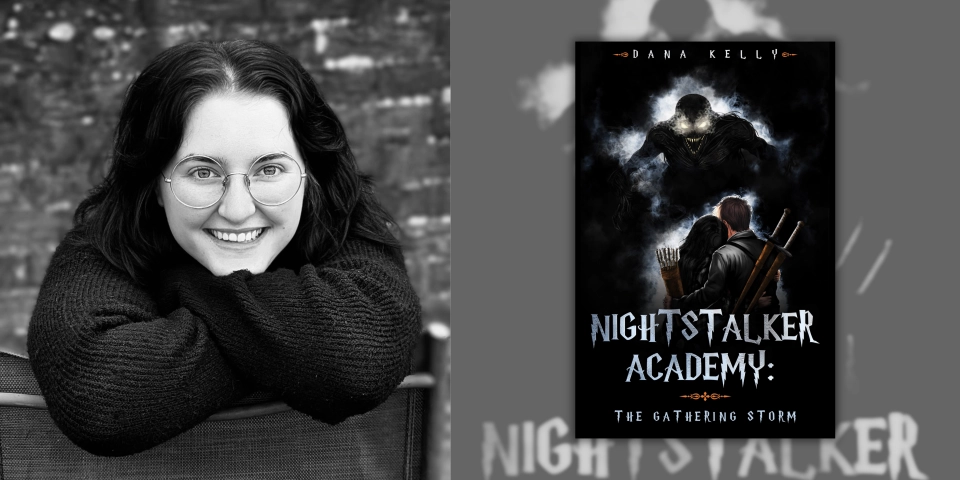
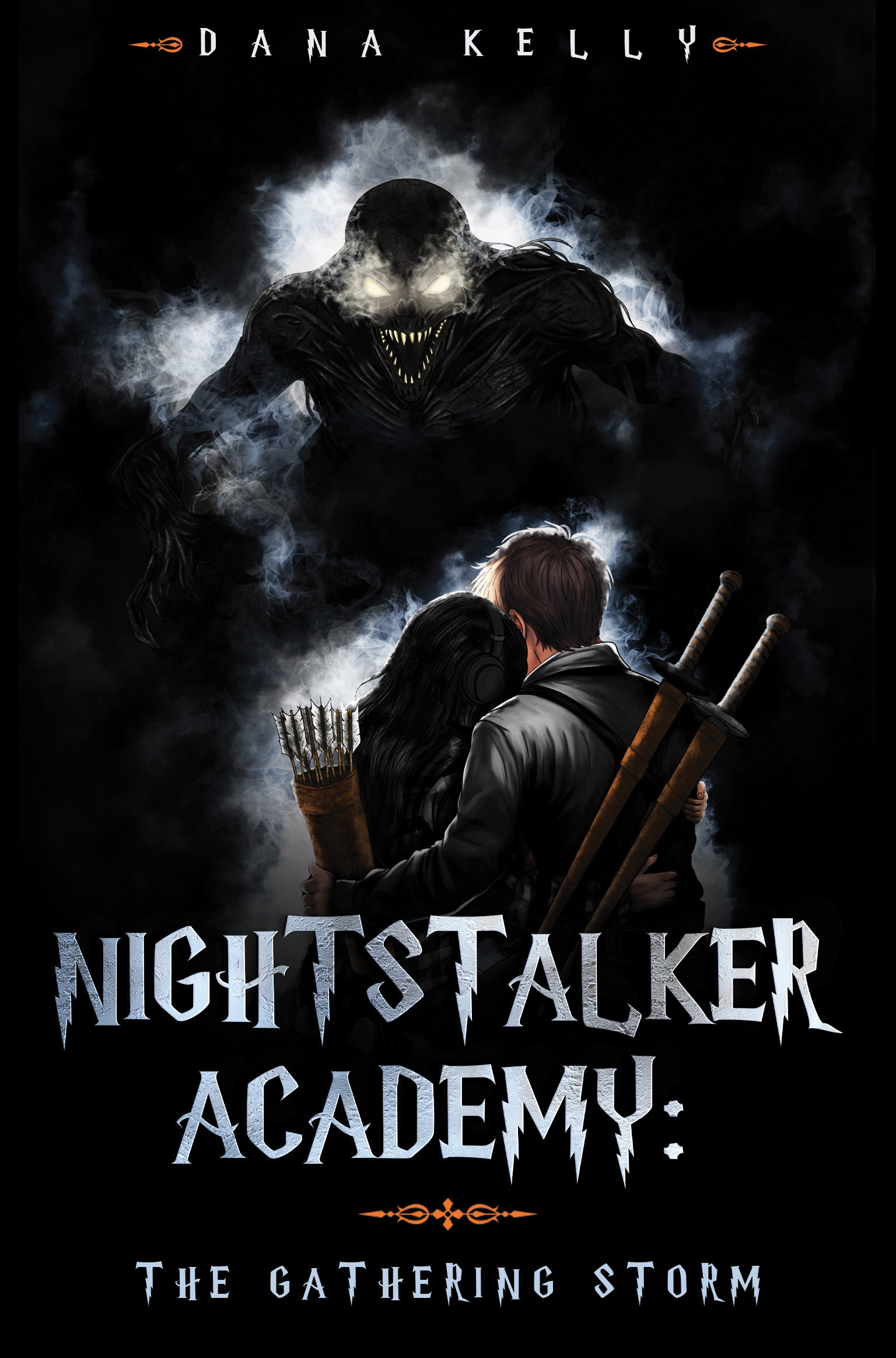
Dana Kelly is the author behind the exciting new young adult romantasy ‘Nightstalker Academy: The Gathering Storm’.
What are the three most important things you have accomplished, aside from publishing a book?
That’s a difficult question but I would have to say my three most important accomplishments are, working with and rehoming ex-racing greyhounds, getting my degree in Classical Studies and currently I have been cast as the role of the villain in this year’s pantomime with my local amateur theatre group.
In your own life, what influences and inspires you to write?
I’ve always had a very overactive imagination, and even as a young kid I would often write little stories, so that has definitely influenced my writing. However, my main inspiration for writing this particular story came from my own experience of being autistic. I haven’t read many books featuring an autistic protagonist, especially one who is portrayed as strong, capable, and badass, and I wanted to create the kind of character I would love to read about, especially as an adult.
I want people to see that, with the right support, understanding, and tools, autistic people can achieve amazing things, be strong and independent, and have meaningful friendships and relationships. I often think that if I had been diagnosed earlier, my teenage self would have loved and admired a character like Aoifa. In many ways, writing her has allowed me to create the character I needed.
What book or author has had the biggest impact on you and why?
The author who has had the biggest impact on me is definitely Rick Riordan. The Percy Jackson series was the first book series I ever read, and it was what really sparked my love of reading. It also introduced me to Greek mythology, which had such a huge impact on me that it ultimately led me to study Classical Studies at university.
What resonated with me most, though, was seeing characters with ADHD and dyslexia represented in a way that felt positive and empowering. It was one of the first times I saw those traits reflected in a book, and that meant a lot to me. Riordan showed me that the things that can make you feel different can also be strengths, and I think that idea has stayed with me and influenced the way I write my own characters.
In many ways, Percy Jackson didn’t just inspire me to become a reader; it helped shape who I am as a writer.
How would you summarise your book?
An autistic female protagonist. A secret academy. A world full of monsters. And the boy who might just help her discover how powerful she really is.
What were your first experiences with writing?
I actually started writing when I was six years old, when I rewrote the tale of The Three Little Pigs as The Three Little Dogs - which probably says a lot about which animal I preferred!
Later, I learned to play guitar, which led me into songwriting, and I focused on that for quite a long time. When I started university, I had a creative writing unit which I ironically failed miserably! However, it reignited my passion for writing stories and reminded me how much I loved creating characters and worlds of my own.
That passion eventually led me to write Nightstalker Academy, my first novel, and I’m very glad that failed creative writing unit didn’t put me off writing for good!
In your opinion, what are the key ingredients for a good story or novel?
For me, the key ingredients are characters you genuinely care about, a story that keeps you wanting to turn the page, and something meaningful at its heart. I’m also a big softy, so I love having some romance in my reads!
I think stories can be a great way to teach people something or challenge the way they think without feeling like a lesson. In Nightstalker Academy, for example, Aoife is autistic, but the story never suggests that she is “too much” or that there are things she can’t do because she’s autistic. Instead, Apollo, her love interest, learns how to understand and work with her. He offers her warmth, guidance and support, while loving her for all of her eccentricities.
For me, that’s what makes a good story: one that entertains you, makes you feel something, and perhaps leaves you seeing the world a little differently.
How long do you spend writing every day?
I don’t actually spend every day writing. Not only do I work at a kennels, but being autistic and having ADHD means my brain doesn’t always work on a predictable schedule. Some days the words just aren’t there, and I’ve learned not to force it. Usually, I wait for inspiration to strike and then make the most of it when it does.
Would you believe me if I said I actually dreamed about Nightstalker Academy? I woke up with the story in my head, wrote it down, and it grew from there. So rather than having a strict number of hours I write every day, I tend to follow where my creativity takes me, sometimes that means writing for hours, and sometimes it means stepping away and letting my brain recharge.
How long did you spend writing this novel
People may hate me for this, but I actually wrote Nightstalker Academy in just two weeks!
As part of my neurodivergence, I can become incredibly hyper-focused on things that capture my interest, and this book completely consumed me. For those two weeks, I was so focused on writing that eating and sleeping properly somehow became secondary to getting the story out of my head and onto the page.
Two weeks later, I had written the entire novel from start to finish. It was one of those moments where the story simply seemed to pour out of me. The editing and refining took considerably longer, of course, but the original first draft really did happen in those two whirlwind weeks!
What was the most challenging part of writing this book, and what did you learn from writing it?
Originally, I think the hardest part was writing Aoife’s character. I wanted to write an autistic character without making her autism into a superpower, because it isn’t one. Autism can be a disability, and it can make certain aspects of life genuinely difficult. I wanted to find a balance where some things are more challenging for Aoife, but that doesn’t mean she can’t do them. With the right support, understanding and tools, she can still achieve the things she wants to achieve.
The biggest thing I learned from writing this book was simply how to write a book! It’s much harder than it looks. Of course, there are going to be plot holes, things I could have done differently, and areas where I can improve, but this is my first novel and I’m incredibly proud that I actually managed to write it from start to finish. I’ve learned so much from the process, and I know that I can only continue to improve as a writer from here.
What did you find most helpful when writing this book?
Honestly, I think the most helpful thing was simply being able to follow my own creative process. I was so hyper-focused on Nightstalker Academy while I was writing it that I didn’t really stop to think about what was helping me, I just became completely absorbed in the story and let it come out.
Looking back, I think giving myself the freedom to write without overthinking or worrying about whether everything was perfect was probably the biggest help. I wasn’t trying to follow a particular writing method or force myself to write a certain number of words each day; I was just following the story wherever it wanted to go.
I think that taught me that there isn’t necessarily one “right” way to write a book, especially when your brain works differently. What worked for me was embracing that rather than fighting it.
What writing advice would you offer to your younger self?
Don’t worry so much about what other people think. Even if you fail - like I did with that creative writing unit at university! - it doesn’t mean you should give up on something you love.
If writing makes you happy, keep writing. You don’t have to be perfect, and you don’t have to do things the way everyone else does them. Just keep learning, keep creating, and keep believing in your own stories. If you genuinely love what you’re doing, nothing can stop you.



06 November, 2026