
Extract: THE WOMAN OF GLASS by Paul Erickson
An extract from the semi-biographical novel by Paul Erickson, this story is based on the life of a strong and...
An extract from the semi-biographical novel by Paul Erickson, this story is based on the life of a strong and...
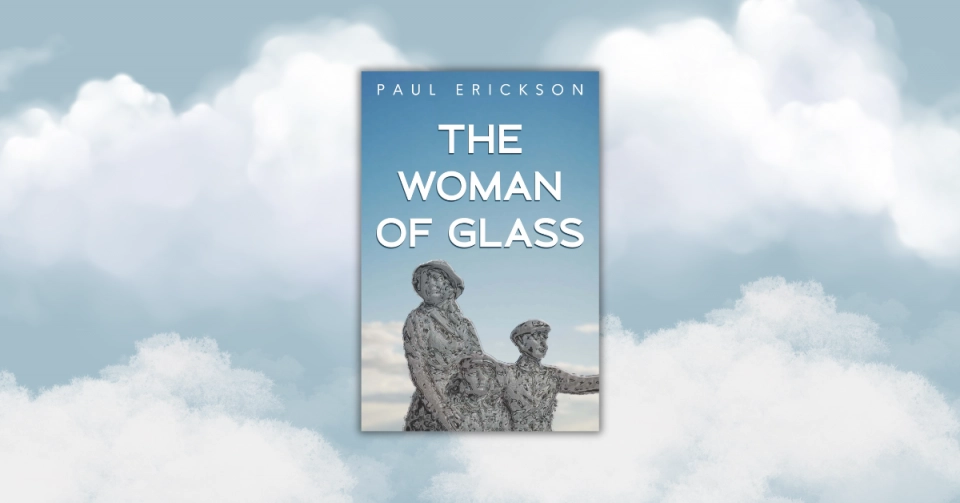
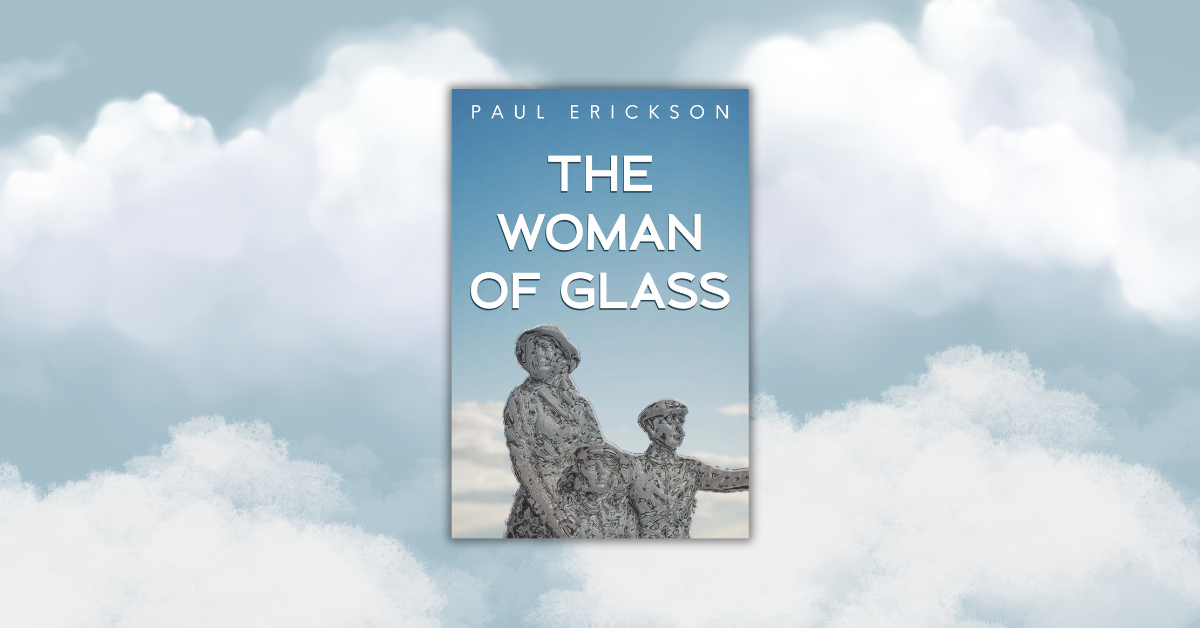
An extract from the semi-biographical novel by Paul Erickson, this story is based on the life of a strong and talented woman, living in the challenging society of the nineteenth century, who must navigate this treacherous landscape for the survival of her family and family business.
Chapter 1
The house stood on the high side of High Street, overlooking the Wick River. Robert Grant had built it in the early 1830s and it was now the third bluestone house he owned. This one consisted of three storeys, a shop front and workspace on the ground floor, living area on the first and the attic with small bay windows, the attic floor space divided into small bedrooms suitable for children or servants. The grey slate roof matched the houses on either side. Robert was pleased when his newlywed daughter, Jean, and son-in-law, John Fraser, had opted to settle in Wick and rent the house, allowing John to set up his own shoe making business.
John was a Highland boy but had done his apprenticeship in Inverness. Jean had met him there while attending a Ceilidh accompanied by her Sinclair cousins, with whom she was staying. Being introduced by mutual friends, Jean and John had danced a strathspey, with its slower and statelier steps, followed by a faster reel then a lively jig. The music had been loud and exhilarating with bagpipes, fiddles and the Clarsach Harp filling the night air. Sitting over supper, their immediate bond could be seen by all. John, in an attempt to impress Jean, had commented on her green, low, square-toed satin slippers saying he would be pleased to make her others in any colour she wanted.
The Fraser’s loved their new home, a quiet fishing community, free from noise and uproar, a community based on close family ties and heritage. The main industry was a small fishing fleet and three rope making factories that employed seventy-five men. Since the late 1740s the major source of income in the area had been the linen spinning. This was a cottage industry that could be found in nearly every home. As a small community, the Frasers’ knew all their neighbours and most of the business people in their self-sufficient community. In such an environment children were free to roam, front doors were never locked and it was safe to walk the streets day and night. However, impending rapid growth would mean prosperity for some but for others, the destruction of their beliefs about what was important in their world. Harsh reality was to clash with the hopes and idealism of residents of this tiny community. Their quaint town was about to become Europe’s “Herringopolis.”
Wick lies at the end of a triangular bay opening onto the North Sea, an estuary of the Wick River in northwest Scotland. The term Wick is of Scandinavian origins and signifies an opening, appropriate in a description of the town’s location. Originally it had been a Norwegian colony on the North Sea, consisting of a few thatched cottages, acting as a small trading post. Over time, it had developed into a drab looking settlement of grey shores and grey houses, the area of shallow poor-quality soil, almost treeless. Where trees did grow they were oddly shaped, stunted and twisted by the fierce salty winds. To the visitor it was a melancholy place that could easily cause a feeling of pensive sadness of spirit. Robert Louis Stevenson, while visiting his uncle who lived in Wick, would call it, ‘One of the meanest of man’s towns, on the baldest of God’s bays.’
However, to John’s daughter Christina and the Fraser family this was home. The only access to the south, at the beginning of the 19th century, was a foot bridge over the Wick River consisting of eleven pillars, built of loose stone, with timber laid over them. It was maintained by the families living to the south to allow access to the church in Wick. This Old Parish Church in High Street, a Church of Scotland, had been built in the 1820s by John Henry of Edinburgh. Christina’s grandfather, Robert Grant, a stone mason, had been employed in its construction. It was the Fraser’s family church, and each Sunday Christina would sit in their hard wooden pew, an enclosed box, housed in this Gothic structure. It was constructed of blue flag stone with soft freestone at the corners, doors, windows and the spire. The church had a single stage tower, slate roof and spacious galleried interior. In the graveyard to the east stood the remains of the Sinclair Aisle, part of the old parish kirk dedicated to St Fergus and built around 1570. St Fergus or Fergustian, had been an Irish bishop who worked in Scotland as a missionary. Near the corner of the old church was the original well, also dedicated to St Fergus.
John Fraser Junior, Christina’s brother, who was five years older, liked to tease and trick his siblings, as many older brothers do. Thus, to Christina, the Sinclair Aisle was a scary place, built of dark, locally quarried stone and John had told her of evil ghosts that rose from a large vault below that contained a sealed lead lined coffin. According to John, ‘It was the body of John Garrow, Master of Caithness that lies within.’
Garrow had been involved in a siege of Castle Dornoch and when the Murray family capitulated, they had handed over three hostages. These innocents were beheaded, their souls now seeking revenge on the Sutherland and Sinclair clans. As Christina’s mother was a Sinclair, John insisted they would be after her. Christina doubted lots of things John told her but knew there really was a vault, her father had also talked about it.
John also gave accounts of the witches, thrown down the well, screaming to be set free. Though she didn’t want to believe him, Christina knew there had been witch trials, their minister had mentioned them in one of his very long sermons. He had talked about the evils of the Witchcraft Act that had remained in law till 1736. As it had been a capital crime in Scotland, those convicted were either strangled or burned at the stake. In reality, Scotland executed five times as many witches, per capita, than anywhere else in Europe. It was estimated that over two thousand five hundred were killed as witches, eighty-four percent women. Even the king, James VI of Scotland, was involved in what the minister referred to as ‘Scotland’s satanic panic.’ During his sermon, the minister had held up a text, Daemonologie, in Forme of a Dialogue, that had been written by the king in 1597. It was a study of demonology and the methods used by demons. The minister used it to denounce what he saw to be the current demons, especially the evils of alcoholic spirits and the declining moral standards within their community.
Even as a child, Christina realised that things around her were changing. There were many more strangers wandering the streets and her parents had become far more protective. She was not allowed out of the family home unless accompanied by her parents or eldest brother John. She understood the need for this as she had seen drunken men fighting in the streets, urinating against walls and heard cries of dismay when purses were snatched. She had noticed women walking the streets, chatting to the fishermen then slyly moving into back alleys or one of the rundown buildings that lined the smaller streets near the harbour.
Christina also knew that something had happened to her sister Barbara who was seven years older than her. She had heard her parents talking and thought it had something to do with some strangers trying to drag Barbara into a wagon, when she kicked, screamed and bit one of them she had escaped. Regardless of the reason, except to go with the family to church, Barbara rarely left the house and seemed content working at her loom. John had warned his daughter that there were reports of young women being kidnapped from remote coastal villages and taken into the Highlands or peat moors and forced to marry pig famers or peat cutters. John called it bride kidnapping or marriage by abduction.
Sometimes these were elopements where the couple run away together and seek the consent of their parents later. Often this was a clan issue, one family refusing to marry into another clan. Actually the concept of a honeymoon is a relic of this practice with the husband going into hiding with his captured wife, to avoid the reprisal from relatives. The month of hiding was with the intension that the woman would become pregnant thus not wanting or able to return to her family. Some men also participated in bride snatching to avoid having to pay the asked bride price or bride-dowry. For the reluctant brides they often spent the first month locked in a shed or barn some tied to a post with rope or chain to prevent them from escaping. At least once a day the groom would insist on sexual intercourse, the intention to produce a child. After the lock down period the bride would be taken to her husband’s family home where she would be placed under the care of his mother or female relative. The switch, a flexible rod was a common corporal punishment for the slightest infringement of the rules or disobedience.
If the girl failed to become pregnant in a perceived suitable time she might be sold on as a factory or brothel worker in one of England’s bigger cities. Here with limited or no pay and no way home the girls became a slave of the new Industrial Revolution.
As most of these weddings were sham, performed by a local with no power or authority, and were not registered, the groom once rid of his bride would start planning another kidnapping, hopefully this time the girl would be more fertile.
The Woman of Glass is available now in paperback.

We are honoured to work with as many authors as we do at Pegasus Publishers – each with their own stories to tell. Their worlds are singular, their characters are relatable, and their creativity truly knows no bounds. This is Author Life, a feature on the Pegasus Blog that opens the door to each of our author’s creative process and previous literary experience, offering you – the reader – an opportunity to learn a little about the mind, or minds, behind the novel. Marius Shovlin ...

We are honoured to work with as many authors as we do at Pegasus Publishers – each with their own stories to tell. Their worlds are singular, their characters are relatable, and their creativity truly knows no bounds. This is Author Life, a feature on the Pegasus Blog that opens the door to each of our author’s creative process and previous literary experience, offering you – the reader – an opportunity to learn a little about the mind, or minds, behind the novel. Dylan Lee Henders...

There's something special for an author about seeing your book through someone else's eyes. Every review offers a unique perspective, highlighting the moments, characters, and themes that resonated most with a reader. We love sharing reader feedback, and this review of How Not to Have a One Night Stand by Elizabeth Ellen is one we couldn't wait to spotlight. Reviews not only help other readers discover new books, but they also offer fascinating insights into what captures people's imagina...
14 January, 2025