Today’s blog post is an interview with the author of the book Comfort Food and Breakin’ Biche, Chris Baball. Comfort Food and Breakin’ Biche is a collection of poetry and short stories set in a small town in Trinidad and Tobago. We got the chance to ask Chris about his book, what inspires him to write and his life as an author.
1. What are three interesting factors about yourself?
Nothing really!
But…
- 1. I come from a small developing country,
- 2. I have lived in four continents, 6 countries, many cities and town[s], and travelled to almost 70 countries (have to check exact number, but 65+).
- 3. I am involved in many activities: table tennis, scrabble, tennis, hiking, gateball, travelling, and of course writing.
2. As a child, what did you want to do when you grew up?
Just to find a steady job, with a good enough salary. No luxury of thought on profession choice. Coming from a family, poorer than what you usually hear or read about, I just wanted to get out of that spiral. My father, got into an accident and could not support the family, and not only did we go regularly to bed without a meal, but there were two sets of clothes. And a shoe which laughed, and I had to stitch together by stapling. My feet bled from the staples, and today, still, I [feel] the corns from the staples, always reminding me of that period.

Chris Baball, the author of COMFORT FOOD and BREAKIN' BICHE
3. When did you first realize you wanted to be a writer?
[I] have written or contributed to several books on debt management (like on Private Sector External Debt, External Debt Guide for Compilers and Users, [and] Public Debt: Guide for Compilers and Users). But, on fiction, only after retirement.
My children, nephews, nieces, and the next generations have no, or not a good, idea of life in the late 50s-60s, now with TV, colour TV, internet, email, not to mention social media…, and the list goes on….
My son, of hearing of some of our adventures, encouraged me to write about them. So, I added writing to my post-retirement bucket list.
I wanted to write casually, spontaneously, and without [any] expectations, just for family and friends.
But I showed my first short story - The Day the Ramajay Died - to a friend, who presented it to the Geneva Writers’ Group (GWG), and it won 1st prize: The GWG also encouraged me to write a book, and this is how I started writing for a wider audience.
[I] joined a sub-group of the GWG, comprising writers from eight other countries, and we usually meet monthly at each other’s homes for dinner, some good wine, and to comment on drafts submitted. Usually, three drafts were submitted each time, and over dinner and some good wine at our homes. Three are supposed to be submitted for each session. This also incentivised me to write more seriously, as I had to produce something almost every quarter.
4. Can you tell me about the book?
It is a collection of short stories and a few poems set in Trinidad and Tobago in the 1960s. It also contains 19 tailored colour images,
Many are based on snippets of experiences, others totally imaginative. Some stories of innocence, most are presented through the eyes of a boy around 6-10 years old.
The book covers several topics not well known now or remembered, I think, such [as] making laglee (a substance used for catching birds), old-time movies and the first time an X-rated (not triple X) movie was shown in a small town and the havoc it created. Some themes are universal, such as predation, confusion over religion, [and] family challenges…. A few poems are also included, some intended to be light, others quite sombre and reflective,
Some stories are written in the Trinidad and Tobago dialect, and the spoken word is usually in the local dialect too. A glossary is also added.
I think some stories will make the reader laugh, while others may even cause some sadness.
5. How long did it take you to write your first book?
I wrote intermittently, sometimes when I knew I had to present something to my writers’ group [and] others when I got the vibes, usually on mornings. It took over 4 years to have this collection.
6. What do you think makes a good story?
I am not sure. Is it the plot or a well-written story with good or excellent grammar and prose? Of course, that’s what make[s] a good story: a compelling plot, well written, with good prose.
Setting, character, etc., are also important but will follow.

Chris Baball’s book, COMFORT FOOD and BREAKIN' BICHE
7. What inspired you to write your book?
Wanting to ensure that some [of] our history is not lost.
Wanting to leave something for my children, grandchildren, relatives, friends…
Then, encouragement from friends, Geneva Writers Group.
To make my family and relatives proud of me once again.
8. What did you learn when writing the book?
It is not a simple process. I intended my writing to be relaxing, spontaneous, [and] easy. But I realised that you have to go through writing, editing, editing again, formatting, searching for an agent, [and] getting a contract.
Then the publicising, contacting family [and] friends encouraging them to buy it and promising that they will enjoy and not regret it. Trying to promote it with associates, newspapers, [and] other media.
Income? Was not the initial factor, but the portion of the author gets was an eye-opener and a reality check.
9. What surprised you the most?
How writers abound. I thought that writers were few and far between, as when I was a child, that an author was a rare breed. But now, there are so many good writers around, even in my small country.
10. What advice would you give to aspiring authors?
Know yourself and understand the amount of work involved. Do your research before deciding to write. Explore first, to get feedback on your skills, plots, and intentions. Consider carefully if this is to be your main profession.
It is not an easy process, and there is no guarantee of success. But, if you do decide, go for it, and try to get into a circle of fellow writers.
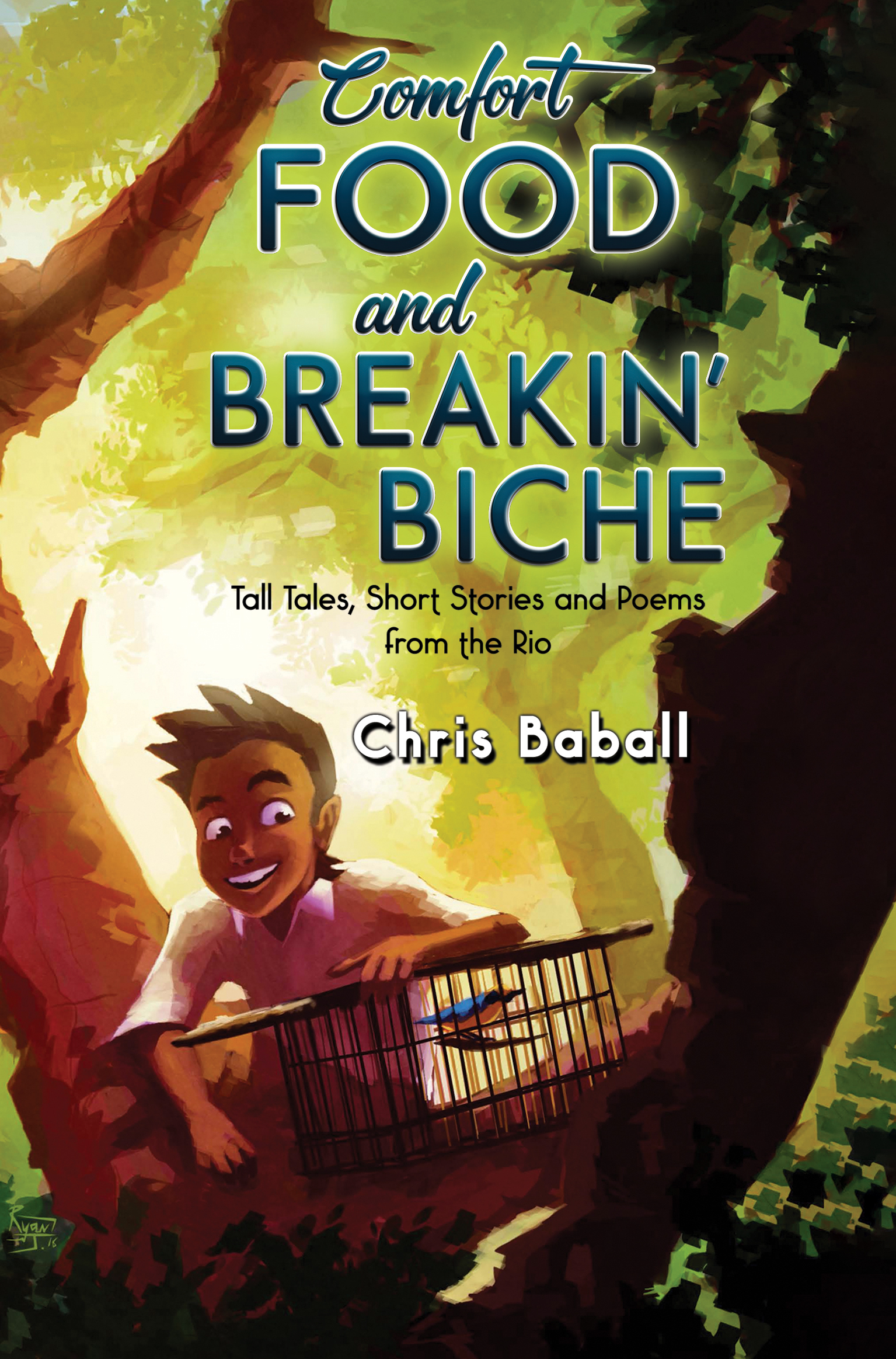 COMFORT FOOD AND BREAKIN’ BICHE
CHRIS BABALL
£11.99
ISBN: 9781800164734
Order today: https://pegasuspublishers.com/books/all/comfort-food-and-breakin_-biche



29 November, 2022