.png)
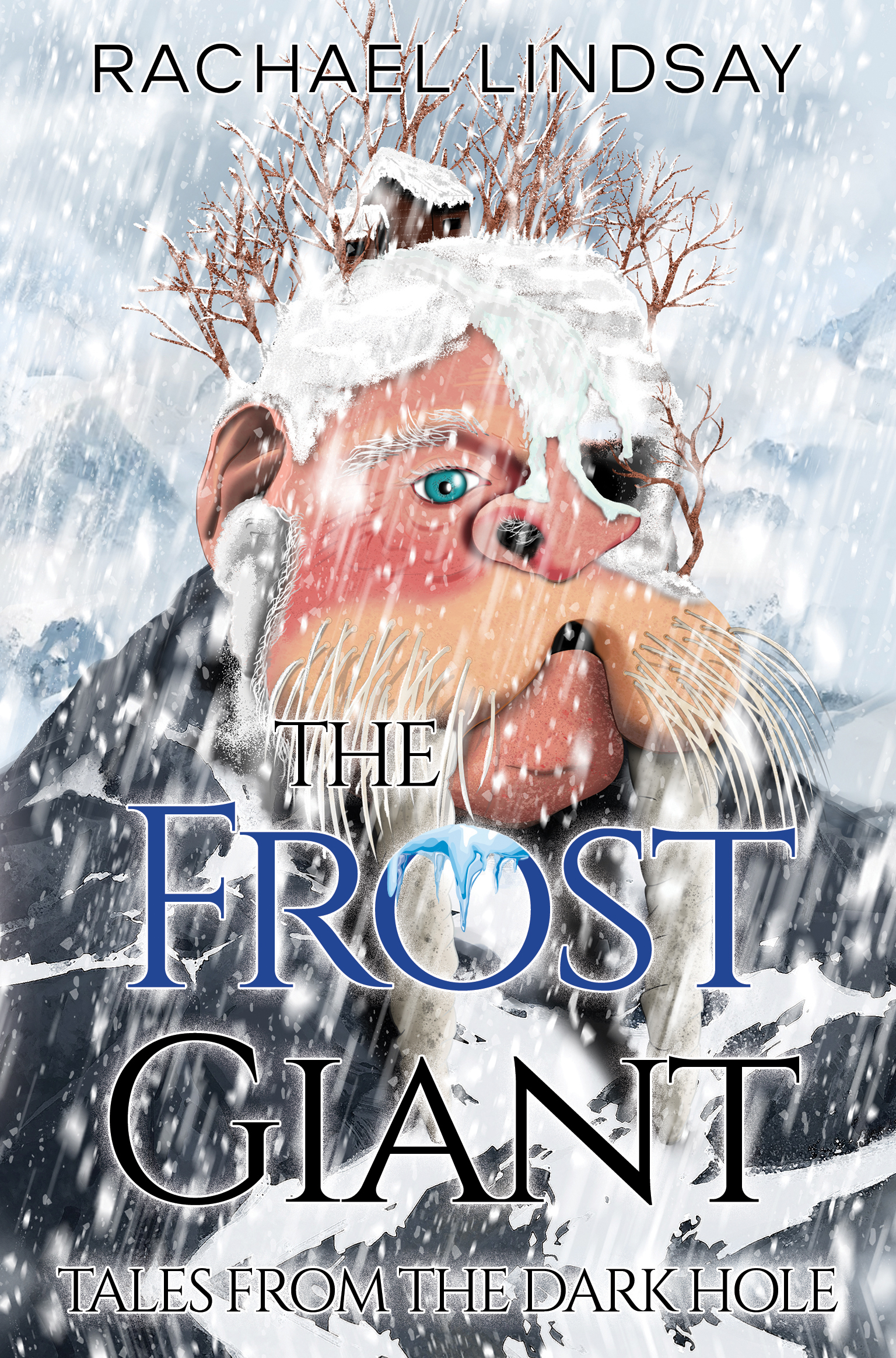
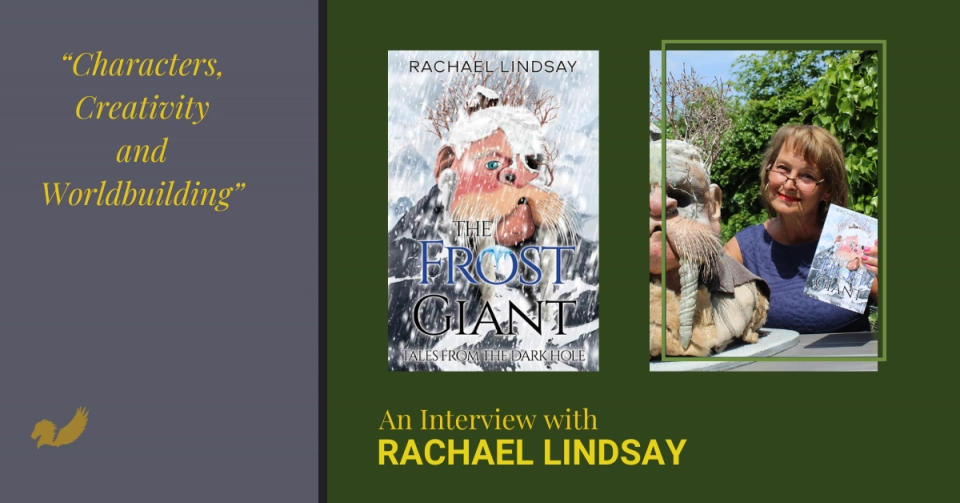
We spoke with Rachael Lindsay, one of our longest standing authors here at Pegasus, having published eight books with us (including her new book “Tales From The Dark Hole- The Frost Giant”) and having published her very first book with us all the way back in 2007! We spoke about motivation for writing, worldbuilding and educating the next generation!
1). You are one of our longest standing authors, having released seven books prior to your latest one “Tales from the Dark Hole- The Frost Giant”. What motivates you to continue to write?
RL: I think there are many reasons for me wanting to write. Undoubtedly, it has a lot to do with escapism; I love to lose myself in the world of my imagination. There is no better feeling than being inside my head when writing, watching my characters’ experiences in the close focus of their settings. My stories are like films to me. I write what I see and I am fully aware of all my senses. I can hear birdsong in the forest dawn or the footfall of a lurking baddie; I can smell the fragrance of flower essence as well as the odour of a sulphurous pool; I can feel the damp of mossy swamp trees and the ripples of water over my feet when nearing a certain sea-cave. I can taste spruce tea.
I write because I see ideas everywhere I go – and I would hate to waste them.
I write for the smiles on children’s faces.
2). Your books are all part of the same universe, with a rich lore of characters and interesting creatures. Which characters(s) that you have created do you feel the proudest of, and why?
RL: This has to be Hobnail. She is a difficult character with a complicated background, but this has made her resilient, brave and not one to be challenged. I am so proud that, despite her bent back, cronky knees and strange, six-fingered hands, she remains determined to live her life the way she wants to: independent and strong; isolated and untidy in her tumbledown cottage. She whizzes, carefree, through puddles on her rusty bicycle and she is vain enough to ‘plum colourate’ her hair with the juice of black beetles. I love her no-nonsense approach, her sharp wit and her word play. And she has such love for her Dear Ones, Warty Toad and Snidey Slug, that she touches my heart.
3). As with many authors who have spent time creating detailed worlds and universes in which to set their books, we imagine it’s very easy to become enveloped in those worlds! How connected do you feel to the world you have created with your books?
RL: In all honesty, I feel privileged to know that only I can truly see the worlds I have created. I can give others a flavour of them through my writing, but only I can see each tiny detail and colour. If I tell you that when I’m not writing, I actually miss my characters and where they live, I think my connection to my writing is clear. They are my imaginary friends. I am ridiculously fond of them all. When I’m not writing, I leave them to carry on with their lives where I left them, happy in the knowledge that I can re-join them at any time.
4). You have mentioned that you wanted to write stories from a very young age. Do you remember some of the first stories you ever wrote?
RL: I filled whole exercise books up with a single story! A fond memory is of a unicorn who became “Menace of the Zoo!” (I was very young!) and I loved writing adventure stories, always with heroes and villains. There were always trap doors involved, with daring escapes and heart-thumping moments. Often, I was asked to read my stories in assembly, which I was loathe to do – but my audience always seemed appreciative! I wrote poetry as well, much influenced by Lewis Carroll, Edward Lear and Spike Milligan. I loved the nonsense words used and I think this has triggered my unusual use of language at times, as with the “Troll Talk” and Hobnail’s conversations.
5). As someone with a background in education, how critical would you say reading is in the life of a young person?
RL: Essential.
Children should have access to, and read, all genres of text. They should read the works of different authors, fiction and non-fiction. They should be encouraged to form opinions and be able to discuss them, and understand that not all books will fill them with joy, but that’s fine. Move on. Choose another and enjoy that one.
They should visit libraries and bookshops, feel the books in their hands and physically turn the pages. They should share books with family and friends. They should read in bed by the light of a torch, or up a tree, or in a den, or in the car. Or just in their special, quiet place.
I feel strongly also, that the creative brain is stimulated in childhood through the reading of quality texts. That creativity has produced not only writers, but painters, musicians, designers, scientists, gardeners – the list goes on. Creativity produces people who can problem-solve. Imagination produces people who can empathise and care.
You can find Rachael’s new book here, and you can find the rest of her catalogue on our website!



25 May, 2023