We are honoured to work with as many authors as we do at Pegasus Publishers – each with their own stories to tell. Their worlds are singular, their characters are relatable, and their creativity truly knows no bounds.
This is Author Life, a feature on the Pegasus Blog that opens the door to each of our author’s creative process and previous literary experience, offering you – the reader – an opportunity to learn a little about the mind, or minds, behind the novel.
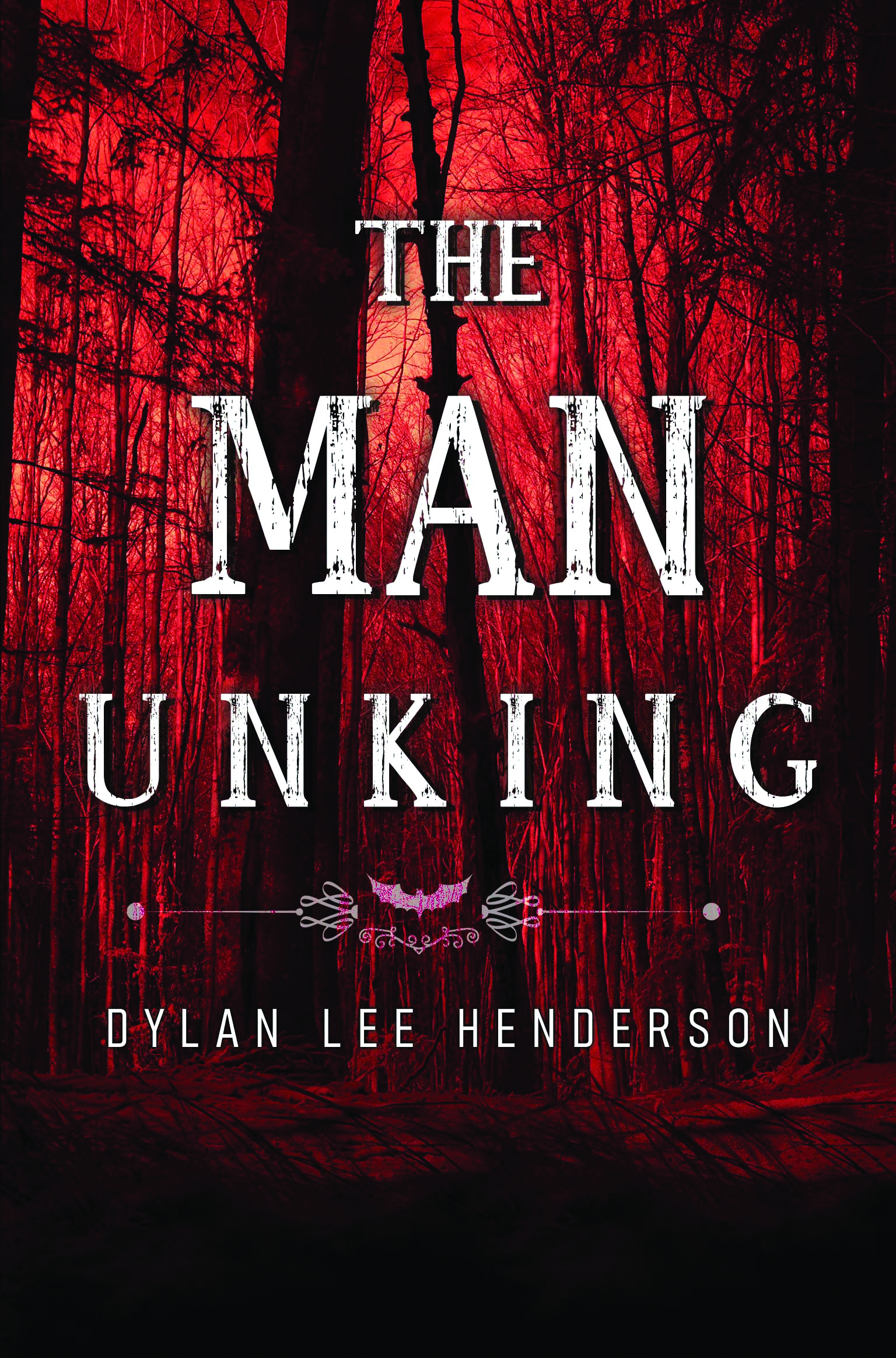
Dylan Lee Henderson is the author behind the spine-tingling horror that will have you checking over your shoulder ‘The Man Unking’.
What are the three most important things you have accomplished, aside from publishing a book?
I've devoted my life to activities that most people wouldn't consider particularly important: studying literature, learning about history, writing short stories and essays. I've lived a very quiet life.
In your own life, what influences and inspires you to write?
Places, as opposed to people or plots, inspire me to write. Brick factories, vacant houses, wooded hills, weedy cemeteries, lonely farmhouses, these are the sorts of sights that make me want to write.
What book or author has had the biggest impact on you and why?
I've spent much of my adult life studying H. P. Lovecraft (1890-1937). His writing is wonderfully distinctive. No one else writes the way that he does—even though an enormous number of imitators have tried to do so. You see, his writing cannot be separated from his personality, from who he is. In that sense, he lives on in his writing. I believe that my true self, if there is such a thing, can be found only in my fiction. When I am writing, I am most myself.
How would you summarise your book?
Imagine that we have terraformed part of Mars. Half of the planet is covered in oaks, elms, small farms. The other half is a hellish landscape, a red desert dotted with the ruins of an alien civilization.
What were your first experiences with writing?
My first short stories were about myself and my life. In time, I was able to write about people like me, but in different circumstances. Eventually, and this took a long time, I could write about different sorts of people in different sorts of environments. I think that's the cocoon from which writers have to escape. I've said that I'm most myself when writing, and yet I also believe that writing, if you stick with it, teaches you how to get outside yourself.
In your opinion, what are the key ingredients for a good story or novel?
There are a great many key ingredients: a good story or novel is a complicated dish. I, personally, don't wish to encounter modern life, the modern world, in a story. I can, very easily, encounter that world by stepping outside my front door. Show me something new, something I haven't seen before.
How long do you spend writing every day?
As an English professor, I write almost every day, but most of my time is spent on essays, academic articles, and materials for my classes. If I'm working on a short story, and it's going well, I might write nonstop for eight or ten hours. I like to see projects completed, so I often push myself to finish them.
How long did you spend writing this novel?
I write slowly and carefully, often spending an inordinate amount of time thinking about the rhythm of sentences, the way that they sound. And yet, most of the time spent "writing" a novel doesn't involve any actual writing. I thought about this novel for about three years, I think, before I ever wrote a word.
What was the most challenging part of writing this book, and what did you learn from writing it?
The hardest part is psychological. You have doubts, which keep hounding you. They won't let you rest. I've written hundreds of short stories, but I've also given up on more than I've completed. And a novel, of course, is even harder in that sense than a short story. It's so tempting to give up and chuck the entire manuscript in the trash. You have to talk yourself out of quitting every day.
What did you find most helpful when writing this book?
I didn't tell anyone what I was writing. When you write, you're motivated by an urge to show people something, something that means something to you. If you tell them about what you're writing, your motivation dissipates. You have no reason left to write.
What writing advice would you offer to your younger self?
Don't be proud. I wanted, at the age of fourteen or so, to write a work that would be as good as anything Hemingway or Faulkner or Nabokov ever wrote. Of course, I couldn't do it, and I knew that I couldn't do it, which discouraged me from doing anything. Start with the basics. Don't try to create an experimental masterpiece. Instead, try to write something that people will enjoy. Take a short story or a chapter that you admire and rewrite it in your own words. Add a character. Modify a conversation. Change the setting. Don't worry about being great. Focus on improving, on learning as much as you can about the craft of writing.




11 September, 2026