Happy Publication Day everyone!
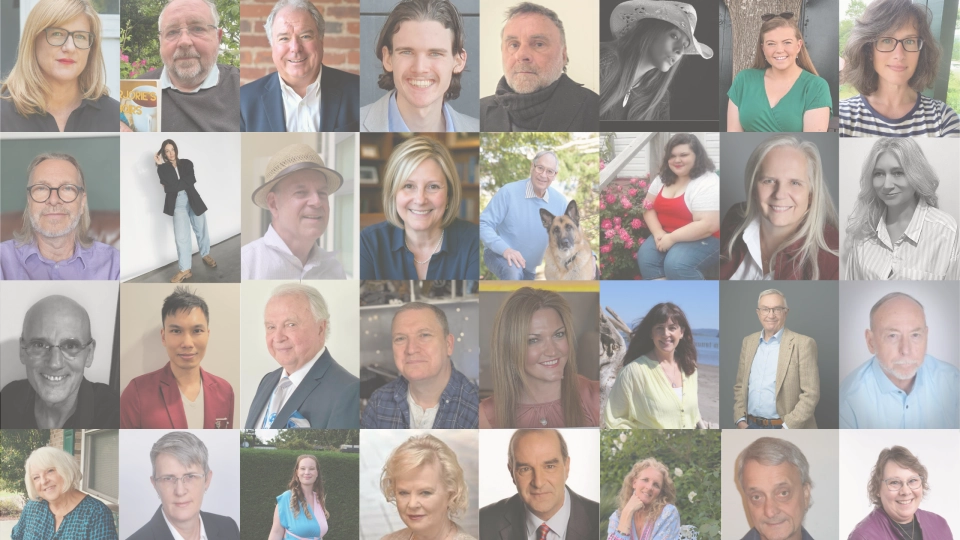
Our fifth Publication Day of 2026 brings a whole new collection of exciting stories, from a wonderful collective of talented authors!
To introduce them, we are continuing a fun feature for the year – Ask Our Authors – where we send all our newly published writers the same simple question to see how different each answer is…
For our April authors, we asked them: Where do you usually find inspiration for new ideas?
Here are their answers…
I truly believe inspiration is all around us, you just have to start looking. From the emotions our loved ones inflict on us, to the words of a song, the taste of a meal or even the dream you may have had in your deepest slumber.
Bella Harper, author of Love Olive.
My inspiration often comes from memory. At the moment, I'm drafting a series of “Recollections" based on what I can remember of my childhood and early youth. Sometimes I draw on memories of conversations with friends or former students. When I taught a John Donne seminar nine years ago, three members of the group were talking to me during the break about the relationship between Donne and Ann More, the woman he married and to whom he addressed some of his finest poems. One of them asked me whether there was a novel telling the story of this relationship. All three of them agreed that they would be eager to read such a book. The memory of this conversation, sometime later, prompted me to begin the work that led to the creation of "Loving John Donne: A Novel."
If memory inspires me to begin, the spirit of competition keeps me going. My son David Huebert celebrated the publication of his first novel, "Oil People" (2024), not so long ago. Call it envy if you like: I'm sure that his achievement provoked my emulation. And there's another sense in which writing historical fiction is a competitive activity. You begin with a story that has already been told, so to speak. But you say to yourself: there's something here that's not being told, and that you'll never find in the historical archives. This something is the truth that only a writer of fiction will be able to supply.
Just the other night I dreamt that I had an agreeable conversation with Voltaire. Perhaps the memory of this encounter will inspire me to write at some yet unknown time in the future.
Ronald Huebert, author of Loving John Donne.
A draw inspiration from the world around me, my life as it happens, the people I come across, and just my daily interactions. I think that many people have a great story to tell but not everybody can put pen to paper and make art, so the ability to do that is truly a gift!
B.C. Moore, author of Dear Victoria, Love Brigitte.
"Ah, so you have been drawn to my tale. Has my yarn whispered to your soul? Come. Unfetter your spirit. Come laugh. Come cry. Come live with my family and me in our enchanted house. It, too, cries and laughs. It sweats and shakes with anxiety. It serves tea and sometimes cleans itself. All that it does, it does for the love of us – its family of witches. Do not misunderstand; we are loving witches, practicing the arts of all that is good. We are here to serve the living and those who’ve passed over. We are here to make this planet of sorrows a better place. Now God and Goddess have chosen you. Realize your secret self through my life’s journey and become unencumbered by the difficulties of this world. I am glad you have been called.”
Blessed be, Melody Butterstone, Witch of Love and Light
For me, inspiration isn’t something I wait around for—it is woven right into the magic of everyday life. Sometimes a new story idea whispers to me through the rustle of the wind, or even from my own house when it is boiling a fresh pot of tea. My biggest secret to getting the dialogue right is listening to how real people—and real spirits—actually talk. I read my lines out loud to make sure they sound natural, and I never use a giant, stuffy thesaurus word when a simple, loving one works best. The real magic happens when you let go of control. There are days when I start writing and my characters—or the house itself—completely take the wheel, sending the story in a direction I never saw coming! If you want to revolutionize the way you work, turn off your inner critic during the first draft. Give yourself permission to write messily just to get the magic onto the page. When you get stuck, practice the "two-sentence rule"—tell yourself you only have to write two sentences today to break the spell of writer's block. Most of all, protect your quiet time. Your spirit needs room to daydream, because that is exactly where the God and Goddess leave their best ideas for you.
Cheryl E. Martin, author of The Good Witch of New Jersey.
I generally find inspiration for new ideas when I am enjoying some quiet time alone and create a whole new world in my head. A concept is then developed, the ideas come and the words follow - the 'scenario' is potentially never ending.
Christopher Edward, author of Princess Grace of England.
Inspiration for my ideas comes from a variety of places, each offering its own unique spark (see what I did there?). Often, it begins with a simple “What if?” moment. For example, the concept for Spark originated during the Covid lockdown, when I experienced a power cut. This led me to wonder, “What if the electricity never came back?” From that single question, an entire lore emerged. Everyday occurrences also provide fertile ground for inspiration. On one occasion, a word I had not heard in years was mentioned by three different people. Prompted by this coincidence, I took out my phone, opened the notes app, and wrote the word down, intending to transform it into a horror story. Dreams are another rich source of ideas for me. As a vivid dreamer—in every sense of the word—I frequently draw upon the imagery and emotions experienced during sleep to inspire new stories and concepts.
Ken Worsley, author of Spark.
I am an avid consumer of current ideas, events and happenings throughout the world. Be it human trafficking, AI, wars going on in the world, crimes committed, or good deeds that people are doing. Everyday I read the Wall Street Journal and sift out all the politics and try to get useful information. One can't believe the wealth of ideas that are happening all around us. You will find this reflected in all of my books.
Thomas C. Hosey DPM, author of Dragon Fire.

My inspiration comes from several places in my life. My joy for telling stories, the nature of humans, and from nature itself. Growing up I discovered there’s a story to tell in every little thing that goes on in life, and I always wished to be the one to tell them! I have spent many years working on this book, which held many challenges in itself. I’d go through writers block, or get frustrated with where things were going, but I still forced myself to write every day regardless. Creating new worlds for people to enjoy is my passion, and even though it’s a struggle some days I wouldn’t change it for the world. We need stories and adventures and escapes into worlds unknown, and that is my most major inspiration right there. I always loved reading, and I hope that my stories breathe life into anyone who needs that escape, or needs the lessons.
Rebecca Scarn, author of Bite Me.
I find inspiration in ordinary moments as much as dramatic ones. Sometimes it’s a news article that stays with me, sometimes a dream, or simply a situation that makes me wonder how someone would cope emotionally. With my latest book, I became fascinated by the impact one shocking event could have on an entire family and how quickly life can change.
M I Stevenson, author of Did He Do It?
I find inspiration for new ideas in the books that I read in my free time. I will sometimes want to read a very specific type of story but can't find exactly what I am looking for and therefor figure out that this is a gap. If there isn't a book about XYZ, then it's up to me to write one for everyone else!
Elle Kay, author of The Princess of Florida, and The Silent Sailor’s Revenge.
Luckily the future is all around us now! I also ran a 'what does the world look like in 2080' workshop in my local independent bookshop which was very inspiring.
AJ Stuart, author of Hunted.
I draw inspiration from conversations, listening closely to the stories people tell and the emotions beneath them. New ideas emerge when I allow myself to see the world through different lenses. When crafting characters, what helps me most is defining their raison d'être, imagining how they move through their world: the words they choose, the actions they take, and the motivations that quietly shape them.
Francis Tint, author of The Glimmer.
I usually find inspiration for new ideas in always the most unexpected ways. I could be watching something or hard at work and suddenly a wave of ideas pop into my head. But I also get inspiration for new ideas from everyday life and events from my past
A tip I would give others is to write a sentence or two of the scenes you’re writing, that only describes the characters and any important dialogue or events. You then going back through it and add more detail. By doing that it made it much easier to understand what would happen and where the scene would end.
Samuel Leddin, author of The Shadows in the Night.

Ideas for stories can pop into my head at any time. It's totally random. It may be a phrase I hear on TV. Or a sleepy moment when a creative vision drifts in. Or when the right combination of words coalesce, just like a melody. A tale, for me, often springs from a catchy lead that entered my head. Story endings come harder for me. In general, succeeding at writing is all about persistence. You have to be able to spark yourself enough to complete your dream.
Robert Kostanczuk, author of A Nocturnal Crawl.
I carry my cellphone, or a pen and small pad of paper, with me wherever I go, as often an idea enters my consciousness at an unexpected moment. Creative ideas may come from different sources, depending upon the type of work being composed. When composing a work of historical, or social, fiction, a news article may trigger an idea which in turn may require research on one's part, in turn triggering additional ideas, and therein lies one of the great joys of writing - continuous education. When writing fiction, I find myself in the make believe world I am creating, as I cannot create without immersing myself that fictional world.
When creating a new work, there is no substitute for time. On occasion, when I attempt to write, I find that I am unable. One must be in the proper frame of mind to create. I remember an occasion, years ago when working as an engineer, my manager giving me two weeks to create five new ideas to patent and I recall attempting, in vain, to explain to him that is not how creativity works. Wonderful ideas tend to enter one's mind at the most unexpected moment, perhaps when one is intensely immersed in a totally unrelated endeavour. Therefore, if one is unable to write at a given moment, my suggestion is to give yourself a little time. Do something unrelated because, although you may be unaware, your unconscious mind is hard at work and will alert you when you least expect it.
M S Edwards, author of The Severed Hand.
My inspiration comes from any place I find a story still untold. The things we don't know which are hinted at, the background and context that enrich what's seen and known, are where my imagination finds the most fertile ground. I often begin with a real person's story, whether current or historical, and move on to developing a narrative around a side character in their life, a family member, servant, neighbour, or teacher. I like to go deep and look close-up, into the shadows and under the stones, to find something new to write about. Sometimes this brings me a cast of characters and a complete plot, but sometimes instead it means playing with a new way of looking at an already familiar face. Retelling a fairy tale so that heroes are now villains or linking contemporary thought into ancient traditions to create a new mythology. I love mixing things like myth, mysticism, and science because I am often surprised by where a new combination of these traditionally separate schools of thought can lead, and what characters I will meet along the way. I am also inspired to try new styles and genres when I read others' work, particularly experimental forms and formats. Poetry is essential to my craft, because poets play with ever new and changing ways to paint meaning into language, and their linguistic gymnastics can leave me breathless, or weeping, or vibrating with joy, and all I want to do is create more of the same.
Elisabeth Wathen, author of Glorious Debris
New ideas? How "I want to help inspire the next generation of readers and writers?”
I have behind me a decade of university studies in philosophy and Law, and I did not find any new ideas since Socrates. Depends how one understands the old ideas or presenting them, is called talent. In my peculiar case, I had too many years of my life a prohibition to write due to the Communist terror. I became free 51 years ago, but I had to work to build my life as not to be poor again because for me poverty is a form of obscenity. Now I am 91, stepping into my 92 years of age and I have many opportunities to release what I thought and kept in my mind many years ago. It is a kaleidoscope of personal knowledges and tragedies mixed with fictional events. Maybe it is just the result of a dream. Isn’t it our life just a dream?
This is very interesting and complex question, and it can be clarified if the writer wants to transmit or emulate ideas. Some just want to write what our permanent contemporaneous friend Hamlet wrote *Act II scene 2): “words, words, words.” One famous French writer has been asked: Maestro why don’t you write any prose? And he allegedly replied: Gee, I cannot see myself writing and Madam la contess opened the door. Our life is like that children’s toy called kaleidoscope, many fragments of different colours and events, not having too much sense or logics. For this reason, a real prose comes after the age of forty because before is the work of accumulations and after that comes the creation. Writing is also the result of assimilation of a culture or of many cultures. In my case I am the result of culture located around Mediterranean Sea which Romans called mare nostrum - our sea.
Dean Phillip, author of Dancing with Thalassa.
I find inspiration in all sorts of places, but often it starts with a small “what if?” moment. For The Last Dance of the Bushranger, I was drawn to the idea of a young refined English woman leaving behind everything familiar to rebuild her life in colonial Australia. She is frightened, uncertain and carrying the weight of her past, but she is also stronger than she realises. I loved exploring those moments where fear and courage sit side by side.
As an Australian, I have always enjoyed learning of our history, especially the stories that show how harsh, complicated and fascinating colonial life could be. Old newspapers, court reports and social stories are wonderful sources of inspiration. Sometimes a single phrase or article can spark a whole scene or character.
When I am writing, the story doesn’t always go where I expect it to. Characters have a habit of pushing their way into the story and demanding more space. I have learned not to fight that too much.
My biggest tip is to keep going, even when the words are not perfect. You can always fix a sentence later, but you can't edit a blank page.
J M Smith, author of The Last Dance of the Bushranger.
When I start a journey of writing I am not always sure where the final resting place will be. There are many twists and turns on the journey, often informed by life experience, events, and sudden unexpected inspiration where new ideas percolate into the narrative. It can be messy with the need for re-writing; it can be frustrating if ideas do not fully form, but ultimately it is very fulfilling when you reach the end of journey.
Nick Shutt, author of Marjorie’s Memoirs.
I find inspiration in the small, often overlooked moments of everyday life. A passing conversation in a café, the way someone hesitates before answering a simple question, or even the silence between two people, can spark an idea.
A major inspiration for storyline in The Outback Redemption was a Kimberley Tour I went on in 2023. My friendship with a Vietnam veteran soldier and the stories he told of his experiences also had an influence on me.
I’ve learnt that stories rarely arrive fully formed. They begin as fragments, a line of dialogue, a feeling, or a “what if” is often enough to start.
Dialogue is where many of my ideas come alive. I’ll often hear a voice in my head, sometimes just a single sentence and I’ll follow it. If it feels authentic.
I let the characters lead, even if it takes the story in a direction I didn’t expect.
Some of my best moments have come from abandoning my original plan and trusting where the writing naturally wanted to go.
When it comes to choosing the right words, I rely heavily on rhythm and tone. A thesaurus can be useful, but I’ve found that the “perfect” word isn’t always the most complex one, it’s the one that feels true to the character and moment.
I often read my work aloud, because if it doesn’t sound natural, it usually isn’t.
George Kyriakou, author of The Outback Redemption.

Where do you usually find inspirations for new ideas?
Let me begin by saying that my life purpose is deeply important to me. A few years ago, I felt a growing sense of frustration because I knew I was not fully aligned with that purpose. Although I was successfully running training programmes, coaching, and supporting clients, I sensed that something was still missing.
Through meditation and reflection, I gained the clarity to redirect the focus of my work toward the retirement phase of life — or what I prefer to call the Third Act. During this time, I was also given the image of the “3Cs” in meditation. This became the first inspiration for writing about retirement and developing a personal growth model centred around three essential elements for living authentically in retirement and aligning more fully with the True Self.
Walking Camino has been a regular and meaningful part of my life since 2014. While walking the Camino in 2022 and listening to the quiet whispers of nature along the trails, the ideas behind my self-development model began to deepen and take root. The 3Cs — Conscious Presence (present moment awareness), Connections (the relationships in our lives), and Contribution (the legacy we leave behind) — became the foundation of this work. During that particular Camino journey, I received great clarity and direction for my second book, Power of W: Women Thriving in Their Third Act.
Since then, and especially with my third book, On Camino Once More: 7 Keys to Embrace the Freedom of Joy, I have moved into even greater alignment with my True Self. The lessons and insights I have received on Camino have naturally found their way into the pages of this book. As an added blessing, I have now developed programmes, seminars, and a coaching practice specifically focused on supporting clients as they transition successfully into this significant and transformative stage of life.
To conclude, meditation and walking Camino remain my most trusted practices for inspiration, clarity, and creative insight.
Ann McGarry, author of On Camino Once More: 7 Keys to Embrace the Freedom of Joy.
Song lyrics. Many times, when setting a particularly emotional scene, we will look to a song which particularly emoted one of us, steal the song's settings, and adjust them to our characters situation of the moment.
Christine Gauthier and Marc Dauphin, authors of ‘The Lost Ring: A German Family 1918 – 1940.
The inspiration for my writing is found in the society in which I live. There are so many prompting scenarios in the community which are thought provoking and can be generated into very interesting narratives. Furthermore, this inspiration comes from a society pregnant with humour, love for humanity and above all a sense of community spirit. Though this spirit has been beaten to submission by prevailing circumstances, it is still smouldering deep in the minds of dwellers who share the same landscape. The lived experience associated with my writing is therefore what is generating all the fictional characters and settings of my writing. I am preparing to complete the last section of my next book and I am looking forward to a short break from my busy professional schedule and regular duties so that I can find time in a quiet resort to complete the book.
A. T. Niba, author of Emotional Coup D’etat.
One of the biggest inspirations behind my latest fantasy novel was the intricate political manoeuvring and rivalries between the great houses in Game of Thrones. I’ve always been fascinated by stories where alliances are fragile, power constantly shifts, and every decision carries real consequences. That helped shape the political stakes in my own world.
From there, though, the story naturally evolved into something uniquely mine. I find that once the initial spark of inspiration hits, the characters, conflicts, and worldbuilding start taking on a life of their own.
Interestingly, a lot of my best ideas seem to arrive at the worst possible time — usually in the early hours of the morning when I should absolutely be asleep. I’ve learned the hard way that inspiration doesn’t wait for a convenient moment, so my best advice to new writers is to always keep your phone or a notepad nearby. You never know when a random line of dialogue, plot twist, or character idea will suddenly appear.
T.M. Caruana, author of Thieved Crown.
Sometimes ideas come to me when I'm not consciously working on them, such as when I'm trying to fall asleep at night. That's why I keep a pen and notepad by my bed. But most ideas come to me when I'm away from my desk. For example, the idea for "Virtual" came while riding in a car past rows of data centers, the cavernous warehouses crammed with computer servers that handle the world's internet traffic. I imagined someone or something linking them all together to do something completely terrible, and the story was born.
Steve Bates, author of Virtual.
I find inspiration is new ideas by simply hearing a word or a conversation I hear nearby when I'm on a bus or sitting at a restaurant.
Lise M Bedard, author of Bunco.
I usually find inspiration in strange places and then fall down research rabbit holes from there. My wife and I can be watching a random television show about mythology, history, ancient mysteries, or even something completely unrelated, and suddenly one tiny idea grabs hold of me. I start asking questions like, “What if that existed in modern Jewish life?” or “How would an ordinary person react to something supernatural?
The original idea for Gefilda actually came after watching the SYFY show Face Off with my daughter. They were doing a superhero challenge, and we started wondering why we couldn’t think of any Jewish superheroes rooted in folklore and mythology. Around two in the morning, I sketched the first version of Gefilda on an envelope. From there, the world just kept expanding.
I also draw a lot of inspiration from people I’ve known throughout my life. The humor, warmth, stubbornness, grief, and resilience in my characters all come from real human moments and conversations that stayed with me.
Michelle M Reichert, author of The Adventures of Gefilda Fische: A Jewish Tale of Supernatural Mischief and Spiritual Battles.

Life experiences. I also observe and listen to others. The words, 'What if', also helps. I also visualize the characters and stories. I also have to decide which way stories go when I see many paths the story can go.
Kayak Spidermoon, author of Dear Bob.
I write mostly from my own experiences. Relationships, good or bad. Encounters with strangers. Jobs I’ve had. Inspiration comes from paying attention to what’s happening right in front of you and remembering it. Eventually something quite interesting will tweak your interest and that becomes the inspiration for a story. Then it’s just a matter of connecting all those other memories like so many dots until a picture emerges. That’s the way of it. The best advice I have for anyone who wants to write is this: Pay attention.
Jeff Lightfoot, author of The Chain That Is Round Us.
I find inspiration in everything. Living life, being alive itself, is the source of all inspiration. Inspiration can come from a short sentence I read, a podcast I hear, a conversation I have, from traveling, or even the most basic and trivial Netflix series.
New ideas are not what I am chasing; they find me in the most unlikely situations, mostly when I am dozing, for example, during a boring flight, in the bathtub, or about to fall asleep.
Sometimes It is a walk in nature, but mostly it is while driving the car, thinking about a conversation or reading a book or an article.
The very act of writing is a way of inviting new ideas. Writing is nothing but deep, slow thinking. Thinking is slowed to the pace of my typewriting, far slower than the usual rat race of thoughts. Writing enables new ideas to enter during the very process of writing.
The very act of writing is a way of inviting new ideas, writing is nothing but deep and slow thinking. Thinking is slowed down to the speed of my typewriting, way slower than the usual rat race of thoughts. Writing enables new ideas to enter in the very process of writing.
My biggest luxury is having Christian, my husband, work partner, partner, and co-author, only one phone call away. With him, I can share ideas and thoughts, explain them to test them, and, in our conversation, refine them. He always listens with attention and compassion, and in doing so, the creative process intensifies.
New ideas emerge during my work with clients and when teaching the Conscious Consulting Masterclass. The questions from my clients and students spark a process of thinking: I take each question as a challenge and ask myself to come up with a meaningful answer and ideas. Over a few days, an answer, framework, or idea forms on its own, and all I do is wait and write it down when the time comes, sometimes during a meditation, but often when I am in the middle of something. I have to interrupt whatever I am doing and write the idea/answer/framework, so I don't forget it. Ideas present themselves with clarity and intensity, leaving no doubt. This comes from a deeper source than my individual thinking mind.
It is not from grasping but from allowing it to show up, to show itself, and all I do is pay attention and express appreciation and gratitude.
What's new for me is that novelty or new thoughts show up very spontaneously during a conversation. For example, my niece asked me what my definition of success was. I hadn't thought about it lately and didn't have an answer, but then I heard myself say, without thinking, ""If you CAN do what you WANT to do."" It sounded obvious, but as I explained the deeper meaning, it revealed itself to both of us at the same time.
The less I want new ideas, the more they come, sometimes almost too much. I am filling out handwritten morning pages every day, writing a second book, and blogging, and the main reason is to find a way to get rid of all the thoughts and ideas that flood my mind without even asking for them.
If you want to invite ideas and creativity in your life, slow the pace of your life down, leave some spaces so new ideas have room to reveal themselves, listen to yourself and nature, appreciate the small things in life and write my friends, write.
Julia Culen, author of Conscious Consulting: Consulting with Wisdom, Compassion, and Presence in a Complex and Uncertain World.
I write most of my poetry in long-hand, in the morning, with my first cup of coffee. Sometimes I have an idea left over from the day before which nags me to write about it, but most often the morning is time for new ideas to flourish. I sit in my favorite chair in the den, with opened blinds, and begin to write whatever pops into my head. This inspirational approach seems to regularly work for me, but it is only the beginning process for all of my poems. Almost none are sacred to me. By sacred, I mean that I won't touch them, once I have written them down.
I do not feel the words are someone else's, or that God, if he is the inspiration, minds that I move things around, change the wording, or influence the meaning behind the words to my own end. Good word craft demands revisions. That is the fun of writing, to me. The revising and refining of my words, from whatever inspired those words, if you believe in that sort of thing. Sometimes the messages are precise, and the lines remain unchanged through a half-dozen revisions, or more.
Writing is not for a lazy person; there is always something else to do to my writing. From that first, rough draft, to the finished manuscript, whether it is a rhyme, or a free verse rant, I treat whatever comes out of it like it is going to be a classic poem, someday. Since I wrote it, it deserves my attention.
I set my poems down in a notebook, waiting to be put into my computer, where I can better alter them, and keep track of what I have written. I encourage any poet to utilize a computer to shine up their work and make their poetry presentable. Sometimes moving a stanza around can make the whole poem better and change the meaning of the words in a way that is even more meaningful, more spiritual, or more soulful, or more direct. If I can't get something to work, I put it away for a month or two and keep writing on other things.
When I am not writing new poetry, I am editing my older stuff. I keep a list of the poems I write on my computer, giving them numbers to their titles, and providing short, abbreviated notes to myself about where I have used them in books, in submissions to journals, on online poetry sites, or elsewhere. Almost all of the entries begin with ""NF"" --meaning Not Finished. Practically nothing I invent is finished at the last stroke of the pen.
My most poignant poems have roots in my memories. I have found that when I was afraid to write about my past, and the feelings those events evoked in me, a subject I am well acquainted with, then I missed out on a rich body of inspiration for my poetry. I think the best poetry forces the reader to examine their own experience; to reflect on their past, sometimes dredging up emotions which are inconvenient, but heartfelt. I think that is a major reason poetry continues to be popular today.
Ironically, I find new ideas in my older memories. My childhood dreams and haunts, my least enjoyable, or most warm and fuzzy memories draw me in. I have to write about what I remember, whether it is the image of a weathered, Christmas wreath hung on the screen door, or a lover's warm touch, or the salt sea incense of the ocean's spray, I have to capture the image and describe it, thoroughly, precisely, as I experienced it. That is what I try to achieve when I write poetry.
Jerry Lovelady, author of Bearing the Weight of Our Wishes: Poems for a New Humanity.
Inspiration strikes when my mind clears which can make remembering the inspirational thought tricky. Running, cycling or walking the dogs are the most common culprits for providing an inspirational thought so I have taken to making voice notes and sending them to myself.
Sarah Juggins, author of Home is Where the Herd is.
It varies. Sometimes I’ll hear or read a phrase or an idea and think it'll make a good poem, sometimes the poems seem to just write themselves (normally soppy love poems!), and sometimes I have to do some serious work. For example, when writing about climate change, or Donald Trump, or Vladimir Putin I research to make sure I have all the facts I need. Occasionally, I wake up in the morning with a short poem already written in my head!
Glen Oglaza, author of Dad.




28 May, 2026