
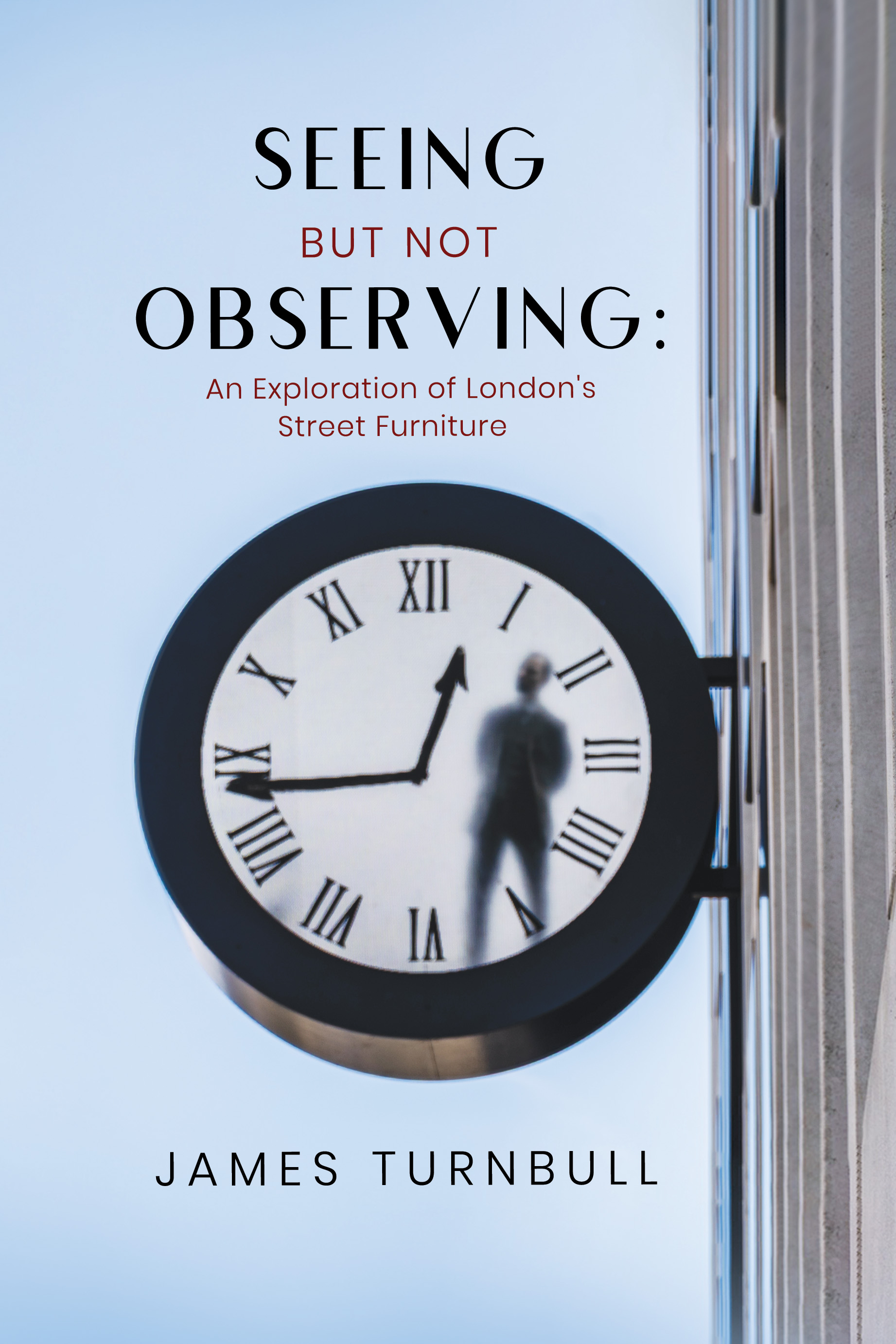
Seeing but not Observing: An Exploration of London's Street Furniture
James Turnbull
The writer possesses a remarkably keen sense of observation, using it to trace the many changes London has undergone over time. With precision and clarity, he describes when, where, and how buildings, shops, mansions, and streets have evolved, anchoring each transformation in history. Moving beyond architecture, the narrative explores the passing of ages and the quiet details often overlooked—commemorative plaques, bollards, boot scrapers, cabbies’ shelters, coal holes, fanlights, insurance fire marks, mews, police boxes, public clocks and sundials, railings, shopfronts, signs, statues, sculptures, telephone boxes, and more.
Each element is carefully explained, revealing how these features once served practical purposes and reflected the spirit of their time. By comparing these historic details with modern facilities, the writer invites readers to reflect on what has been gained and what has been lost, and also about seeing London not just as a place, but as a living, evolving soul.
More Books in This Genre
-

Why Clothing Changed
Shane Naomi Adler
-

Strategic Victory
Kevin Wraight
-

Morning
Kevin Wraight
-

Camille Monfort: Shadows of the Heart
Dean Spencer

