We are honoured to work with as many authors as we do at Pegasus Publishers – each with their own stories to tell. Their worlds are singular, their characters are relatable, and their creativity truly knows no bounds.
This is Author Life, a feature on the Pegasus Blog that opens the door to each of our author’s creative process and previous literary experience, offering you – the reader – an opportunity to learn a little about the mind, or minds, behind the novel.
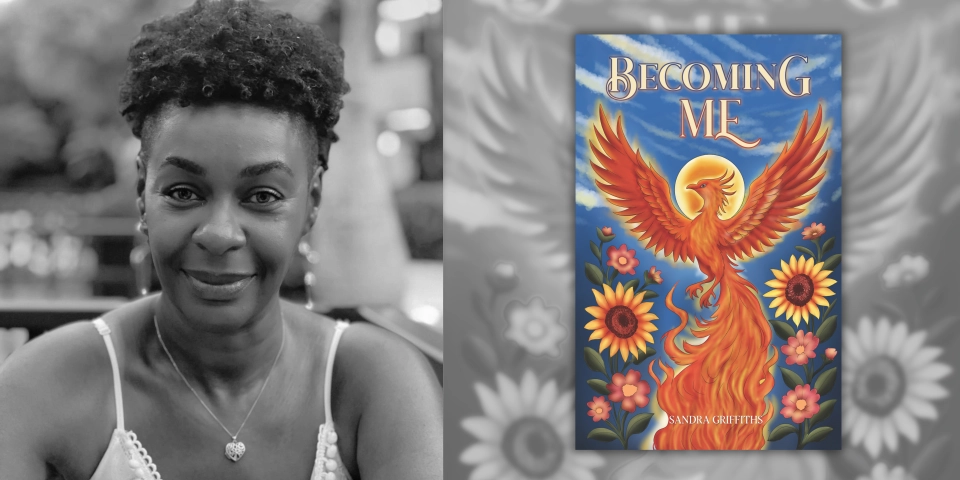
Sandra Griffiths is the author behind the tender collection of poems ‘Becoming Me’.
What are the three most important things you have accomplished, aside from publishing a book?
I would have to say raising three children one with autism, as a single mother watching them grow into 3 well rounded human beings and making a contribution to the world. Qualified as Teacher and social worker and my son who was told would never work now holds down employment. Secondly, I qualified as a nurse later in life, which took me 3 attempts at 3 separate institutions over a ten-year period due to having mental health challenges and raising children as a single mother. Thirdly, would be learning to drive in my 50’s was real struggle this took me 8 attempts but has now given independence and freedom.
In your own life, what influences and inspires you to write?
What influenced me to start writing was seeing a physiatrist and as part of my therapy he encouraged me to write down how I was feeling, so that I could try to understand the emotions I was feeling. This then led to me using my poems as part of my own healing journey. I also take inspiration from travel and everyday events, I summarise how I am feeling.
What book or author has had the biggest impact on you and why?
Maya Angelou was my biggest influence, and the pieces of literature are *I Know Why the Caged Bird Sings* and *Still I Rise* deeply resonated with me during one of the most challenging periods of my life when I was in a women’s refuge with 3 children. Both pieces gave me comfort and hope that life could & would get better. It was important to see an author that looked like me.
How would you summarise your book?
My book takes you on a journey through the mind of a young teen, right through to the mind of a mature woman. It takes you on a journey on the peaks and flows of life and the things that I have encountered. It shows that no matter what you have come up against you can find peace, but I think most of all it is a literacy quest to find love and healing through words.
What were your first experiences with writing?
My first experiences of writing whereas part of my study to become a midwife, I wrote my first poem Dear Midwife which explored the thoughts and feelings of a young black single mother on her journey through pregnancy. Then later on has part of my own therapy I was encouraged to write as a form of healing.
In your opinion, what are the key ingredients for a good story or novel?
For me personally, it has to be something that resonates, it has to have substance and has to have me intrigued from the begging to keep me turning the pages. Humour for me is a key ingredient as well as being well written and having a good story line to hold my attention. I like to read something that leaves me feeling empowered.
How long do you spend writing every day?
I think it took around 2 years in the making because it wasn’t a fluid experience, due my mental health challenges. Sometimes there were big gaps in my writing if I had periods of low mood – it was like a feast or a famine.
How long did you spend writing this novel?
I think it took around 2 years in the making because it wasn’t a fluid experience, due my mental health challenges. Sometimes there were big gaps in my writing if I had periods of low mood – it was like a feast or a famine.
What was the most challenging part of writing this book, and what did you learn from writing it?
Putting my words into some sort of order was the most challenging thing for me and at times I would question if my writing was good enough. There were many drafts and many balls of screwed up paper which caused me some mental challenges around low mood & anxiety. In some instances, I was getting triggered through the re-visiting of the challenging parts of my trauma and this experience led to many gaps in my writing, and I learnt that my writing didn’t have to be perfect, and it was my own unique style and journey. Once I started to frame the trauma and understood the emotions the rest started to just flow out and I started to heal & enjoy it.
What did you find most helpful when writing this book?
I found it helpful to experiment and to be free, it wasn’t all about things being symmetrical and rhyming. I also began to immerse myself in different types and styles of poetry, one poet I started reading was Alfred Tennyson, Lord Tennyson. My mum used to recite a particular poem Blow, Bugle, blow and I remember this from my childhood. I also found asking for feedback was helpful, as others can give you honest critique through there lens of reading your work. Keeping a journal was also helpful in my documenting my thoughts and feelings.
What writing advice would you offer to your younger self?
I would tell myself to be expressive and say how you think and feel, writing is an art. It also gives you a voice, which is important to use this creativity to use your voice to be heard. I would say don’t be afraid to go against the norms or go outside the lines as it is important to be your own unique self. Don’t let anyone tell you, you are not good enough because you are.


16 July, 2026