We are honoured to work with as many authors as we do at Pegasus Publishers – each with their own stories to tell. Their worlds are singular, their characters are relatable, and their creativity truly knows no bounds.
This is Author Life, a feature on the Pegasus Blog that opens the door to each of our author’s creative process and previous literary experience, offering you – the reader – an opportunity to learn a little about the mind, or minds, behind the novel.
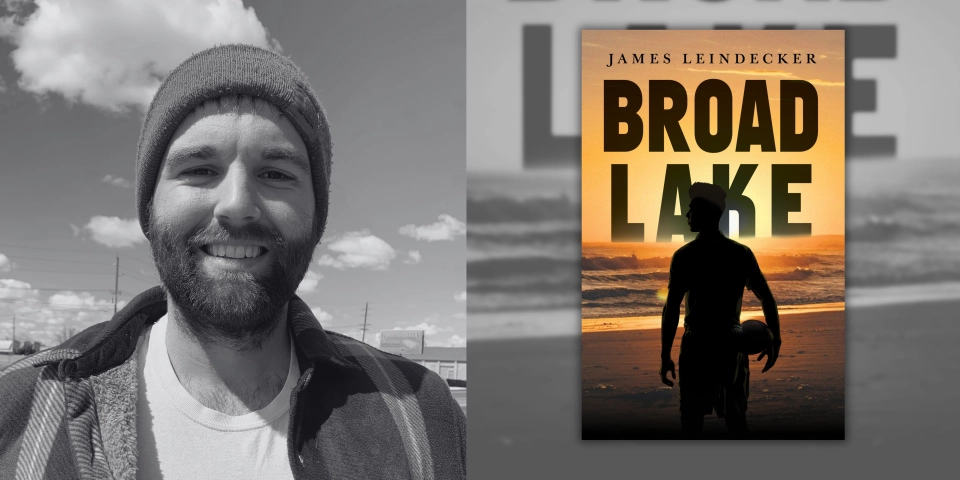
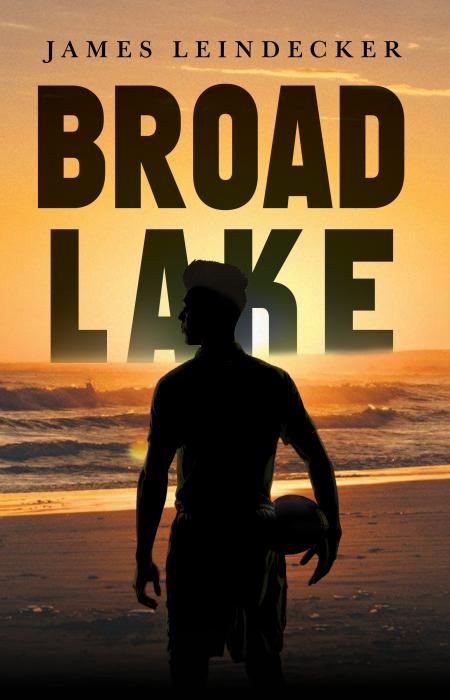
James Leindecker is the author behind the Young Adult fiction novel ‘Broad Lake’.
What are the three most important things you have accomplished, aside from publishing a book?
The three accomplishments that I am most proud of are more personal than material in nature. The first was convincing my wife, Victoria, to marry me. The second was having three amazing children who I get to watch grow up into amazing human beings every single day. The third is having a personal relationship with Jesus Christ and being able to share my faith with my family and friends.
In your own life, what influences and inspires you to write?
I like to draw off of my personal experiences and insert different real life scenarios into my writing. This novel, for example, draws heavily from my own high school football experience both as a player and as a coach. I was teaching middle school English and coaching high school football while I was writing this book, so a lot of the content draws heavily from both of those experiences. In general, I trust my subconscious to be constantly sponging information from my daily experiences so that when I am in the middle of writing, those things can be played out organically within the context of my story.
What book or author has had the biggest impact on you and why?
I have a lot of literary influences that helped to mold me into the writer I am today. From my early years of reading, I read the children's books series of "Animorphs" by K.A. Applegate, "The Boxcar Children" by Gertrude Chandler Warner, and the "Bailey School Kids" by Debbie Dadey and Marcia Jones. My father also owned all of the Patrick F. McManus humorous short story collections which I devoured as a child. This was critical to my development because it first introduced me to using humor to write stories and the beauty of the short story form.
How would you summarise your book?
After the tragic loss of his father, Jax Prescott and his mother move to the town of Broad Lake for a fresh start. Being new is never easy, and Jax will have his work cut out for him if he wants to earn a starting spot on the football team over the kids whose families have been legacies for generations past. With the help of Nina, the girl across the street, can Jax find a way to make an impact and begin healing from the hole left in his life from the loss of his dad?
What were your first experiences with writing?
The first thing I distinctly remember writing was when I was in fifth grade. I had been reading a lot of "Animorphs" books by K.A. Applegate and wanted to write a series of my own with the same basic concept. I remember settling on the title "Foodimorphs" where the protagonists fought aliens by turning into different types of food instead of animals like in the original series. It was obviously not good, but it was the first time I had really experienced creating something new on my own. The thrill of creating something brand that had never existed before was what I remember most about that experience. It's how I still feel to this day when I'm creating.
In your opinion, what are the key ingredients for a good story or novel?
For me personally, I am definitely a big proponent of "less is more" when it comes to storytelling. I like a story that is solid from beginning to end but leaves a lot of the small details to be filled in by the reader. I don't need to know how long someone's hair is or how many freckles they have on their right forearm. I think that giving the reader the ability to build the world around the characters and the story gives them their own unique view of how they interpret the rest of the text. I think this is critical for creating a text that can stand the test of time because it can be viewed with fresh eyes by each person that reads it for the first time. It also opens it up for debate and criticism because each person's perspective is a little bit different from the people around them. So in summary, I think that a clear story with round and dynamic characters is the most important aspect to a good story.
How long do you spend writing every day?
Not nearly as much time as I should. If I am in the middle of writing something, I'll put 2-3 hours of writing a day, especially if the story is flowing nicely and I'm able to find a groove while writing. But on a typical day, I'll put in an hour and just put things down on paper even if I can tell it's not going to amount to anything. Repetition is critical for getting ideas out and finding myself along the way. If I'm experiencing writer's block, I'll try different genres of writing or different styles and see if it dislodges something new.
How long did you spend writing this novel?
This novel went by in a flash. I finished writing it in two months, had my final proofread copy done in three months, and it took me another year to get up the courage to send it in for publication.
What was the most challenging part of writing this book, and what did you learn from writing it?
The most challenging part was getting myself out of the way and allowing my characters to tell the story themselves. I was blessed to discover Ray Bradbury's wonderful series of essays "Zen in the Art of Writing" while beginning this novel. In it, he has an essay where he talks about his process of writing, and how he is able to create characters who then tell the story for him while he just follows along and writes down what they say and do. I have to tell you that this made absolutely no sense to me when I read it and I wrote it off as ridiculous until I had the exact same phenomenon happen when writing this book. My characters came to life right in front of me and before I knew it, they were doing all of the work for me. I could actually tell the moments when I would try to wrestle control back from them because the story would all of the sudden become disjointed and awkward. The hardest part was to take a step back, erase all of the stuff that I knew was inauthentic, and allow them to take the reins back even if I was unsure of why they were doing whatever it was that they were doing. The result was an exhilarating experience for me because I was shocked almost every day with where things ended up going and how amazingly my subconscious was able to run with the story in directions I had never dreamed it would go when I had started writing for that day.
What did you find most helpful when writing this book?
Setting a schedule was critical for best creative output. I was able to create intentional moments where I could do nothing but sit and think about the story to allow new ideas to formulate and transpire in my head before committing it to paper. Another critical thing that I learned was a quote by Ernest Hemingway where he said to always stop writing for the day when you know what is going to happen next in the story. I found this critical for avoiding writer's block and I think it saved me countless times from staring at the page with nothing to say when I returned to writing the next day.
What writing advice would you offer to your younger self?
I would tell myself not to waste too much time trying to emulate other writers. Trust that you have a unique voice and that what you write is authentically yours and like nobody else. I would also encourage myself to read things that I don't like to read. Read authors you don't care for and genres that don't interest you because it's much easier to see the elements of storytelling when you have a wide breadth of examples to draw from. Don't be afraid of poetry or difficult things. Don't be afraid of nonfiction and informational texts. Soak it all in and write fearlessly and about things you love.



18 June, 2026