Happy Publication Day everyone!
Our Sixth Publication Day of 2026 brings a whole new collection of exciting stories, from a wonderful collective of talented authors!
To introduce them, we are continuing a fun feature for the year – Ask Our Authors – where we send all our newly published writers the same simple question to see how different each answer is…
For our June authors, we asked them: How did your idea evolve from concept to final draft?
Here are their answers…
Aside from a few character names changed a lot of it is very similar! The original was my Uni dissertation, which I had to change a lot to fit with what my mentor wanted. The version I'm publishing is what I wanted to do in my own words without any one telling me what I can and can't do.
E L Heffernan, author of Chasing Ghosts.
My book of poetry, Awakening, is a collection of poems I’ve been working on since High School. At first, it was just poems in a binder that I never imagined I would publish. Then when Awakening came together, I found some of my earlier poetry was spot on for the material. The themes seen in Awakening- gripping loss, forgiveness, and fright- went perfectly with some of my earlier poems. So, then it wasn’t just a concept anymore. Once the themes aligned, I was able to put my final draft together.
M.E. Watson, author of Awakening - A Book of Poetry.
I’m a big fan of horror and apocalypse movies. I love zombie movies but realistically they are too farfetched. So, I wanted to bring a realistic horror apocalypse. An asteroid hitting earth wiping out most of civilisation leading to people becoming Cannibalistic to survive. Naturally there would be those who do it to survive however other would do for enjoyment causing a divide. I like the idea of a sanctuary for survivors to try and get to which brought the idea of the New World. I’m also a huge fan or spicy movies and erotic fiction. Being interested in the human emotion/interaction and psychological areas during these scenes and seeing people's reactions when reading or watching them. Likewise, with horror and gore. I also enjoy adventure books and movies in turn these three themes inspired me to create The Cannibal Brothers trilogy as an erotic, horror adventure. Influenced by my favourite book series, under the eagle, i liked the idea of using two main characters, initially two brothers called Jack and Max, however whilst writing the trilogy I introduced other main characters. I included many areas of my favourite places in the books for my own memories including some characters based on real people in my life. I used my own experience in the police and security world to bring realism to death and fighting scenes, making the book more authentic. The book is written purposely to be easily transferred to screen which is the ultimate goal. I also often leave out ethnicity of characters, age and not too much detail of places etc to allow readers to use their own imagination and leave a platform for a screen adaption to portray what those characters and places would look like. I love the idea that my readers will each have a different imagination of what the characters and places would look like. I include many shock deaths, surprises and twists and keep the book fast paced to keep readers on edge. I go into detail for the erotic and gore scenes; this is my world and my specialism. I want the reader to feel what the characters feel and become scared or excited. I also used numerous genres to send the reader on a roller coaster of emotions. Movies certainly inspired my scene creations. Sometimes where I like a scene, I will adapt it to see how I can make it more erotic, gruesome, action packed, trying to push boundaries. It’s very true that the more you read and the more you watch, it gives you the skills to write stories as well as having a crazy vivid imagination not fearing or holding back what you want to write. Never let others criticism or negative thoughts put you off your artwork. I prefer a quiet peaceful area to write to allow my mind space to explore. My fans are a huge inspiration to keep going, being recognised in public and doing public appearances is a blessing and something I enjoy and thrive off. Always happy to sign a fans book and chat, I’m so grateful for them! Finally, I have another 3 books for the series I’m drafting that I will look to release of the trilogy goes well. I also have a 10 book children’s series called Mr Moz that I’m looking to publish which is based on the adventures of a dog. It’s very popular in children's day nursery’s that I send the story to for free.
Daniel Pike, author of The Cannibal Brothers: Rise of the Cannibal.
It started with Touro Tower in Newport RI which is structurally like all Templar constructions. I figured if it was built by Templars then it must be haunted by their spirits. Templars were given a bad rap when they were dissolved in 1307 and burnt at the stake in 1314. Their vow to protect the 'sacred bloodline' which was cited as heresy and one reason for their eradication has fascinated me for eons. The concept evolved from there.
More history - The Romani people of Southern France have celebrated the feast of Sara Kali on May 24 since the Medieval period to this day. They believe she was the daughter of Mary Magdalene and Jesus and that the bloodline continues to this day, despite the church's efforts to wipe out anyone suspected of descending from her. 'Kali' is the Romani word for 'dark skinned'. So of course, the last descendent in RI had to be a Black American doctor working to improve the health of her ghetto community. Who better than the ghost of a Knight Templar, able to assume his mortal coil, to be assigned the task of protecting the last descendent?
A young monk who had already succumbed to the wiles and attributes of one Magdalene, is sent to protect her descendent. What could possibly go wrong? She proves herself to be a courageous feisty street-smart fighter of the systemic racism and poverty of her community and fully capable of taking care of herself. He only knows the chivalric code and inherent social inferiority of women in his time. He must work his way through what is the greatest culture shock he faces. His admiration and love for her grows as he witnesses and participates in her struggles.
From these concepts and the traits of my characters, the plot and suspense evolved naturally. Templar is the first book of what will be a trilogy. The second, "An Age of Demons", is complete and Pegasus is interested. The third, “The Knight's Tale" is 3/4 complete.
Tips for writers - Let your characters emerge from your imagination as 3-dimensional 'real' people whose dialogue reflects who they are without falling into the trap of over- characterization of a demographic. As you have heard, characters drive plot. Listen to them when they speak to you.
CD McCarthy, author of The Templar and the Magdalene.
What began as a sort of "pay it forward" for the wonderful advice I received from my therapist became an unexpectedly cathartic journey for me. My original intent was to provide readers with two things: knowledge of the therapeutic steps I took to overcome adversity, and how I actually put those steps to use in overcoming the trauma of childhood abuse. As I wrote I came to realize that beyond informing my readership, my writing was giving me the ability to reclaim lost years. In short, in the beginning I wrote just for the audience, but as I moved forward my writing became the means to purge strong emotions and become free.
Lisa Presley, author of Rescuing the Children: My Journey from Childhood Abuse.
I remember as a kid seeing a film where these creatures flew around seeking human prey. They’d zero in on their quarry, land and envelop their victim’s head. The alien monsters consumed the head leaving behind, you got it, headless corpses. As an adult, I’ve searched and searched for this old black and white film. I’ve never found it, but it was the inspiration for the creatures in Enter Infernum. The other big influence was a 1970s television show, Kolchak, The Night Stalker. The protagonist Karl Kolchak was a reporter for a small Chicago newspaper. He investigated cases involving the supernatural and used a tape recorder to take notes on the case. This influenced me to set my story in 1970, and have my protagonist, Paul Randolph, record his investigations on a reel-to-reel tape recorder. As this TV show was the inspiration for The X-files, this program had a strong influence on me as a writer, choosing a police procedural to tell the story. Finally, there was a horror novel I loved that involved a haunted book. Who ever read this novel went mad. Stupid me got rid of it in a yard sale. I should have at least wrote down the title. I very much love the idea of cursed manuscripts or films. Antrum is an excellent, creepy film. This led me to writing the secondary story, the cursed manuscript, Enter Infernum.
All of this was jumbled in my head, bubbling to the surface as I set the first words down. As I continued writing my story, other ideas competed for a place on the page. The Battle of the Teutoburg Forest was one of them. The hero of the conquest, Arminius, I decided would be my villain and I reimagined the Roman’s defeat. Other historical or mythical characters who appeared in my story, I, for the life of me, don’t know where they came from. However, my muse was insistent on me including them.
As I had decided to set my story in 1970, much of my childhood and the accompanying nostalgia streamed onto the pages. The setting was chosen based on my familiarity; I grew up in Indianapolis. Lest you think I’m disorganized in my thought process, I did have a detailed outline and story arc. However, the words just streamed onto the pages. Some days, I’d write for hours. The process some days frightened me as the story evolved. It was as if someone or something whispered the story into my ear.
I know this is a long winded explanation behind the concept and writing of Enter Infernum, but this was not going to be a short story. I hope you find my account engaging enough to read my debut novel.
John J. Maurer, author of Enter Infernum.
I had to write it from nothing, then I didn't like it because it didn't feel authentic to me. So then I rewrote most of the theme, dialogue and I changed the male protagonist to a female protagonist. Then I expanded on visuals and dialogue until I liked what I was reading. Then I expanded more, until I had 78,000 words
Lithoniel Franksson, author of Saga Of The Oakenkin: The First Thread of Fate.

I’ve written eleven novels over the past nine years. The process comes easily and organically from ideas sparked by a walk in a graveyard on a cloudy day, a hike in the forest, or simply by observing people and overhearing conversations. The idea evolves as I craft evocative scenes and introduce compelling characters. As their journey begins, roadblocks and conflicts arise, but I have no clue what will happen next. The characters have wants, needs, and motivations. All I have to do is stay true to who they are, and they write the novel for me.
As for writing tips, I think Tim O’Brien says it best. “The goal, I suppose, any fiction writer has, no matter what your subject, is to hit the human heart, the tear ducts, and the nape of the neck, to make a person feel something about what the characters are going through, and to experience the moral paradoxes and struggles of being human.”
I do this by grounding the characters’ experiences in specific sights, smells, and sounds, conveyed to the reader in a cinematic way. My first draft goes to a professional editor who is a Phi Beta Kappa member, an acclaimed playwright, and an award-winning screenwriter. She obliterates much of what I’ve written, and my rewriting begins.
T.A.Stevens, author of The Prodigy.
After 53 years of marriage, my soulmate for life, was taken by Angel's to GOD'S GLORY.I sat in a park where I sat with my soulmate multiple times and wrote my story of her illness,
leaving her earthly body and crossing to the other side. Shock, Crying, Disbelief along with the most cruel of human emotions - GRIEF - The suffering we experience, how western culture suffers in silence when grief raises it's cruel waves of vitim emotions. Sitting in the Park daily, when weather permitted, and reaching back into my memory files I write my story taking the grief each day, each night as weeks rolled into months, then months numbered 12 bring my story, 'Another Day Without You.' to an end.
Tony May, author of Another Day Without You.
I use a method called "freefall" that I learned from well-known Canadian author W.O. Michell
where I lay down the scene, line after line until nothing more comes. Sometimes when I am trying to figure out where to take my characters I might be driving somewhere, and the idea comes to me that seems like the perfect next move. Landscape is important to me as it reflects the mood of my characters: "the grass yellowed by drought.... a small creek cuts into the field"" and my character says " I am living on empty, like this creek with only stones to tell me what it once was," I say. The mystery unfolds--you can do anything in fiction in way you can't do in life. The individual characters develop from an idea of them--for example one is alcoholic--using my experience to create a realistic character. The most exciting part for me is the laying down of the story. Afterwards it is line by line editing and creating mood and bringing added details: for example, a poem or a book that gives the character meaning in his/her life.
Janet Audrey Simpson-Cooke, author of A Corner of the Earth.
I was a foreign correspondent in Asia for 11 years and travelled on the region many times
I was based in Hong Kong 2years after the end of the Vietnam war. I tried to get into Laos and Cambodia in 1985 when I spent 2 weeks in Vietnam for the 10 anniversaries of the end of the war however the communist governments of both countries refused to issue travel visas
Towards the end of 2020 I was able to travel to Laos and Cambodia. While there I got the idea for my novel Veil of Betrayal which for the most part takes place in Laos. I visited all the places I mentioned
In the novel and some of the events are similar to those that did occur.
The best advice I can give sit down and start writing, and read, read, read.
Walter W. Miller, author of Veil of Betrayal.
My idea evolved in layers. At first, I don’t think I fully understood what I was writing. I knew I had stories in me. I knew there were memories, moments, losses, hard truths, strange turns, and little flashes of grace that had stayed with me. But in the beginning, it felt more like I was gathering pieces from a life rather than building a book.
The first concept was simply to tell the truth. Not the polished version. Not the version that makes everyone comfortable. The real one. The one with trauma, faith, mistakes, survival, humor, grief, forgiveness, and the kind of moments where you look back and think, “Well, that certainly explains a few things.”
As I kept writing, the book began to shift. It became less about just telling what happened and more about understanding what happened. That was the part I did not expect. I thought I was writing memories, but the writing started handing me meaning. Some chapters became harder than I expected because I had to walk back into rooms I had survived. Other chapters surprised me because I found tenderness in places I thought only held pain.
The rewrites were where the book really became a book. The first draft was the emotional excavation. The rewrites were where I asked, “What am I really trying to say here?” I moved things around. I cut parts that may have been true but did not serve the story. I added details where the reader needed to breathe with me a little longer. Sometimes I had to take a sentence that felt like a whole thunderstorm and make it clear enough for someone else to understand.
Choosing the right words mattered. I didn’t want the book to sound too perfect or overly polished because that would not have sounded like me. I wanted it to feel honest, Southern, reflective, sometimes funny, sometimes raw, and always human. I used a thesaurus at times, but carefully. A thesaurus can be helpful, but it can also make you sound like you swallowed a dictionary and are trying to act natural afterward. I wanted the words to fit the feeling, not just look impressive on the page.
One thing that helped me was reading sections out loud. If I stumbled over a sentence, it usually meant the sentence needed work. If it sounded stiff, I changed it. If it sounded like I was trying too hard, I pulled it back. Reading out loud helped me hear the rhythm of my own voice.
Another thing that helped was stepping away when something became too heavy. Memoir writing is not just writing. It is remembering with your whole body. There were times I had to close the laptop, take a walk, look at a photograph, cry a little, pray a little, or just let the memory sit quietly until I was ready to return to it.
Photographs also played a big role in how I work. I love taking pictures, and I often use them as writing prompts. A photo can unlock a whole scene for me. A road, a porch, the ocean, a tree line, an old building, or even the way light lands on something can bring back a memory or create a mood. Sometimes the image knows what I am trying to say before I do.
The biggest piece of advice I found, and would pass along, is this: write first, fix later. If you try to make every sentence perfect while you are still trying to tell the story, you can scare the truth right out of the room. Let the first draft be messy. Let it ramble. Let it come out crooked if it needs to. You can clean it up later. You cannot edit a blank page.
I also learned not every truthful thing belongs in the final draft. That was important. Just because something happened does not mean it has to be included. A memoir is not a court transcript. It is a shaped story. You have to decide what helps the reader understand the journey and what only weighs the book down.
By the final draft, the book had become more than a collection of memories. It had become a journey of survival, grief, faith, forgiveness, and finding my own voice. It changed me while I was writing it. I started with the idea of telling my story, but by the end, I realized I was also reclaiming it.
For new writers, my advice would be to begin before you feel ready. Don’t wait until you have the perfect desk, the perfect schedule, the perfect confidence, or the perfect first sentence. Start with one memory. One image. One line that will not leave you alone. Follow it.
The story may change as you write it. Let it. Sometimes the book you think you are writing is only the doorway to the book you are meant to write.
Renda R. Hanson, author of Where the Hummingbirds Landed - The Sea Knew My Name.
The concept for my book evolved over time. It was a seed of a thought that grew into a full-fledged story. I began with the premise of a world where words were seen as dangerous. What would it be like to live in a world like that? Then, I thought about the kind of characters I wanted to build. I knew that there would be a love story, but how would that play out against the backdrop of a place where speaking was only done in private. I also knew that I wanted the characters to be rich in detail and have depth of character. They needed to evolve and change over time both individually and as a couple. Once I had the world and the characters, I was ready to write. I let the story evolve over the pages, introducing obstacles to overcome and then imagining the way my characters would react to those challenges. I hope that the work captures the imagination of readers.
Julie Bruce, author of The Symbol.
The idea for *The Lost Heir* began with a single image in my head – a young man, the sole surviving heir to a kingdom, who did not know who he truly was.
At the time, that was all I had.
I didn't have an outline, a plot, a map, or anything that would eventually lead to a book. But once I started writing and building the world, I drew inspiration from some of my favourite authors, creating the setting and story one step at a time.
One of the things that surprised me most was how the story grew while I was working on it. Characters that I had intended to have small roles suddenly became major parts of the story. Plotlines took deviations I wasn't expecting and, in some cases, led me down completely new paths.
The best advice I ever received was simple: be open to changes in the story. Some changes may not work for you or the story you are hoping to tell, but others might surprise you. Allow the story to show you where it wants to go and explore those possibilities in detail.
For me, the journey from concept to final draft wasn't about getting every word perfect the first time. It was about showing up consistently, learning as I went, and trusting that the story would become stronger with each revision.
Looking back now, the final version of *The Lost Heir* is very different from the version I started writing, and I think it is much better because of it.
Dan Rutter, author of The Lost Heir.

My original idea was a memoir capturing the challenges of working with lawyers. But a writing coach suggested I explored different genres - including horror, to liven up my tale. And that changed everything. And so, my story morphed into a totally fictional romp through the life of my alter ego, Jack Curtis: from Benghazi to Singapore, East Anglia to Hong Kong and Sydney to London, searching for excitement, friendship and love.
Barry Jackson, author of The Boy in the Green Dress.
To answer this question I need to go back to my process of creativity.
I had ideas which took shape from deciding on the title of each piece of writing. This I found was a good building block for my imagination to be allowed to express itself
Then I started to write in my manual. Not ever accepting my first attempt. Then when I was happy, I then took it to the next stage and transferred to my lap top where all changes and corrections to place. This procedure first came to be when I was at school. I loved to write short stories. Each became a joyful experience which even today I try to make it so.
Darren Carter, author of Forsake All Holiness.
"The idea did not evolve according to a carefully mapped-out plan; rather, it grew through encounters with people who recognized the potential in what I was writing. I have always had an innate urge to write, but it was only when a friend, who is the editor of a major magazine, read parts of my unfinished manuscript that the project truly gained momentum. His enthusiasm was contagious. He saw possibilities where I saw incomplete thoughts and provided both inspiration and valuable feedback that helped me bring the manuscript to completion. This is how the Norwegian edition came into being.
As the project developed, new opportunities emerged through my international network. The idea of an English edition arose naturally. Here, I received invaluable support from my English friend, Sandie, who contributed both linguistic insight and a keen eye for the overall work. Together, we continued refining the text until it found its English form and evolved into a publication, we both strongly believed in.
From the earliest sketches to the finished manuscript, the journey has been shaped by collaboration, encouragement, and the belief that good ideas become stronger when shared with others.
Steff Herbern, author of Backstage with King Olav.
In my case, the idea came far into the process of writing. My mother-in-law was very into art therapy and encouraged me to try it. The only difference was that in her case, beautiful art emerged, as opposed to my endeavour, which resulted in words that I then pieced together into poetry, which I guess is a form of art.
In a sense, this opened a Pandora's box in that words just kept coming sporadically, and I kept writing them down. At first, I was embarrassed by them, because they felt too personal and negative, but with time, it became therapeutic and I enjoyed playing with rhyme and new word creations. The decision to publish this awkward and at times playful scribbling emerged when I realised that it could perhaps become useful to others who have gone through similar things. So that is what kept me going until the final draft.
Kama Poriot, author of Silhouettes: Memories of a past life.
I had the bones of how I wanted the novel to go rattling around in my head for the better part of a decade before I was finally able to express it in the way that I felt moved the story in the direction that made sense. I knew how I wanted it to open and had tried half a dozen times over the course of the years to force the action to happen the way I felt it should happen. Every time it came up flat and I was left up in the air with an unfinished idea. During the course of the years leading up to finally getting the introduction right, I read nonstop from as many different authors and genres as I could get my hands on. As I absorbed all of this content, good and bad, I was able to deduce more subtle ideas about storytelling that I had been unable to express in previous attempts. The biggest influence was when I began to read the essays of Ray Bradbury about his writing process and his insistence that he never influenced his stories, but rather created the characters and let them take him on the journey with them. That never made sense until I, once again, took my protagonist out for a run to start the novel (the way I had started him all of the times before). Only this time, instead of taking him to his house to be sweaty and tired, he was hit by a car while trying to cross the street, and the rest of the novel practically wrote itself from that point forward. Anytime I found myself getting stuck, or feeling like I was influencing the action too much as the author, I took a breath and put the story into the very capable hands of my characters. Two months later, I finished up a novel that I had never dreamed I'd be able to write in my lifetime.
James Leindecker, author of Broad Lake.
Committing is my third book in a series about Alice, a female serial killer.
For the third instalment I knew things needed to ramp up and I needed to show how my writing had improved.
My stories evolve as I go along. I have a few set ideas and then from there the rest comes to me. I also do not always have an ending until I’m right in the middle of the story. I’m a bit of a, ‘fly by the seat of my pants,’ kind of author."
Justine Robertson, author of Committing.
"Well, I started writing my new book right after my first book, Play with Me, hit the stores. Publishing my first book really taught me a lot, as it was a truly valuable learning experience. Not only did I have new ideas, but I also had a better understanding of how to approach writing in a more structured way.
I knew right from the start that I wanted to focus on short stories once again, since I enjoy that format. There’s something special about writing a short story. The challenge of creating suspense and excitement for the reader within a limited number of pages really appeals to me.
As soon as I had a draft of a new story, I gave it to a friend of mine, and he would provide feedback on what needed improvement. Once I had a whole collection of short stories, we discussed which ones were the strongest and left the others out.
I also wanted to do something special with this book, and my friend came up with the idea of building a universe where certain details from Play with Me would reoccur in Dead to Me. At first, I dismissed the idea, as I thought it would be far too complicated and was worried it might take focus away from the stories. However, we later discussed keeping it simple—small details, like Easter eggs, that only readers who have read everything would notice. I liked that idea, and that very same night I started jotting down ideas on how to make it work. So, if you’ve read my first book, you’ll probably recognize one or two things in this one.
I also decided from the start that I wanted to do something special with the cover of my new book. I’m a huge fan of old horror movies from the 80s, and there’s something unique about the style and aesthetics of classic VHS covers. I remember how they had a wonderfully eerie feeling to them when I was a kid, and I still feel very nostalgic about them. So I reached out to an old friend, Jonas Tollin, who is an artist, and told him about my idea. He immediately started exploring a few concepts, and we eventually agreed on a final design that became the cover of the book.
B.J. Edwin, author of Dead to me.

I had never intended to write my memoirs. Yet when I finally had the time to look back on the many adventures and rich experiences I had accumulated in so many different countries, I felt that they should not simply disappear. I wanted to preserve them for others—not only so that they might share in those experiences, but also so that I could pass on some of the extraordinary lessons I had learned during my years as a diplomat abroad, especially in the Arab and Islamic worlds.
What began as a personal wish to record memories from my diplomatic career gradually developed into something broader: a reflection on diplomacy, conflict, and the search for peace. At first, my focus was mainly on the countries in which I had served, particularly those connected with the Middle East. As the writing progressed, however, I came to see that these experiences were part of a larger story: how diplomacy works in practice, how political ideals often clash with realpolitik, and how dialogue remains indispensable even when circumstances make it appear almost impossible.
The earliest drafts were far more extensive and more memoir-like. They drew on diaries, notes, unpublished writings, and personal recollections. Over time, I shortened and reshaped the manuscript, leaving out details that were less relevant to the central themes and giving more space to episodes that revealed wider political and human dilemmas. In its final form, the book became less a chronological account of diplomatic postings than a thematic reflection on diplomacy, conflict, and the pursuit of peace in the Arab and Islamic worlds.
Nikolaos van Dam, author of My Diplomatic Journeys in the Arab and Islamic worlds.
The idea evolved overtime. During Covid we were confined to our apartment and the only interaction was with the outdoors. The profound lack of human exchange was what led me to engage with life around me. Nature became my close companion, and I nurtured this association with my life experiences.
My love for nature was the endearment for the universe in its entirety. I formed an in-depth alliance with the natural world, and this was the window of my soul providing insights which I was able to pen down in my anthology.
I always say poems and poetry are pieces of art. In as much as I express myself through my brush in colours, when I pick up the pen, in a similar manner, it expresses my inner feelings.
I collected my poems and was able to group them according to their moods and saw that some of them complemented with my paintings. At this stage I shared some with my friends and family for feedback.
Slowly, I compiled my first draft over a few years, after several versions. Finally, it was meticulously edited by my dear friend, Dr. Shahela Hamid, an expert in the field. Then, I sent it out to the publishers.
Tahmina C Islam, author of Life: Inspirational Insights.
Originally, my idea was to create a book that would resemble the lyric booklet of a rock album. While that was only the starting point, I hope I managed to carry that spirit into the final draft. The biggest evolution of the project was the addition of elements that build an overarching story, with every poem serving as a chapter in that story.
Over the years, the idea went through countless stages of writing, rewriting, and self-doubt. Many days of going back and forth, giving up, and starting anew. Looking back, I couldn't be happier with the final result. It is not only a more evolved version of my original vision, but also a testament to my passion for both this book and writing in general.
In many ways, the writing process evolved alongside my own psyche. Through writing, I found the strength to believe in myself, and that journey became inseparable from the book itself.
Nualaye Astante, author of Harvested.
"Following the death of my daughter now eleven years ago, I felt the need to express certain emotions and thoughts I had locked inside but needed expression. I thought it would be valuable for others to know about a beautiful little girl who had a seizure disorder and other non-physical issues, but I could not just write about her and my wife and my experiences with her. It probably would have been uninteresting and would be too emotionally-taxing.
Instead, I created characters nothing like my wife and I and our story: two exceptional people, one a professional basketball player and the other, a brilliant physicist who have a daughter like mine. My book revolves around their difficulties in raising a child with these issues and what happens with their careers and relationship as a result of contending with the demands that such a child places upon her parents juxtaposed with the love for their child.
To effectively write the book, I had to bring ideas to the daily writing sessions before I sat down. The story was constantly with me, whether in the shower, before I went to bed, as I daydreamed in the car. I did not want to sit down in front of the computer with a blank page and no thoughts about how to continue the story. I am not patient enough and am distracted easily, so when I did not have thoughts of how to continue the novel, I tended to get up after a few minutes and do something else. When I did have ideas, even if they did not work, it let my mind roam freely, and suddenly time became irrelevant, and after a while, I would look at what I had wrote, and a lot of it (with a lot of editing) worked.
The best advise I can give, is to give your mind the freedom to let it lead unconsciously and freely. Don't worry too much about the quality of your writing. You can fix it later. Just write. And when you do write, enjoy your writing. There is nothing as satisfying as reading a sentence or a paragraph you just wrote that is fun and complete. You have to enjoy writing. Otherwise, why do it?
Gary Goldsmith, author of Stephanie's Father.
My idea for this book actually evolved from a personal essay I had written in college. One day I was re-reading that essay and all the pieces fell into place, and I found the title of my book. After that, I saw the vision very clearly. I began combing through all of the poems I had written from 2022 to early 2024. I realized that all of my work had fallen perfectly under the umbrella of the concept. I had about 30 poems already written from March 2022-January 2024 and wrote about 22 more over the course of five months. I couldn't stop writing, especially when I came up with the concept for "I Loved You Here". I had realized that for years I had been writing about the concept of loving people and moving throughout the world while you still carry them in your heart. What really revolutionized the way I worked at was creating mood/vision boards for the book. I am a very visual person and creating a visual for the book helped me dive even deeper into what I was trying to convey through my work. During the writing process I also found trusting my gut to be very important. I just wrote and wrote honestly. I also knew very definitively when the book was completed, and I had told the story I wanted to tell. I felt like I had said everything I wanted to and felt confident in the fact that no detail was spared. I chalk that up to just writing with honesty and not trying to write through the lens of anything other than wanting to write about my feelings. I was writing for me, not for anyone else. In turn I think that truly helped me to get it out and leave it all on the page.
Julianna Balducci, author of I Loved You Here.
Leaving Her Behind, is our sequel to our first book 'Her'. we spent sometime deciding the journey our characters would take us, and working on what new characters would fit in well, we went through some different endings, and both decided on this one, we have chose was the right one, and hope the readers will enjoy our book, as much as we did writing it.
If we had any tips for future Authors, always follow your dreams, and never give up.
K.L.J Browne, author of Leaving HER Behind.
See details in my sixth book, Hither and Thither, by me, Valerie Helps. I have always kept a diary of some sort; I needed to record what was going on in my life, which was unusual from the beginning. Writing comforted me, and I seem to remember it became a habit at night at boarding school under the blankets with a torch I think my father gave me. I was sent at the early age of five to boarding school away from the malaria-ridden coastal town of Dar es Salaam - in Tanganyika Territory (now called Tanzania.) The malaria-carrying Anopheles mosquito that infested the coastal regions did not survive at elevated altitudes; thus, young children were sent inland to boarding schools due to their inability to tolerate the bitter malaria antidote of quinine.
The journey took the best part of three days - overnight on a train and two long and
exhausting days on dreadful unsealed black cotton soil roads in what were called "busses" but were, in fact, huge articulated lorries with a separate front cabin for the driver with space for a couple of passengers and a colossal space seemingly separated from the front- filled with separate seats for the rest of the children. A dreadful way to travel such long distances with only one welcome stop en route. I have always recorded what was going on in my life and I did write several "books" during the school holidays with a girlfriend called Anne in Dar es Salaam. She was a better artist than I at the time.
Valerie Helps, author of Hither and Thither.
I’d say my writing strategy can best be summed up by the name of a canal boat I once saw painted on its side: coddiwomple - which means to travel in a purposeful manner toward a vague or unknown destination. When I start writing, I prefer to let the story evolve naturally and hope for the best, rather than rigidly planning every turn.
I’ve begun to notice when I’m writing that I’ll hit a breakthrough moment where I suddenly realize exactly how the story is going to end. I rush to write the ending down so it’s locked in, and then I loop back to carry on with the story.
Because my process is fluid, I often rely on instinct. I have a habit of a specific word popping into my head that feels right, even if I suddenly doubt its exact definition. That is where Google becomes my best friend, confirming that my subconscious knew what it was doing all along - even if I don’t.
Every writer has to find the rhythm that works for them. This happens to be mine, and while it might not be a traditional textbook method, it’s the only way I know how to bring a story to life.
I’m not sure I’ll ever get to a 70,000 word count with that strategy though…
R E Hayes, author of The House.

I've tried working out a synopsis in earlier books, but within a chapter I've veered off in another direction. Hopeless. I have literally lost my own plot!
Nobody's perfect, and nowadays I start with a character - man or woman - and see where he or she leads me. There is no careful thought process, I simply let my fingers lead the way from one incident to another until there is enough impetus for the storyline of a book.
Other characters then appear from somewhere and we're off.
This is my way of writing, not the proper way. I have worked on national newspapers all my life and I have been trained never to waste a word. Just get on with it and tell readers what's happened, even if it's in my imagination. I usually write for three to four hours and I don't mind being interrupted - I soon pick up the flow.
There is a knack to making dialogue sound natural, without repeating 'He said' 'She said' and dialogue takes so long to write. But NEVER rush it, and throw in all the swear words you want, as if you were taking to a good friend.
I remember an old hack telling me once: ""Don't agonise over the words. Just imagine you're telling me a story in a pub and bash it out. Dead easy, mate."
Don't be frighted of a blank screen. It's all in your head waiting to see the light of day, and the only thing that's stopping it is YOU.
Christopher Wright, author of HARD.
The idea to write about leaving my husband came about eight years before I actually did because I thought that if I had outside validation —that I was doing the right thing—that I wasn’t a bad person—I would finally have the courage to actually do it. So, the title of the book was obvious for me, May I Please Leave My Husband Now? I always thought that it would be about the journey to finally find the cojones to ask for a divorce, until I got the divorce and had to coparent with my ex and his new handler. Turns out you don’t REALLY know what someone’s like until you divorce them! Then I felt obligated to talk about my coparenting experience in addition to the train wreck of me moving on too soon as well. I tried to make the book feel like I was sitting with the reader telling my tale so every time I would add or edit I was talking out loud to see if it sounded like “me”. I also never had a whole bunch of people read it to see how they liked it or to give me input because I didn’t want somebody else’s filter on my work. When writing it’s all about you baby!
Prudence Mann, author of May I Please Leave My Husband Now?
Originally, the idea came from my sister, Matt. She had taken a job working for a bridal company to go and work as their marketing director in Europe. She was able to travel for a few months, and her favourite place was Paris. I thought this was great inspiration for a story. Although PARIS WASN'T READY FOR HER does not include any real-life scenarios that my sister lived through, this is where the initial story sparked. I was watching Emily in Paris at the time, and fell in love with the architecture, the lifestyle, the fashion, and I also was re-watching the Hills and I loved the relationship that Lauren and Whitney had, and their adventures they would go on for fashion events. I tried to channel Lauren and Whitney vibes with my characters (Elle, being similar to Lauren, and Kensington being similar to Whitney). I re-watched the earlier seasons and took note of some of the tasks they did, as well as researched Paris at length, to ensure how I described the culture, architecture, and general vibes were accurate. When I wrote this book, I didn't know how it was going to end, so every time I would sit down to write, it would feel like an adventure in itself as I did my best to insert myself in the shoes of my characters and write their stories. I hope you love it as much as I do.
Brettney Thompson, author of Paris Wasn’t Ready For Her.
MURDERS ACROSS THE POND is the second book in a 3-part series relating to financial corruption. The first book LOOSE ENDS concerned a corrupt unregulated hedge fund whose money comes from a Mexican drug cartel and is laundered through a dodgy Swiss Bank.
In MURDERS ACROS THE POND, the background relates to a Private Equity Fund receiving money from the Mexican Drug cartel, which is set up in Jersey (Channel Islands). A British man is killed because he wouldn't sell his business to the fund and in the US, a contract killing has links to the British murder. The characters in LOOSE ENDS are involved in unravelling these murders, which occur on both sides of the Atlantic.
David Liston, author of Murders across the pond.
Well to begin with I do not consider myself an author I am a great fan of Cinema and did a few short movies and photography. I take notes I have drawings little designs poems I collect tickets posters business cards perfume samples and what not to remember certain scenes in life. Somebody like me who made history, for sure doesn't as a time to write about it. But I knew it was an epic story so I took notes of any kind.
Then when Covid arrived finally I had the time to write it all down. Easier said than done sometimes I was writing nonstop for hours and weeks to come but I also had months where nothing was happening, I just couldn't get a word on that goddamn paper. I remember just for fun I was t tying myself to a chair not to leave the writing table, I remember that because I made a photo of that situation.
I remember I wanted to have the perfect situation in order to write which for me would be to stay at a little beach house with a writing table overlooking the Mediterranean sea , good simple food and the possibility to snorkel after and before writing but life wasn't that kind and homeless as I was gratefully couch surfing I had to write wherever so I did . I remember I was freaking out one day in the Camper van because it was not enough space to layout my notes, I do remember that, again, because of a photo I took of the situation. I also think I discovered why first books shouldn't be more than 300 pages, again before Ai help, because one cannot remember, did I wrote this already yes, no? When? Where?
And if you're writing something which is painful right the last thing you wanna do is to read it again I didn't.
I had help a friend of mine who passed away recently her name was Charmaine King she gave me feedback she was reading the stuff but she was never criticizing it your focus was to push me to finish it write it down regardless the situation I was in she always said just write it down we can polish it later just get it on paper get it on paper and so I did it took me about a year.
After that I had another friend coming in to help me , a fine English man who had just retired from being the director of a local newspaper, He very patiently corrected the grammar without modifying the authentic wording of mine , I am very grateful that I have had this help because it was out it wouldn't be there by now.
Alex Hai, author of The Gondolier.
The idea for my book evolved over countless years and in many sporadic bursts of writing. The concept was born from my love of fantasy television and movies, but more precisely from the TV series Merlin. I was fascinated by the way magic was portrayed in this interpretation of the stories of Arthur and the Round Table, and of Merlin himself. The instinct to protect people through secretly using his magic, was what had inspired the concept for my book.
As I developed my idea, I drew further inspiration from adventure novels like The Hobbit, which encouraged me to turn the story into a full-length journey-adventure story, filled with magic, exploration and discoveries. As my story grew in length, I found courage from reading series such as The Lord of the Rings, and a few detective books such as Sherlock Holmes, to split my book into more manageable chunks, turning it from one book into three.
I didn't try to publish for many years because I had heard how hard it was to get a book published. I felt intimidated and inexperienced. One thing that helped me, other than the undying support of my friends and family, was a piece of advice that was spoken to me by a work coach and would continue to follow me whenever I opened any of my social media pages: You can sit and be afraid to show people your work, but until you try you will never know if it is good or bad. Of course that isn't word for word. I don't remember exactly what my work coach said, but the message remained the same whatever form it took. I had to have faith, and I could only reap what I was willing to sow.
My book had changed many times by the time my work coach had spoken to me that day. It is very different from the original story. It is still filled with exploration, magic, and discoveries. The framework has changed, to be more about self-discovery all whilst trying to recover lost memories and avoid being caught by someone seeking to take the main characters magic.
It is still the first in a series.
It has been gutted and remade more times than I can remember. It was a labour of love that spanned many years. So, I guess my answer to the question 'How did your idea evolve from concept to final draft' can best be answered as this: through many years of sleepless nights, a lot of editing and hard work, and the undying faith of those who mattered and saw something I failed to see in myself in my darkest days. This story only exists because of those people and because I have the writers itch to keep on writing, as well as the hope that one day my books can inspire someone to write something of their own, or just to enjoy a cozy afternoon with a good book and a warm drink.
Elizabeth Martin, author of Chronicles of Gardainia: Salomens’ Prophecy.
I used to work in Christian publishing. One of my bosses was the equivalent of Terry Waite I was later told. Everyone there was writing books at the time. I wrote some stories for Sunday School by Post about a boy called Walt who met some people from another planet. When the children were at junior school, I walked to school with them and used to make up stories about a teddy bear land and later when I joined a creative writing group I thought I would try imagining some characters as little animals. I wrote some stories when the children were teenagers and poems mainly for the groups. My husband had written books on alternative medicine with my help when we first got married. Now I decided I would compile a book of my stories and poems so they would not be lost forever. I wrote a biographical story which turned out to be a sad story of our divorce and wasn't a good idea. It didn’t seem good to be negative and miserable.
I was going to do an MA in creative writing, but I was ill and didn’t get in. But a friend saved these stories and poems, and I was grateful to her for keeping them as I lost mine.
Christine Ironside, author of The Anomalous Mirasmas Buckets.
When I decided to write Trailing the Perfect Murderer, a novel exploring the philosophy of death, I knew from the outset that I would use an omniscient narrative voice rather than a first-person perspective. There were two reasons for this choice. First, death is a universal experience that transcends individual lives and perspectives. Second, the omniscient point of view lends itself naturally to the stream-of-consciousness technique, allowing a deeper exploration of thoughts, emotions, and existential questions.
Because religion plays an important role in how humanity understands death and fate, I spent considerable time researching different faith traditions. I interviewed imams, priests, and rabbis to gain insight into their perspectives on mortality and destiny. I also immersed myself in the works of Sartre and Camus, whose writings examine death through the lenses of existentialism and the absurd. In addition, I studied books on grief, loss, and even the psychology of murderers, seeking a broader understanding of humanity's relationship with death.
The preparation phase—including research, note-taking, plot development, and character creation—took nearly five years. During that time, I was, in many ways, writing the novel in my mind long before putting words on paper. The actual writing process required another two and a half years.
I firmly believe that rewriting is the most important stage of writing a novel. For Trailing the Perfect Murderer, the revision process alone lasted almost a year. After each major revision, I would set the manuscript aside for approximately two months before returning to it with fresh eyes. I also made it a habit to read the text aloud, allowing me to hear the rhythm, tone, and authenticity of the narrative.
I do not know whether I am qualified to offer advice to future generations of writers, but if there is one lesson I have learned, it is the importance of knowing your characters and your plot intimately. At the same time, writers must remain open to surprise. Sometimes it is the characters themselves who reveal the direction the story is meant to take, guiding the plot in ways the author never anticipated.
N. Ahmet Erözenci, author of Trailing the Perfect Murderer.
First of all, I'm primarily a non-fiction writer so imagine my surprise when Dot and Dash came to me begging me to tell their story. As I started writing I had no idea where the story was going but Dot and Dash let me know. I keep a list of cool sounding words nearby at all times so I can sprinkle them into the text which helps keep the conversation interesting. I love breaking rules like the Oulipo writers from France, and hopefully I've broken some major rules such as writing the story in play form, having 3 endings so the reader can choose their favorite, etc. It was a tremendously fun experience working with Dot and Dash, and the sequel will be out next year so stay tuned!
Ellen Greene Stewart, author of Meet Dot and Dash.

The Wizard Family of Wizard Town is the latest in my series of books with a message. They're all set in a place called Everywhere Land where every town is VERY different from any of the other towns. There's towns who's inhabitants are made of plastic, are pirates, dinosaurs and the latest are wizards. The stories cover areas such as the environment, bullying, disability, selfishness and much more. In the stories it’s the children that find the solutions.
During the writing process, I wanted to try to get the message across that a small change in people’s behaviour can make a huge difference in everyone's lives, and I thought that a great way to get the messages across would be to view everything from children's perspective.
Stephen Gibling, author of The Wizard Family of Wizard Town.
The idea for The Magic Seashell came from my childhood. As an island girl from Indonesia who now lives on the beautiful coast of Southern England, I have always been fascinated by the sea. To me, the ocean has always felt magical and mysterious.
During the COVID-19 pandemic, my twin daughters were born, giving me the inspiration and courage to turn this idea into a story. They also inspired me to move from writing novels to writing children's books.
The Magic Seashell is the first book I have written in English and is very personal to me. It took six years from the first draft to publication this June. During that time, I published another book first, which allowed me to refine the manuscript and illustrations until they matched my vision. I am incredibly grateful for the patience and support of Pegasus Publishers throughout the journey.
The biggest lesson I learned is that wonderful things take time. There were many moments when I wanted to give up while balancing family, work, business, and young children, but perseverance kept me going.
My advice to aspiring writers is simple: write down your ideas, keep learning, and never give up. Not everyone will love your stories, but the right readers will. Believe in yourself, stay patient, and keep following your dreams.
Wenny Smart, author of The Magic Seashell.
The idea for *The Power of Words* came from something I have noticed throughout my life: words are never ""just words."" They have the ability to encourage, comfort, inspire, and build confidence, but they can also hurt, discourage, and stay with us long after they have been spoken.
When I first began writing this book, I thought it would be a simple story about kindness. However, as I worked on the manuscript, the story began to change and grow in ways I had not expected. The more I explored the characters and their conversations, the more I realized that the true heart of the book was not simply about being kind—it was about understanding the incredible impact our words can have on other people.
One of the most interesting parts of writing this story was working on the dialogue. I spent a great deal of time thinking about how children actually speak to one another. Sometimes changing just one word could completely alter the feeling of a scene. I often kept a thesaurus nearby, not because I wanted complicated vocabulary, but because I wanted to find exactly the right word to express a feeling or emotion. The best children's books often use simple language, but every word earns its place on the page.
As I revised the manuscript, I learned another important lesson: first drafts are rarely the final story. In fact, some of my favorite moments in *The Power of Words* appeared during later revisions. I discovered that writing is often less about getting everything right the first time and more about being willing to improve what is already there.
One piece of advice that transformed the way I write is this: write first, edit later. For a long time, I tried to make every sentence perfect as I wrote it. This slowed me down and often stopped my creativity. Once I gave myself permission to write imperfectly and return later to improve the words, writing became much more enjoyable and productive.
Another tip I love is to read your work aloud. When you hear your story instead of simply reading it on the page, awkward sentences suddenly become obvious. This simple technique has helped me improve almost every manuscript I have written.
Perhaps the biggest lesson I learned while creating *The Power of Words* is that stories have a way of teaching their authors as much as their readers. While writing this book, I was reminded that every conversation matters, every word carries meaning, and even the smallest act of encouragement can make a lasting difference in someone's life.
To young readers and aspiring writers, I would say this: never underestimate the power of your imagination and never underestimate the power of your words. A single sentence can change someone's day, a story can change how someone thinks, and a book can stay with a person forever.
That is the message at the heart of *The Power of Words*, and it is the reason I felt compelled to write it.
Debi Gueron, author of The Power of Words.
The idea for this book actually began with my mom. In this modern world of gentle parenting, leave it to my boomer mom to come up with a story about fairies who will whisk you away if you refuse to take your nap. It worked on my kids and on my sister’s kids, so I typed up my own version in the Notes app on my phone.
At the time, I wasn’t trying to write a book. I was simply a mom trying to help two little ones settle down for their nap. Whenever the day felt long or the wiggles were winning, I would pull out my phone and read them the rough version of the story.
Those early readings became my testing ground. If the room grew quieter and they quickly lay down and closed their eyes, I knew the story was doing something right.
Eventually, I grew tired of making edits with my thumbs, so I sat down and typed the whole thing out. From there, I refined the character names, adjusted the pacing, and reshaped the storyline until it felt smooth, comforting, and consistent.
Hilary Cox, The No Nap Fairies.
Whilst sitting in my back yard one afternoon, I wandered if I could write a story about a bird. The sparrows and occasional blue tit weren't inspiring me, so my mind started to drift to more exotic birds. ""How about an eagle"" I thought. "How about a Bald eagle from the snowy mountains of North America. How about a Bald eagle that could ski. How about a Bald eagle that could ski but couldn't fly!" Well, that was it, my pencil started to scribble away, tightly gripped by my hand. Freddie would become his name.
The story continued to build. "What if Freddie could ski but had never learnt to fly and perhaps the other eagles who flew, really wanted to ski" I just had to think of a reason why the other eagles would want to ski. And then it came to me; a storm would make it impossible for flying.
Before I knew it the story was complete. And then came the drawings!
Never having illustrated a book before, this was a challenge. I looked at photos of people skiing, how their knees bent and body moved and tried to recreate some of the positions with a cute looking eagle. It all seemed to come together in the end and was super fun to do.
A J Freeborn, author of Freddie the Eagle.
The concept of Ollie's Whispering Woods came from being in the walking border queue between Gibraltar and Spain. Now for those who don't know where Gibraltar is, it sits at the bottom of Spain just near where the Atlantic Ocean meets the Mediterranean Sea. I worked in Gibraltar for many years and would cross the border to my home in Spain on a daily basis. On numerous occasions there was a long queue to go through passport control. On one such occasion, I was standing in the queue when a tabby cat wandered through all of our legs as we waited outside to enter the small building to show our passports and went onto the road where cars passed through the border, and it walked right on out of Gibraltar into Spain. It made me laugh that a cat didn't have to wait to show a passport, I looked into the sky and Seagulls, and other birds crossed the same border with freedom in their wings. I thought about the fish and more importantly the dolphins in the bay between the two countries and thought how do they know what Spanish Water is and what is Gibraltar Water. Nature doesn't create borders, birds, animals, fish all migrate, seeds are blown in the wind to germinate in other lands. All these thoughts came to my mind and made me wonder, why as human beings don't we look to nature more often to learn from it.
I have recently retired last year and had two grandchildren on the way and having spent most of my life (37 years) as a tutor of Leadership and Management skills, across the world and across the generations - I wanted to give Generation Beta (born 2025) and those still young enough in Generation Alpha a new thought process of learning from nature and to address the balance with it.
So, Ollie (My dogs name) was born but he is really me as a child, as I was always a very inquisitive kid when around nature. In certain countries around the world currently we are seeing mass migration as the world destroys landscapes through global warming and often creates starvation, leading to conflict, leading to persecution and death.
As the worlds surface continues to change, we need to find a way where we can live more in harmony and peace, bring unity with freedom to the world and have belief and happiness through the trust and wisdom we create in humanity. As I thought about these adjectives, they became the names of the animals Ollie meets on his journey when he finds himself lost in the woods, a metaphor perhaps, for how we are as a human race. Each animal guides him home and from them he learns how humanity is damaging the planet we all share alongside nature. He gently learns that we must move forward, not backwards, and that we need to build a more sustainable environment for future generations to flourish in.
For me, my writing is all about helping people to Listen, Learn and Grow, Listening is the first skill we learn as a baby, no one teaches us that, like they do to get us to read and write and yet Ollie learns in this book and subsequent ones, that if we don't start to listen again, we won't learn or grow. When I write I listen to my heart, I want to convey emotion and feeling whilst helping others to learn and that for me is what creates a novel, for others to enjoy and understand.
Dale Gunstone, author of Ollie’s Whispering Woods

My idea for the book evolved from spending time with my little dog Maisie, who is now 5. She is such a joy and she is often referred to as my grandog, so I wanted to remember all her little adventures and immortalise her forever! I have always written little poems and wanted to write a book for young children so thought I would combine the two. The illustrations were very important to me as I wanted to capture how cute Maisie is and with the help of Pegasus, we have achieved this.
Sharon Keon, author of The Adventures of Maisie Boo.
The idea for Peek-a-Boo, Here Comes Two started when I was pregnant with my twins. I went looking for a book to help tell my older two children that there were two babies in Mum's tummy. What I discovered was that there were very few books available, and the ones I did find weren't quite the type of story I was after.
I wanted a book that felt exciting. A story that took children on a journey and helped them imagine all the fun, questions and changes that were ahead of them when twins joined the family.
There have been many versions of this book. The title actually came first. My very first draft was written in rhyme, and, at the time, I thought that was the way picture books were meant to be written. After joining critique groups, attending writing events and talking to Australian authors and publishers, I learnt so much more about the industry. One thing I heard again and again was that rhyme is incredibly difficult to do well and that publishers were seeing a lot of it. It became pretty clear that a complete overhaul was needed.
The heart of the story, however, never changed. It was always Harriet's story.
While the book is light-hearted and fun, I wanted to touch on that little worry sitting in the back of her mind. The kind of worry lots of children have when a new baby is coming. Will Mum and Dad still have time for me? Will things be different? Where do I fit now?
Like most books, there were plenty of lines I absolutely loved that ended up being cut because they simply weren't helping the story move forward. Learning to let go of those favourite lines was probably one of the hardest parts of the process.
The biggest piece of advice I'd give any aspiring writer is not to worry too much about your first draft. Ignore the rules for a while. Just write. Get the idea out of your head and onto the page. Let your imagination run wild. First drafts are messy, and they're supposed to be. The important thing is getting something down. You can always come back later and start shaping it into a story.
I also don't believe you need dedicated writing days or long stretches of uninterrupted time to write. Most of my writing happens at the kitchen bench, with my laptop balanced on my lap on the lounge, or sitting on the porch swing while my kids bounce on the trampoline. Sometimes it's ten minutes here and twenty minutes there. Those little pockets of time add up, and eventually they become a book.
Chantel Volker, author of Peek-a-Boo, Here Comes Two.
During my time as a teacher, mother and subsequently grandmother, I was always searching for books to read to younger audiences that evoked interest but also contained factual elements with subtle underlying principles and insights. So a significant amount of my time was researching factual details for whatever was involved in each curse. A key factor in selecting twins, a boy and a girl as my protagonists was firstly to engage both male and female readers but also to give me scope to show how each character develops balancing their own individuality with the unique closeness and connection as part of this twin bond. In this second story the twins travel in time, place and personas requiring me to constantly use family to ensure the dialogue sounded current and believable, not cringey. And yes, my thesaurus was my best friend!
Peta D March, author of The MacDuff Twins and the Mac Curse.
The idea for I Love Myself! grew naturally out of my lifelong love of painting. I’ve always enjoyed experimenting with oil paints, and over time I began to feel that my work leaned more toward illustration than traditional fine art. Because of that, the dream of creating a children’s book was always in the back of my mind. I also knew that if I ever wrote one, it would center on self?love, a value I believe is deeply important in today’s world.
For months, I tried to develop a story that felt meaningful, but nothing seemed strong enough. Then, during a hike with my dog on a particularly beautiful trail, something shifted. As I walked, I reflected on how my love of nature shapes my identity and brings me joy. That joy, I realized, was directly connected to my own sense of self?love.
From there, the ideas began to unfold. I started thinking about the many things that nurture self?love, and I noticed how often they were tied to gratitude. I jotted down thoughts as they came, but the structure didn’t fall into place until I considered how self?love influences the world around us. Once I saw that connection, the framework became clear: begin inward, then expand outward — from ourselves, to the world, to the universe, and back again.
To me, that journey captures something beautiful: self?love starts within us, but it radiates far beyond.
Martha Millett, author of I Love Myself!
Having taken my boys to several Halloween events at our local Muncaster Castle in Cumbria, one year’s production stuck in my head. The actress was dressed as a pale faced girl who had reportedly died in a fire in a terrible chimney accident, her ghost sat in front of a mirror talking to us. It was really well done and quite terrifying if you are nine, which my youngest son was at the time. I always liked the name Maggie and when I put the two together Maggie Wimpleton was born, a scullery maid, abandoned by her mother, learning to survive the harsh realities of life in a castle, Fothering Castle in Victorian times!
Then I brought in the modern-day characters Sam and Max Forshaw, (the characters are based on my two boys) who I decided have a gift to find unsettled spirits and help them find peace. At this stage I remembered that the primary school my boys attended did a Victorian event each year where the children had an opportunity to dress as either Victorian gentry or Victorian servants. The story then grew in my head as I mingled the deeds of Maggie Wimpleton and her life in the castle and how she dreamed of a handsome man coming to sweep her off her feet and take her to his own castle to take high tea and wear fine dresses to her untimely death when she hid up the chimney because she had tried on her mistresses party dress and had died in the fire that her best friend Shep had lit to warm the room. Maggie Wimpleton became a shadow girl not ready to move towards the light, drifting aimlessly around the shadows of the castle until one day something woke her up.
I then mixed this with the boys attending a Victorian evening at the Castle. Sam dressed as a handsome Victorian gentleman and Max as a Victorian manservant. Max is none to happy that he has to be the manservant and Sam gets to be the gentry but as it turns out Sam is in for a whole lot more than he bargained for when Maggie thinks he is her beau come to take her away and she finally steps out of the shadows!
There is of course a twist in the story because there is a second person hiding in the shadows of the castle, not willing to step towards the light without his beautiful Maggie, Shep the manservant who has held a torch for Maggie since she arrived at the castle is also not at peace, but the boys have to work hard to settle two spirits before their work is done.
H M Sharpe, author of Maggie Wimpleton, Shadow Girl of Fothering Castle.
I have always had a love of nature, and animals of any size have feelings. I came up with the idea when my son was young and decided to write a children's book. The story changed several times over the years before I was happy with the version I wrote. To anyone wanting to write, I would say once you have an idea, just write it down, and the story will flow and come together before your eyes. Above all, believe in yourself.
David Godden, author of The Adventures of Luigi Pip.
Flamingos always did amaze me; such pink birds made the perfect icon for summer! After watching quite a lot of documentaries, I let one stubborn flamingo tell its story in its own way, which ended up quite tragic...
Sheneli Bombuwale, author of Flamingo Trails.

The idea for my children's book was born one evening when I was making up a bedtime story for my young son. We flew up into space, visited lots of different made-up planets and met some interesting characters along the way, including the one in the book. We even drank hot chocolate from a river and ate marshmallow clouds! However, the character my son loved the most was the very friendly Alien with the Really Long Tongue. From there, I decided to write the story down so we wouldn’t forget all the fun we’d had. It wasn’t until a few years later that I stumbled upon it collecting digital dust on my laptop and then came the idea of bringing it to life in the form of a rhyming picture book. My son still loves the story and his younger brother can now enjoy it too. It’s a great reminder that all creative ideas, even if they seem lost, can manifest into something tangible - so why not dig out those old projects and see where they take you!
Stevie Metcalfe, author of The Alien with the Really Long Tongue.
I first told the story to my daughter at bed-time when she was 2 years old. The idea came from my own Mum's plans to eventually buy some hens! My daughter loved this idea so much so it was always a bed-time favourite...some kind of story about the hens! My daughter was really fascinated by the introduction of ''The Red Fox'' to the story and it made me think ''that could be a children's book''. I developed the story a little from first telling it to my daughter and added in more detail but overall, the magic of the story stayed the same.
Tracy McMenamin, author of The Red Fox.
We love our Swissie Dogs and I've always wanted to write a story for children that would introduce them to the wider world and share the joy we have as owners, we've had a few 'adventures' over the years and I really felt that the right audience is young children, so the hardest part was making sure that I kept the story flowing and used language suitable for a younger age group, ensuring there were descriptions and pictures of the animals and the rural setting, as well as some humans. The engaging story was important too, keeping it short was also a challenge! I would recommend making sure you know your characters well and can share that knowledge through your story so the reader recognises them as it evolves, it took quite a few drafts to get it right and my partner Shaun was a great support in reading through the various versions.
Sarah John, author of Bailey, Belle and Friends — The Rescue of Troy!
The idea for A New Friend for Achilles began with a simple but meaningful moment: the arrival of a new puppy in our own home and the changes that come with welcoming someone new into our home. At first, the concept was about Achilles meeting Ares, but as the story developed, it became much more than that. It grew into a story about friendship, patience, family, and learning how to adjust when life changes.
As I worked through the draft, I focused on Achilles’ feelings and his journey from uncertainty to acceptance. I wanted young readers to understand that it is normal to feel unsure when something new happens, but kindness and time can help relationships grow. The final draft became a warm story about becoming a big brother, sharing love, and discovering that a new friend can become family.
Yvonne Couture Day, author of A New Friend for Achilles.
The plight of the little honeybee has always been close to my heart, so I wrote this story about Clive, the Honey Bee and his adventure. Later, I came to understand that the male Bee has very little adventure in them and certainly does not collect pollen for the queen (as stated in my book)... so I had a factual problem. It took some time to think changing the character to Blythe and making my main character a girl made everything spot on.
Adele Karmazyn, author of The Life of a Bee, It’s Not for Me.
"The spark was my 3 cats, sleeping and playing around me. The occasional hiss and growl is always Cassie being upset at Murray. She might be his sister but she wants to be the boss too!
So I just started writing from memory and the many photos I have of them. The core of the book is actually a true story, but from what I think Mia's perspective would be if she could talk. Actually, I have many a conversation with all of them!
It was so easy to write, I carried on writing to well beyond the end of this book. Then I stopped and read it. I made changes so that it flowed easier, but at this stage it was still my writings, just for me.
On the second reading I realised I had 2 children's books in front of me. So I split it and looked at the first book and its grammar, the way it flowed, the vocabulary and I realised I needed to cut it down even more, but without losing the story.
I wrote from my heart; I let the story unfold and only once it was written down did I go back and read it. Then came the hard work, but also rewarding as you see your words bring a story to life, one that you can share with the world, and hope that they enjoy reading it as much as you did writing it.
Diane Frayne, author of Murray’s Tales: Mama Mia’s Story.

It all started with ""Maths to the Matterhorn"" the book that precedes ""Into the Storm"", they are the first and second books in a trilogy entitled ""Cornflakes to Kilimanjaro"".
I had climbed many mountains in many different countries, met some fascinating people with wonderful tales to tell. Retirement loomed from my 40 years of working in the N.H.S. when a friend said ""You should write a book"" I laughed. But then a stream of ideas started to interrupt my thoughts, characters acquired names and became moving, speaking people. Then it happened, I mentioned to my partner that I had an idea that I could maybe write a book, there was no escape, the genie was out of the bottle and there was no putting it back. And so it began.
I had never written anything apart from work related material before I started ""Maths to the Matterhorn"". So it was an exciting new experience, almost like going on a completely new adventure. I had no intention of seeking publication, I could just enjoy the process of telling a story. As soon as I started to put the words on paper I was hooked, I had the beginning and I had the ending, the rest was a jumble of experiences and memories that just had to be woven into a tale of adventure, human kindness, fragility and strength and at times evil.
Chapters started to accumulate, the characters grew and became friends, I was living my own story it was almost like having a new adventure. Already I had written 15 chapters, and the story was nowhere near complete. It dawned on me this would be two books probably three, and so ""Into the Storm"" was born. By now writing was a big part of my day. I loved revisiting all the wonderful places that I had climbed and walked in, remembering the vistas, smells and emotions that I had experienced, it was almost like taking a photograph except that I was using words not images to capture the memories.
By now I had the story in my head, the characters were real personalities I was loving working through them to get my story on the pages. My typing skills were awful, and the most frustrating thing was not being able to keep up with the pace of action needing to be written. ""Into the Storm"" was wonderful to write, the storm so powerful and emotional and full of energy, it turned out to be a lead character in the book. Sometimes I was so carried away by getting the story down on the page I had to revisit time and time again to get the cut and paste and steady the pace, so the story wasn't lost in the descriptors.
As soon as the final words of ""Into the Storm"" had hit the page another file was opened and the third book was started, ""The Final Battle"", to conclude the story of Sam and Daniel, Jeremy, Alan and Moser. They had become almost like family in my adventurous journey into writing.
Viv Foster, author of Into the Storm.
My books started simply from when my paint brush touched paper. I often used art as my tool for therapy and escapism. Drawing up characters and worlds was a common activity to pass the time. My love of drawing started as many of us did, in early childhood. This continued into adulthood. When I was going through grief, I wanted to make something with a goal that could reach others while honouring someone special that I had lost. At first, I was thinking of a book about my dog yet found this subject to be to personal and painful. While I went back and forth on the drawing board I kept being interrupted by a spider that started to follow me, including landing on my head and sleeping in my coffee grinder. I named the orange huntsman spider Maurice, and he inspired me. My long-term goal was to inspire young readers into science. Now that I had a character, Maurice, the storyline followed. I would dot point scenes before setting off to paint them. My pocket-sized watercolour book came with me everywhere I’d go so when I felt inspired, right there in the moment, I would start painting. The manuscript came after the paintings. Which for me was easier to focus on typing up, as I could see the story had already been completed with a begging, middle and end. The paintings just required more detail and essence. As for the seven legs this may be left as a mystery. I may one day bring it up in Maurice’s tales. However, until now, I want the readers to realise it just doesn’t matter. Maurice functions and lives happily and is not defined but his features it’s just acknowledging that he has seven legs.
Lauren Molesworth, author of The 7 Legged Astronaut.
For me it was getting the travelling correctly as it spanned about 30 years, and though not everywhere is included, the most interesting places were. All done under a life threatening health diagnosis, providing a deep and worthy distraction!
Dawn Lewis, author of Daisy.
The idea for Ordinary Amelia: The Ice Heart of the Fairy King began with a simple question: what would happen if an ordinary girl was forced to face extraordinary challenges and finally discover the strength that everyone else could already see in her?
The character Amelia is actually based on my eldest daughter.
From the very beginning, I knew that the heart of the story would not be the Ice Heart itself, but Amelia's journey of self-belief. Throughout the series, Amelia often doubts herself. She sees her mistakes, her fears, and her weaknesses far more clearly than her courage, kindness, and determination. As the writer, I wanted to place her in situations where she would have no choice but to confront those doubts and begin to recognise the qualities that the people around her already saw. In many ways, the adventure became a story about learning to believe in yourself, even when you feel ordinary.
One of the biggest surprises was how the supporting characters grew in importance. Characters who were originally intended to appear briefly developed their own voices, motivations, and storylines. My personal favourite characters when writing were Bill, Bob, and Brent, the 3 tiny green aliens. Alot of their dialogue is actually stuff I would do or say! As I spent more time with them, they began influencing the direction of the plot in ways I had not originally planned. Some of my favourite scenes in the final book were completely unplanned and emerged naturally from asking myself, ""What would this character realistically do next?
Dialogue was another area that required a lot of revision. Because the book is aimed at younger readers, I wanted every character to have a distinct voice while keeping conversations natural and easy to follow. I often read dialogue aloud to myself to hear whether it sounded believable. If a sentence felt awkward when spoken, it usually needed rewriting.
World-building also evolved throughout the writing process. Phantasma became much richer as new ideas appeared during drafting. I kept a notebook of magical creatures, locations, objects, and bits of lore so that I could stay consistent throughout the story. Often, a small detail introduced in one chapter would inspire an important plot point much later in the book.
One of the most valuable lessons I learned was that first drafts do not need to be perfect. Early on, I would spend too much time trying to make every paragraph flawless before moving on. Eventually, I realised that finishing a rough draft is far more important than writing a perfect chapter. You cannot improve a blank page, but you can always improve a completed draft.
Another tip that transformed my writing process was focusing on character emotions rather than plot mechanics. Whenever I became stuck, I stopped asking, ""What happens next?"" and started asking, ""How is this character feeling right now?"" The answer usually unlocked the next scene. Readers connect with characters far more than they connect with events.
Finally, I learned to embrace unexpected changes. Some of the strongest moments in the story appeared because I allowed the book to grow beyond my original outline. Having a plan is important, but leaving room for discovery can make the writing process exciting and help create a story that feels alive.
My advice to aspiring writers is simple: write regularly, don't be afraid of imperfect first drafts, read widely, and trust your imagination. Stories often become something far better than you originally imagined if you give them the freedom to grow.
Peter Windus, author of Ordinary Amelia — The Ice Heart of The Fairy King.
The kids have gone. Every day the same. My coffee is cold, their breakfast half eaten and spread over the table. Did we really have an argument or is it just a ritual? School days! Words can't describe it, so I started with the drawings and worked myself into a happy mood before the return of the smiling innocents!
Geoff Todd, author of Oh No.
All great ideas begin in the shower at 4:30am before going to teach first graders. It was early April, and in Marquette, MI that means we still get snowstorms, and I had been praying for a snow day all night, but no such luck. As I was mentally preparing my day, remembered my struggle from the day b before when I was looking for a good read out loud for my class. I had already used up all my favorites and this class was a handful, but they were smart and easily mesmerized when I read a book with meaning and humor. So, I began to think...if I was going to write a book for them what would I write?
Well, since 15 out of 19 kids wanted to be a vet, an animal seemed appropriate. The cutest animal on the planet (in my opinion) was a 8-week-old golden retriever puppy. Oh no, memories were flooding in! We had a puppy named ""NAILS"" that died in a very unfortunate accident. He was the cutest! He would become my main character. Sadly, my poor puppy died. IDEA.......he could be a guardian angel. He was so small he would need help, a light to guide him.
Each morning shower added more details. Collar won't come off, he won't grow and what did I want the light to teach the kids, many ideas were flowing for the rest of the week.
When the weekend finally arrived, I was ready to start my book. Words started to flow, and I kept writing. There was no time for editing.
When I investigated writing children's books I found all these things I never knew about such as ""word count"". Oh no, I think I need some help. I then hired John Fox (a professional editor) to look at what I had written. Was it any good? l liked it, but did he? He turned out to be a great help. He said he loved my ideas and how I had written it, but my grammar was a mess! He also gave me one great idea. He told me that I had ended it too soon. I needed one more chapter. I reminded him of ""word count"" and it was stopping me from writing the ending I wanted. He encouraged me to write it anyway.
So, I wrote the ending I wanted. (He edited it :) )
THE FINAL DRAFT WAS DONE!
Julie Hocking, author of NAILS.
My initial concept was to write about a land where time is frozen and the inhabitants live at a greater speed than the rest of the world. I took a long time trying to work out how to explain this and drew up timelines for people within my land and those outside it. I also made the people in that world smaller (thinking about the little people of legend) and based my story in a re-imagined West Country of England (I live on the edge of Dartmoor). My entire story developed into a magical fantasy involving a wizard, a wise woman, a time portal, a talisman and spells.
Initially I didn’t expect to do this but my story demanded it because there had to be a reason that the people were in a time bubble. I devised a war involving a wicked tyrant and his wizard who cast a spell over Tobal’s people. Tobal is a young boy and initially I thought he would a hero and very good at everything, but I’m pleased to say that he developed into a boy who fights through his lack of confidence and anxiety, to try to save his people.
Maureen Boon, author of Tobal and the Moving Stones.
"My idea started with a doodle I drew on a piece of paper. The doodle was of a peculiar and charming little girl. I put her aside for a while. One evening, I was watching the bats flying in my backyard, (I was very fortunate to have a large backyard with loads of trees). There was something very joyful and magical as I watched them fly - it appeared they were having some fun! I dusted off my “doodle girl” and decided to create a bat named Bap. That’s how the whole thing started. I put pen to paper and the story of a little girl and a bat came to life.
W. L. Little, author of A Bat Named Bap.
Dyrne Hill evolved from my own childhood adventures and the ghost stories that I would make up for my siblings and cousins. I loved roaming outdoors and making camps but also loved history.
While living in Bulford in Wiltshire I was drawn to the myths and legends surrounding Stonehenge, Uffington's White Horse and the Pagan connection within the area.
The books two main characters are James and Penny who come from military families and as the story expands so does their friendship. I felt that military children were underrepresented in Y/A books, but I noticed how these children have a unique lifestyle and are very resilient, making them the ideal protagonists for the story.
To make sure that the plot worked, I created my own storyboard. This way I could look back on key dates throughout the writing process. I invented a timeline, a family tree and a map of the places in the story. I spent hours researching online so I could gather information about certain events that I could incorporate into the books so that the story felt real.
And so, Dyrne Hill was born, initially for my youngest son and which eventually expanded from my own nostalgic roots into a full series, where I blended mystery and history and a touch of the supernatural. The Secret is the second instalment in the Dyrne Hill trilogy.
Chris Dewar, author of Dyrne Hill - The Secret.

"The imagination of a child is a wonderful thing and a place where extraordinary and magical things can happen. Sadly, as we become adults, we lose this ability as the harsh realities of life start to kick in. Therefore, in order to write a children’s book, you have to re-imagine this original concept. A world in which inanimate things can come to life and ordinary objects can take on a personality of their very own. In creating my book, I had to enter a state of mindfulness and consider what challenges, fears and ambitions could face something rather ordinary, if it were to take on a human persona. The hero in the book has to come to terms with facing ambitions, fears, disappointments and regrets and wondering where life may end up taking them. Like all children’s books. there is a happy and glorious outcome, leaving the reader with a feel-good factor.
I hope children and their parents will enjoy reading the book with the same amount of pleasure that I experienced in writing it.
Alan Jones, author of The Lonely Coconut.
The story was inspired by an unfortunate incident that took place at my home with my pet Australorp rooster named Nero and his favorite hen named Ruby. They had their own separate pen from the remaining flock and always kept close to each other as if they were lovers. Sadly, unbeknown to me, a part of the fencing had fallen down during stormy weather, and a fox chased Ruby and killed her. It then turned on Nero who wisely ran for the shelter of the henhouse, and it was a close shave because the fox ripped out all of his tail feathers on the way.
Nero was in shock and grieving on his perch for days, so I decided to find him another Australorp mate. It took a while, but slowly they became attached to each other, and this is when the idea dawned on me that I would like to commemorate his experience by writing a story for young children who loved animals. I am fortunate to have a very artistic son who has become my illustrator for several previous books and he was happy to come up with drawings that pleased me once again. I still have the magnificent tail feathers of Nero in my possession.
Yvonne Horsfield, author of A True Rooster's Tale.
"My book series concept was inspired by an annual project in my son's first year at school. Each year, the students would write, illustrate, and print a book. My husband and I helped our five?year?old come up with an idea that told the story of a little boy through the eyes of his dog. We thought that each year, each additional book could be about the same boy but from the perspective of another inanimate object in his life.
I really loved the idea, and since I also work with five? and six?year?old children, I wanted to write my own version of these books and have each one focus on a different skill kids that age need to learn, such as the days of the week or the months of the year.
My second book in the series, Max's Dog, incorporates the adventures that Max and his dog, Kipsey, have throughout all four seasons. The book is written using only basic sight words so that a six?year?old should be able to read along.
I love the idea of seeing the world through different perspectives. In each of my books, you see characters/ items and how they each relate to the central character differently. I think my books encourage children to be adventurous and think creatively about the world around them.
Stacey Bodwell, author of Max's Dog.
My idea evolved from watching my son face his own challenges with honesty and openness. It made me reflect on my own childhood and how I often didn’t feel able to speak up or share what I was going through. From that reflection came the desire to write a book that helps open dialogue between children and their parents or carers, and to remind kids that they are not alone in what they feel or experience.
Chris Glover, author of Superhero Stones.
The concept for ""Lulu's Big Bake Off"" came from my drawings of Lulu and Bobo. As a writer, it was the visuals that inspired the character and the story.
At the time, I was heavily into baking and loved watching cooking shows and, had just discovered ""Bake Off"" and yes, I know, I was late to the table on that one. But better late than never!
I've been a drama teacher for over 20 years and was used to building stories from character, so I applied that experience, plus my own love of baking and drawing to create the Chef Lulu series.
The character of Chef Lulu and her faithful dog Bobo are based around my daughter and her dog Lewis, plus my own dog, Bobo. There are 3 stories in the series so far. ""Lulu's Big Bake Off"" is the first one to be published. Each story is centred around Lulu's dreams of becoming a chef.
When Lulu encounters difficulties, she tends to lose confidence. But, with a little bit of help from Bobo and other characters in the stories Lulu perseveres and learns how important it is to keep trying.
That is really the point of the Chef Lulu stories. Despite life's setbacks, keep pushing forward towards creating your best self. Often, we find that difficulties provide us with our greatest source of learning.
At the time I wrote the Chef Lulu series, I was recovering from a life-threatening illness, so in many ways, the stories were a metaphor for my own struggles. I had to learn to trust myself again, and to a certain degree, reinvent myself in terms of what I did with my life. I took up drawing and illustrating, which led me to enter my art works into exhibitions, competitions and to create a series of art cards that my local bookshop now stocks. Now I have written and illustration my first children's book. It's been quite a journey.
Creating Chef Lulu and her stories have provided me with a joyous adventure. I hope they will do the same for my young readers. Have fun and enjoy spending time with Lulu, Bobo and her friends. And remember, there is a little bit of Lulu in us all so... keep dreaming!
Kaye Lopez, author of Lulu's Big Bake Off.
Let me say first that I am not a writer - except for lots of research papers on climate science! So, it was quite a surprise to find myself writing a children's story. Every summer I spend time on the Isles of Scilly and 5 years ago I happened to meet Wally the Walrus who had also decided that this was a good place for a break. He was wandering around the harbour in St Mary's and popping up to say 'Hello' as we went by on the island boats.
When I got home, I thought about all the creatures that he would meet on the islands and the friends he would make and decided it would be a nice story for my little grand-daughter. So, one day I sat down at my desk and the story just poured out effortlessly - not quite like writing a scientific paper! I wrote it in one sitting, drawing on my love for the islands and the seals, puffins and gulls that live there. And the fact that Wally was made so welcome by the residents touched me as a symbol of how we must care for all those with whom we share this planet. This has never been more important with the pressures that we place on the natural world and the challenges that animals like Wally will have to deal with as the Earth warms.
Of course, my story would be nothing without the wonderful artwork of my fellow climate scientist, Graeme Stephens. His beautiful watercolours have brought to life Wally and his friends and captured the beauty of the Isles of Scilly. I hope that all who love this place will enjoy our little book!
Julia Slingo with Graeme Stephens, author of Wally: The Wandering Walrus.

Let me say first that I am not a writer - except for lots of research papers on climate science! So, it was quite a surprise to find myself writing a children's story. Every summer I spend time on the Isles of Scilly and 5 years ago I happened to meet Wally the Walrus who had also decided that this was a good place for a break. He was wandering around the harbour in St Mary's and popping up to say 'Hello' as we went by on the island boats.
When I got home, I thought about all the creatures that he would meet on the islands and the friends he would make and decided it would be a nice story for my little grand-daughter. So, one day I sat down at my desk and the story just poured out effortlessly - not quite like writing a scientific paper! I wrote it in one sitting, drawing on my love for the islands and the seals, puffins and gulls that live there. And the fact that Wally was made so welcome by the residents touched me as a symbol of how we must care for all those with whom we share this planet. This has never been more important with the pressures that we place on the natural world and the challenges that animals like Wally will have to deal with as the Earth warms.
Of course, my story would be nothing without the wonderful artwork of my fellow climate scientist, Graeme Stephens. His beautiful watercolours have brought to life Wally and his friends and captured the beauty of the Isles of Scilly. I hope that all who love this place will enjoy our little book!
Julia Slingo with Graeme Stephens, author of Wally: The Wandering Walrus.
The story came to me as I was on my regular morning hike with my blue heeler Gypsy. There was a rainbow that bowed between two mountain peaks. It was early enough in the morning that the moon hadn’t faded away yet. I thought to myself “extraordinary, how often does something like this happen.” That inspired me and I began writing pieces of it every morning. Around the same time I had a conversation with my mother about how to use nonbinary pronouns in conversation. I decided to go back and change the language in the book to help her understand it better. She read the story and became inspired herself. Being a bit of an artist, my mother did lovely water color drawings of the story and gave it back to me with the words written across each picture. I loved it. So much so that I decided to submit the piece to be published. My beautiful pup Gypsy has since passed away, so I dedicated the book to her since it was my mornings with her that gave it life.
Maja Wolfe, author of Moon Meet Rainbow.
The story began with a typical crazy day with numerous kids running around my house and turned into a whirlwind of a chaotic adventure. Hurricane Helene had just swept through GA and the kids had a day off of school when a wet critter skidded across our deck. The day unfolded with drama, compassion and laughs. Months later after sitting and sweating at my son's baseball practice I decided to use my time wisely vs scrolling through the black hole and drafted a copy of my book.
Sharon Salvatore, author of Animal Hero: The Wet Critter.
I have always loved space and rhyming and as a mom and teacher I like books that are fun but children can also learn from. Shapes seemed like fun characters and an additional opportunity to teach or talk about with kids. This draft I was always editing on my computer because the vision was narrow enough - space facts and rhyme. I also at times typed notes in my phone. I rearrange stanzas a lot (copy and paste) and switch out words to find the best rhymes. Then I constantly read and reread to hear which carries the best rhythm!
Amanda Rees, author of Silly Shapes in Space.
I came home from work one day and my daughter told me she was fishing in a puddle earlier in the day and I told her I was eating colors all day at work. She thought it was funny enough that It seemed like it would make a good book, and I wasn't aware of any other books with that topic, but I knew absolutely nothing about writing. Coming up with characters and a story was pretty easy, but how to make it fun to read while also throwing in some moral lessons took some practice, but I always enjoyed reading Dr. Seuss because of the way the words bounce and roll off the tongue, so I spent a lot time learning rhythm and prose before ever attempting to put anything on paper and after about twenty drafts, I finally felt like I might have something parents and children would enjoy reading.
Jason Grigsby, author of My Favorite Flavor Is Blue
The concept was something I'd been playing with ever since my daughter came home from school mentioning that she's taller, her skin is darker, and her ponytail is different than the other girls in her class. I came to the conclusion that there isn't a book that teaches kids that you aren't supposed to be like anyone else- you're supposed to be like you! It was almost like the stanzas just downloaded into my brain, one after the other, so quickly. I felt like someone else was writing it and I was just the vessel bringing it to the world. I went back and forth on a few paragraphs for a few weeks, but from idea to completion, it all came together in a month! I wrote it as a reminder to my daughter but also for any child questioning their worth or comparing themselves to other kids.
Erin Washington, author of I'm Just Like Me
"I read a news story about Sanford, AZ back in the 90's. The town wanted to build an observatory and the only hold back was it would negatively impact the red squirrel. An idea came to me about the squirrels, like what if they could stop it themselves?
I sat down and let the words come. The best way I find to write in this first draft, and not to let spelling, editing or any correcting get in the way of the idea. So even if I'm the only one who can read it at first, I let the ideas flow through. This is most important for me to write. I let go of all the punctuation, anything that stops me from the story flowing. My book came from there. I wrote the story in 1994 but never sent it anywhere. Then in 2022 I found it and thought, heck lets send this out, it’s not bad.
C.J. Urbancic, author of Reynold and the Observatory.
My first book, A Friend in Need, was inspired by our family pets and their very distinctive personalities. Young children are entirely interested in their immediate microcosm, and I choose my subjects with that in mind. The story was originally written for my children, but after they were grown, I found the first draft, and I decided it was more than a little, heart-warming story. The dog, cat, and birds, despite being different creatures and generally considered adversaries, learn to work together. I had an opportunity to teach children about friendship and diversity through an entertaining yarn, rather than preaching.
As an English teacher and children’s librarian, I have observed the transformation of the children’s book. As a whole, children’s books now contain fewer and simpler words and often crude ideas. I wrote a story with rich language and themes of friendship and kindness in response, the kind of story I would like to read to my children and students.
The Garbage Can Raid is the sequel to A Friend in Need and continues to develop the characters and themes.
The story develops from the question children often ask and the reason they love series: What happens next?
I write conversationally, as though I am telling the story, rather than reporting it. I find this style more engaging to the reader. My stories tend to be character-driven: given this personality, what might this character do? What would happen then? I write a story I would enjoy, not one I think will sell, or one that needs to be told. Those things seem to happen naturally.
Susan Sughrue, author of The Garbage Can Raid.


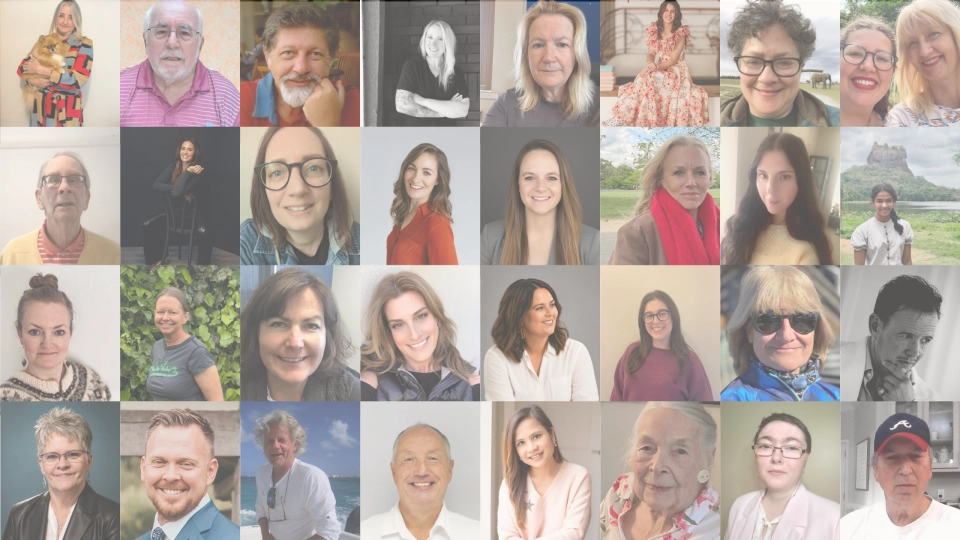


25 June, 2026