
About
Alan Halliday
Books
-

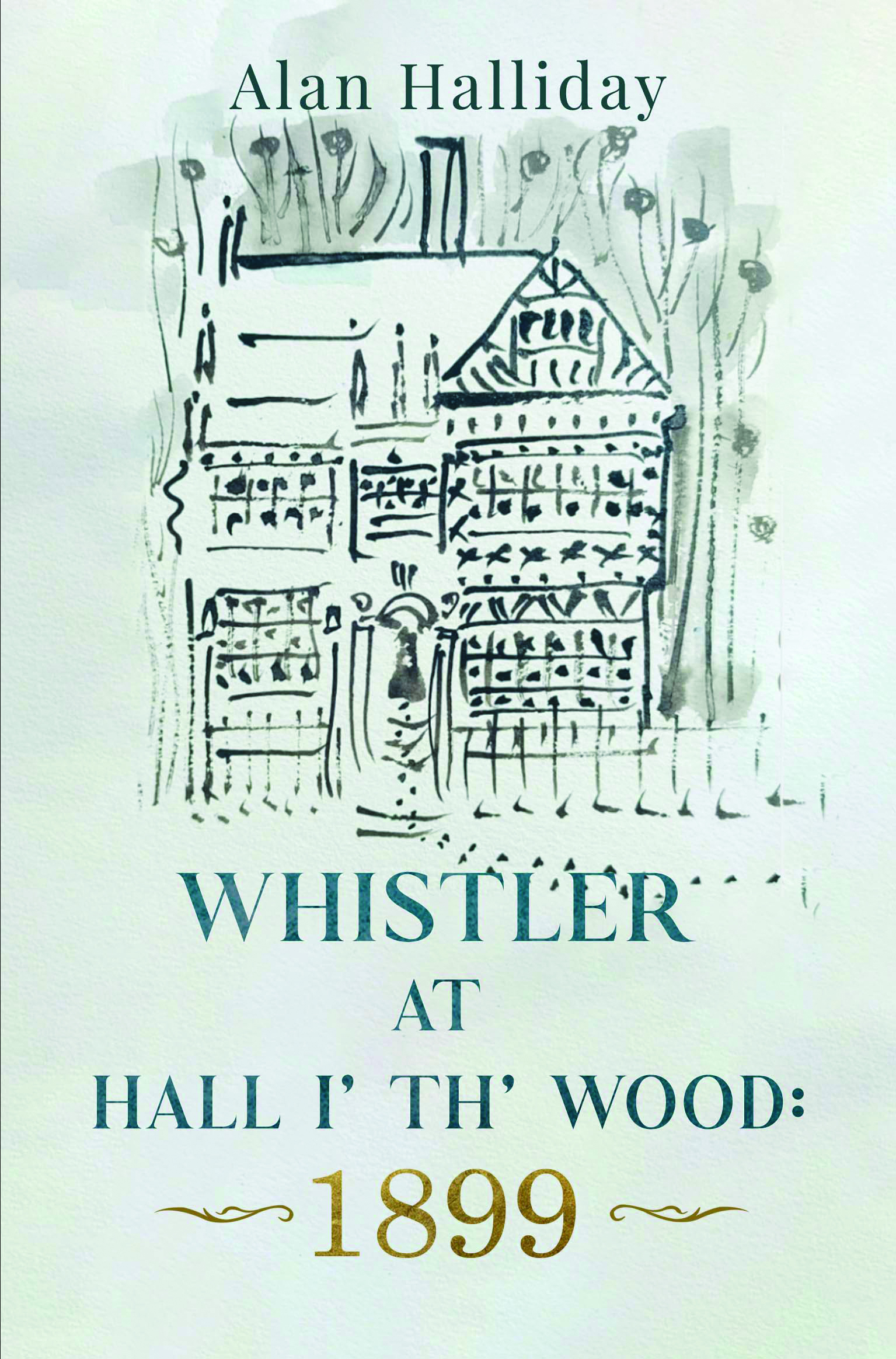
Whistler at Hall i’th’ Wood: 1899
At the remote and mysterious Hall i’th’ Wood, Sylvain and his extraordinary young cousin, Ella Sugar, are about to uncover secrets that blur the line between the supernatural and the artistic. Ella’s uncanny photographic talent captures the ghostly presence of none other than Whistler’s Mother, drawing the attention of the eccentric gallery owner Dr. Quixsell — and setting the stage for a high-stakes exhibition in Manchester. Amid snow-laden landscapes, haunted halls, and the mischievous interference of spirits, Ella must navigate the cutthroat art world, curious collectors, and her own growing knowledge of witches, folklore, and ghostly phenomena. With Sylvain as her guide, she discovers that belief can make the unseen real — and that courage, wit, and a touch of daring are essential when the past refuses to stay buried. “Whistler at Hall i’th’ Wood,” is a haunting, witty, and vividly imaginative tale of art, mystery, and the spectral surprises that lurk in every corner.
-
The Prelude
At Oxford University in the early 1970s, James D'Arblay was a talented and good-looking young man with a reputation for unreliability. A compulsive actor and musician and a man of considerable physical charm, D'Arblay is drawn towards the romantic life and the flamboyant poetry of Lord Byron. " class="product_extract"> At Oxford University in the early 1970s, James D'Arblay was a talented and good-looking young man with a reputation for unreliability. A compulsive actor and musician and a man of considerable physical charm, D'Arblay is drawn towards the romantic life and the flamboyant poetry of Lord Byron.
-
Letting Go
Alan Halliday plunges the reader into a potent cocktail of Proust, sex, drugs, haute couture, Pop Art, theatre, opera, ballet and photography.
-
Tante Brutus
The main protagonist comes on stage immediately in the opening lines... Ana Anderssen, Professor of History of Art at Birkbeck, University of London. The tug-of-war continues in France, at Champigny-sur-Veude, a village in Indre-et-Loire,some fifty kilometres from Tours.